
If you’re considering solar panels, one of the first questions you’ll need to answer is: How much electricity does your home use in a year?
Your home’s energy consumption, measured in kilowatt-hours (kWh), directly impacts your monthly utility bill, and also the size of the solar system needed to offset your electricity costs. While the average U.S. home uses around 10,000 to 11,000 kWh annually, every Ohio home is different.
In this guide, we’ll explain what kWh means, how much electricity homes use, what factors affect energy consumption, and how to determine the ideal solar system size for your families specific needs.
Why Knowing Your kWh Usage Matters for Solar
The most successful solar projects start with a clear understanding of energy consumption.
When you know your annual kWh usage, you can:
- Accurately size your solar system
- Maximize your solar investment
- Estimate long-term savings
- “Right-size” your system
- Prepare for future energy needs like EV charging
Rather than guessing based on home size alone, reviewing your actual utility usage provides the most accurate picture of your solar potential.
If you’re new to your home, we can estimate the size of the system you need, but it will be a ballpark. Our guidance for new homeowners is to give it a year to collect the homes annual energy use. That way when you go solar you get the system that’s “Right-Sized” for the home and the way you live in it.
What is a Kilowatt hour (kWh)?
A kilowatt-hour (kWh) is a measurement of energy consumption. A device using 1,000 watts (1 kilowatt) of power for one hour consumes 1 kWh of electricity.
Approximate Usage for Common Household Appliances
- Refrigerator – 1-2 kWh/day
- Central AC – 3-5 kWh/hour
- Electric Dryer – 3-5 kWh/load
- Dishwasher – 1-2 kWh/cycle
- Electric Vehicle Charger – 7-11 kWh/hour
kW vs. kWh
Many homeowners confuse these terms.
- kW (Kilowatt) = Power being used at a specific moment
- kWh (Kilowatt-hour) = Total energy consumed over time
Your electric bill measures kWh, not kW.
National Average
The average American household uses approximately:
- 900 kWh per month
- 30 kWh per day
- 10,800 kWh per year
However, averages are well, just averages! Every home is different.
Average Monthly Usage by Home Size
Small Homes (1,000-1,500 Sq Ft)
- 600-900 kWh/month
Medium Homes (1,500-2,500 Sq Ft)
- 900-1,300 kWh/month
Large Homes (2,500+ Sq Ft)
- 1,300-2,000+ kWh/month
Energy-efficient homes may use substantially less, while homes with electric heating, electric vehicles, pools, or hot tubs often use more.
Seasons Effect Home Electricity Use in Ohio
Spring
- 600-900 kWh/month
Summer
- 1,000-1,800 kWh/month
- Increased air conditioning use
Fall
- 700-1,000 kWh/month
Winter
- 900-1,600+ kWh/month
- Especially high for homes with electric heat
Because Ohio experiences hot summers and cold winters, annual energy consumption is often more important than any individual month’s usage when sizing a solar system.
This is another reason why every solar energy system is different. Your annual and monthly usage will vary widely based on whether you use electricity or gas to heat your home in the wintertime.
Biggest Electricity Users in a Home
Understanding where your energy goes can help reduce consumption before installing solar.
Heating and Cooling
HVAC systems account for the largest portion of residential energy use.
- Central air conditioning
- Heat pumps
- Electric furnaces
- Space heaters
Water Heaters
Water heaters operate every day and can represent a significant portion of your monthly electricity usage.
Major Appliances
High-energy appliances include:
- Dryers
- Ovens
- Refrigerators
- Freezers
- Dishwashers
Electric Vehicles
A typical EV can add 250-500 kWh per month. This is one of the fastest-growing contributors to household electricity consumption.
Factors That Affect Home Energy Consumption
Home Size – Larger homes generally require more energy for heating, cooling, and lighting.
Number of Occupants
Additional residents increase:
- Laundry
- Cooking
- Electronics usage
- Hot water demand
Insulation Quality
Proper insulation can dramatically reduce:
- Summer cooling loads
- Winter heating costs
Appliance Efficiency – Older appliances consume significantly more electricity than ENERGY STAR-certified models.
Lifestyle – Remote workers, gamers, EV owners, and households with home businesses often consume more electricity than the average homeowner.
How to Calculate Your Home’s Annual kWh Usage
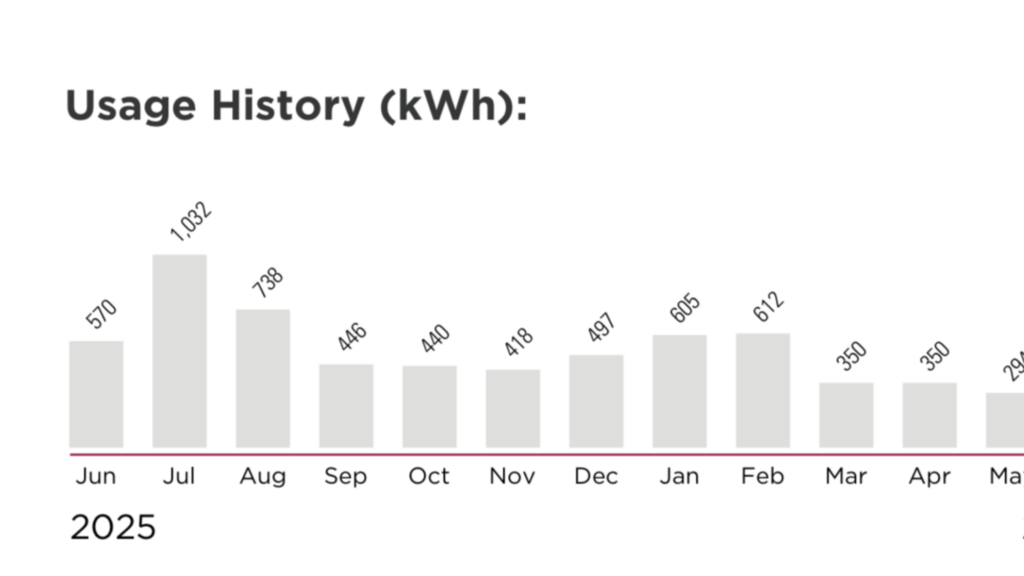
Your electric bill provides the answer. Usually, electric bill shave an annual usage graph which allows you to add up your monthly totals.
This annual total will help your solar consultant determine how many solar panels you need to offset your annual energy usage.
Keep in mind: other factors such as home orientation, roof pitch and shade are other factors that come into play when your Solar Consultant determines the right size of solar array to meet your electricity needs.
Ways to Reduce Electricity Usage Before Going Solar
Reducing consumption can lead to a smaller and less expensive solar system.
- Upgrade to LED Lighting
- Install a Smart Thermostat
- Upgrade Older Appliances (look for energy star appliances!)
- Improve Insulation
- Use smart power strips and unplug rarely used electronics.
Frequently Asked Questions
How many kWh does a house use per day?
Most U.S. homes use approximately 30 kWh per day, although actual usage varies significantly depending on home size, appliances, and lifestyle.
How many kWh does a house use per year?
Most homes consume between 10,000 and 12,000 kWh annually.
What is considered high electricity usage?
Generally, usage exceeding 1,500 kWh per month may indicate high consumption, especially if the home does not use electric heating or own an electric vehicle.
How can I find my annual electricity use?
Add the kWh totals from your last 12 months are usually on your last bill in the form of an annual usage graph.
How many solar panels are needed for a 2,000-square-foot house?
The answer depends on energy usage rather than square footage alone, but many Ohio homes of this size require a solar system between 8 and 12 kW.