School budgets face constant pressure. Every dollar spent on rising electricity bills is a dollar that can’t go toward teachers, technology, or student programs. For educational institutions across Ohio and beyond, solar panels for schools offer a practical way to redirect energy costs into long-term savings while creating powerful educational opportunities for students.
Schools consume significant amounts of energy to power classrooms, cafeterias, gymnasiums, and administrative buildings. Utility rates continue climbing, making energy costs one of the largest line items in operating budgets. Solar energy systems change that equation by replacing volatile electric costs with predictable, stable savings that compound over decades.
Beyond financial advantages, solar installations give students direct exposure to renewable energy technology, climate change solutions, and the practical applications of science, technology, engineering, and mathematics. When schools invest in solar power, they invest in both fiscal responsibility and the next generation of problem solvers.
Why Solar Makes Financial Sense for Educational Institutions
Energy costs represent a substantial portion of operational budgets for schools, colleges, and universities. Traditional electricity bills fluctuate with utility rates, which have historically trended upward. Solar power systems lock in lower energy prices by generating clean energy onsite, reducing dependence on the grid and protecting budgets from future rate increases.
Solar panels produce electricity for 25 to 30 years or more with minimal maintenance. Once installed, they generate power year after year, creating energy savings that accumulate over time. These savings can be redirected toward classroom materials, facility improvements, teacher salaries, or educational programs.
Many schools and tax-exempt organizations have access to specialized financing options that make the transition to solar more accessible. Power purchase agreements allow schools to install solar with no upfront cost. Under this arrangement, a third party owns and maintains the solar equipment, and the school purchases the electricity generated at a lower rate than the local utility charges. This structure removes the barrier of initial investment while delivering immediate savings.
Ohio schools also have access to the School Energy Performance Contracting Loan Fund, a low-interest loan program designed to help K-12 schools invest in solar and energy-saving improvements. This program supports the installation of solar panels along with efficient HVAC systems, lighting upgrades, and other energy conservation measures, creating a comprehensive approach to reducing energy consumption and operational costs.
How Solar Panels Benefit School Budgets Over Time
Solar changes the math completely. Instead of paying rising electricity prices to a utility company every month, schools generate their own power and watch those savings grow year after year. The longer the solar panel system operates, the greater the return on investment.
Here’s how the savings add up:
- Year one: Reduced electricity bills start immediately as the solar array begins producing power.
- Years two through ten: Savings compound as utility rates continue rising while solar production remains consistent.
- Years eleven through twenty-five: The system continues generating free electricity long after any financing is paid off.
- Beyond twenty-five years: Many solar panels continue producing power efficiently for decades, extending savings even further.
Schools that have made the switch report meaningful reductions in energy bills, freeing up funds for student-facing priorities. These savings represent real dollars that stay in the school budget instead of flowing to utility companies.
What Do Solar Installations Look Like for Schools?
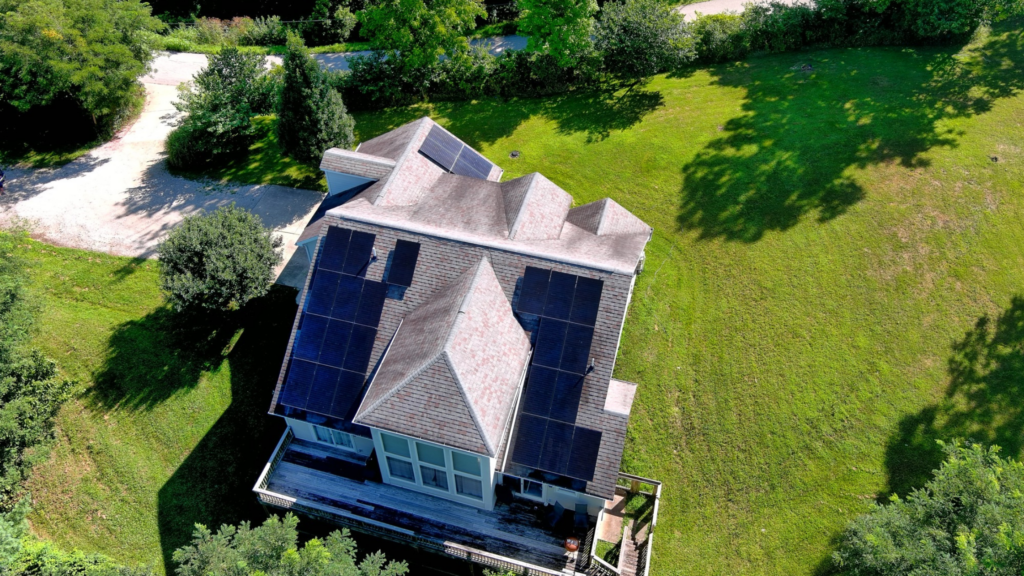
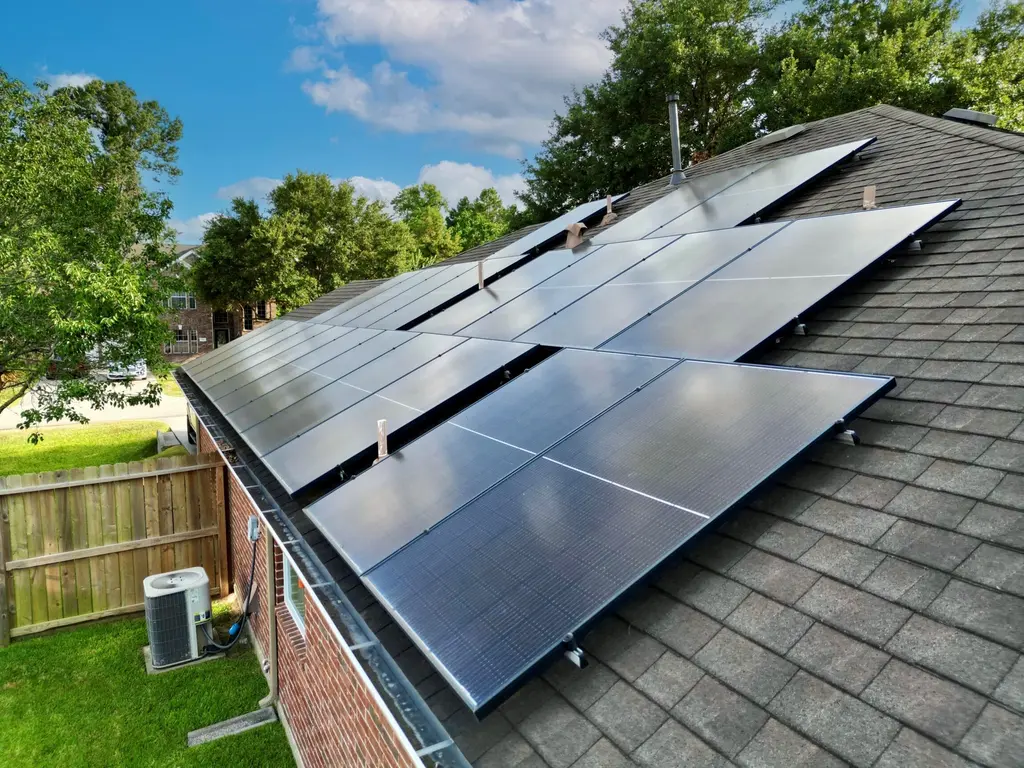
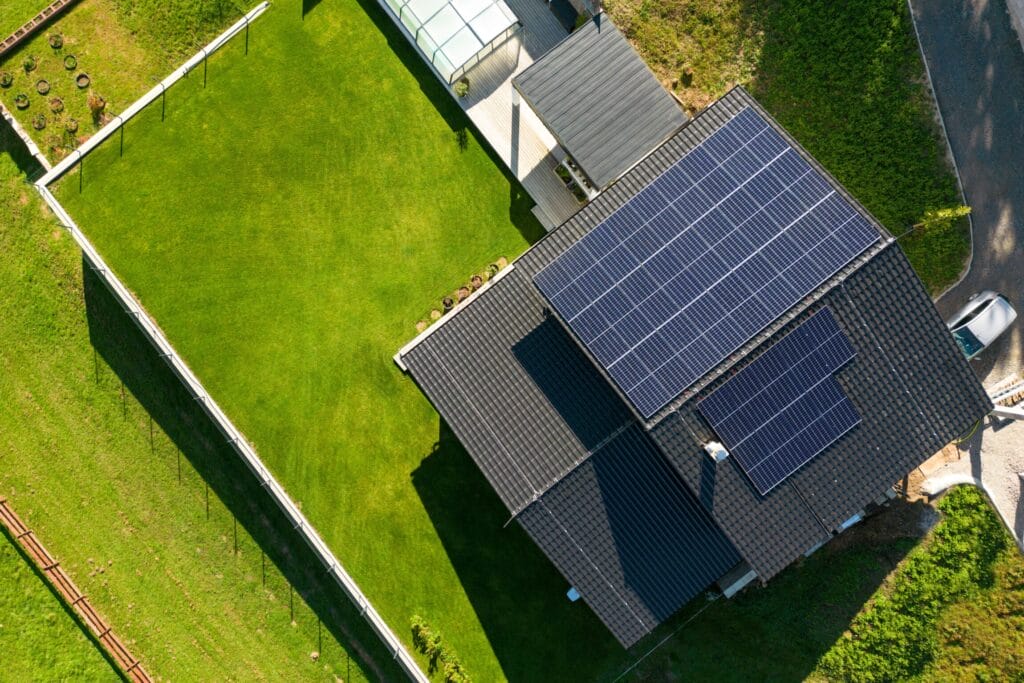
Solar energy systems for schools typically involve large solar arrays installed on flat roofs, angled rooftops, or ground-mounted structures in parking lots or unused land. The size of the installation depends on the school’s energy use, available space, and budget goals.
A typical solar project includes the following components:
- Assessment and design: A solar consultant evaluates the school’s energy consumption, roof angle, shading, and structural capacity to design an optimized system.
- Financing review: Schools explore options including power purchase agreements, loans, or direct purchase.
- Installation: Experienced installers mount the solar panel system and connect it to the school’s electrical infrastructure.
- Activation: The system begins generating clean energy and reducing electricity bills immediately.
- Monitoring and maintenance: Ongoing performance tracking ensures the system operates efficiently for decades.
Kokosing Solar has helped more than 75 schools, colleges, and universities go solar, bringing 25 years of solar installation experience and the backing of 75 years of construction expertise from Kokosing, Inc. As Ohio’s longest-standing full-service solar installer, we design systems internally and use NABCEP-certified installers to ensure quality and reliability at every step of the process.
How Does Solar Create Educational Opportunities for Students?
Solar installations do double duty. They reduce energy costs and serve as visible, tangible teaching tools that bring renewable energy concepts to life. Students can see the solar panels on their school roof or campus and connect abstract lessons about energy, engineering, and environmental impact to real-world applications.
Teachers across multiple disciplines can incorporate solar power systems into their curriculum:
- Science classes: Study how photovoltaic cells convert sunlight into electricity, explore energy conversion principles, and investigate the environmental benefits of reducing carbon emissions.
- Math classes: Calculate energy production, analyze cost savings over time, and graph energy consumption patterns.
- Technology and engineering: Examine how solar energy systems are designed, installed, and maintained.
- Social studies and civics: Discuss climate change, sustainability policy, and the role of renewable energy sources in creating a sustainable future.
Many schools display real-time solar production data on monitors in hallways or classrooms, allowing students to track how much energy the system generates and how much carbon footprint reduction it achieves. This transparency turns the school building itself into a learning laboratory.
By integrating solar projects into educational programs, schools prepare students to think critically about energy use, fossil fuels, and the transition to clean energy. These lessons equip the next generation with the knowledge and inspiration to pursue careers in the solar industry and related fields.
What Are the Environmental Benefits of Solar Energy for Schools?
Switching to solar power reduces a school’s reliance on electricity generated from fossil fuels, which lowers carbon emissions and contributes to a cleaner, healthier environment. Educational institutions that prioritize sustainability send a powerful message to students, staff, and the broader community about environmental responsibility.
Solar schools demonstrate leadership in addressing climate change. By producing renewable energy onsite, they reduce their environmental impact while modeling the kind of forward-thinking decision-making that students will need as future generations inherit the challenges of energy and climate.
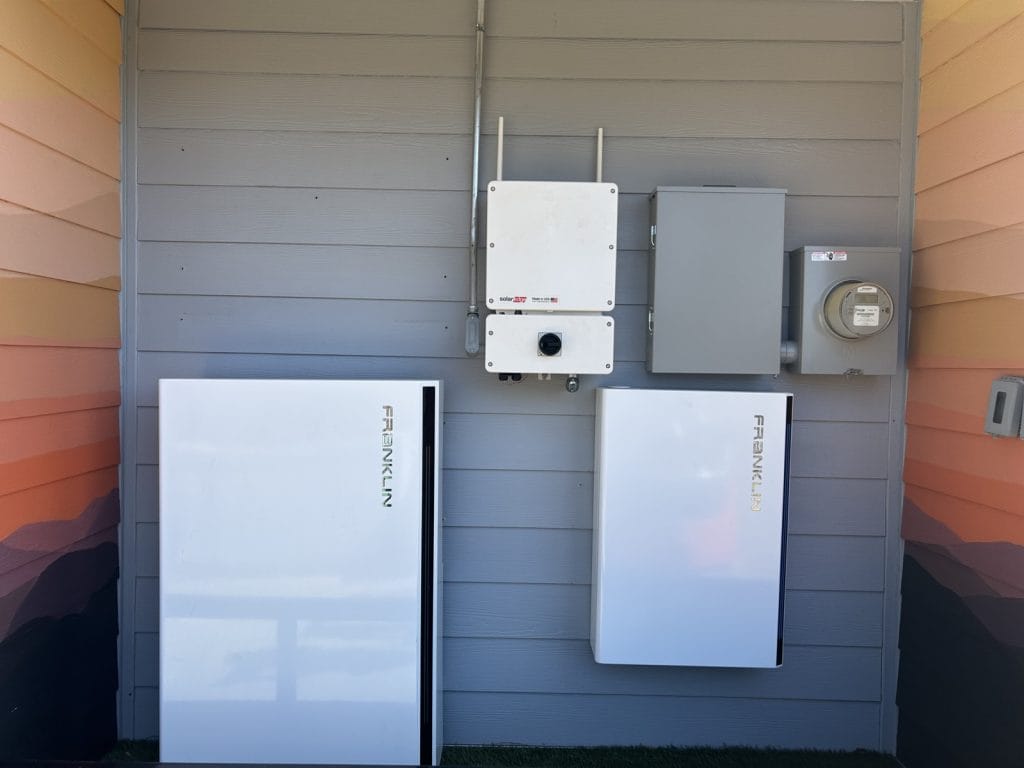
The environmental benefits extend beyond carbon footprint reduction. Solar installations produce no air or water pollution during operation, and excess energy generated during sunny periods can often be fed back into the grid, supporting the broader transition to renewable energy sources. Some schools pair solar panels with battery storage, allowing them to store clean energy for use during peak demand times or power outages.
How Can Schools Get Started with Solar?
The process begins with a conversation. School administrators, facilities managers, and district leaders can reach out to a solar consultant to discuss their specific situation, energy bills, and goals. A professional assessment reviews energy consumption, available roof or land space, and financing options to determine the best approach.
Kokosing Solar works with schools to design customized solar solutions that fit their unique needs. We answer questions about how solar replaces volatile rising electric costs with predictable savings, how power purchase agreements work, and how solar benefits extend beyond operating costs to improve student and staff recruitment and enhance community relations.
Schools interested in exploring solar can start by reviewing recent utility bills, identifying available installation space, and considering their long-term budget priorities. The consultation process is designed to be educational and transparent, helping decision-makers understand the financial advantages, environmental benefits, and practical considerations involved in going solar.
Why Do Schools Choose Kokosing Solar?
Experience and reliability matter when investing in a solar panel installation that will serve a school for decades. Kokosing Solar brings more than 25 years of solar expertise and the strength of 75 years of construction experience from Kokosing, Inc., one of the largest family-owned construction companies in the Midwest and Mid-Atlantic.
We stand behind our work with a commitment to quality, safety, and long-term service. Our team includes NABCEP-certified installers, and we handle every aspect of the project internally, from design through installation and ongoing maintenance. Schools trust us because we combine technical expertise with a customer-focused approach that prioritizes their specific needs and goals.
Take the Next Step Toward Energy Savings and Student Learning
Solar energy offers educational institutions a powerful combination of financial value and hands-on learning. Schools that invest in solar panels secure a brighter future by reducing energy costs, protecting budgets from rising utility rates, and giving students direct exposure to renewable energy technology.
Ready to explore what solar can do for your school? Contact Kokosing Solar to schedule a free assessment and find out firsthand why schools, school districts, universities, and educational institutions across Ohio and nationwide are making the switch to solar.