Rising utility rates are reshaping the financial landscape for business owners. As electricity prices climb, operating expenses follow, tightening annual budgets. A well-designed solar power system offers a solution: generate solar electricity onsite, stabilize electricity bills, and retain more capital within your operation.
Many commercial property owners overlook that commercial solar is not one-size-fits-all. Warehouses, farms, and retail sites can all utilize solar panels, but their energy needs, roof structures, and usage patterns differ significantly. This is why engineering, site-specific design, and long-term service are crucial. Kokosing Solar, with over 25 years of solar expertise and 74 years of construction experience, stands as Ohio’s longest-standing full-service solar installer, offering in-house design and NABCEP-certified installers.
Why “one-size-fits-all” commercial solar falls short
A robust commercial solar installation begins with understanding how your facility uses power. Two sites may have similar square footage but vastly different electricity consumption. One might operate climate control and conveyor systems all day, while another experiences sharp afternoon peaks from HVAC and refrigeration. Load profile is essential because a solar panel system should align with how and when the facility draws power.
Site conditions are equally important. Commercial buildings vary in roof age, type, structural capacity, available ground space, and shading. Utility company interconnection rules also affect system sizing and net metering opportunities. Ignoring these factors can result in an underperforming system that complicates operations or leaves financial benefits untapped.
Warehouses: big roofs, steady loads, and straightforward solar arrays
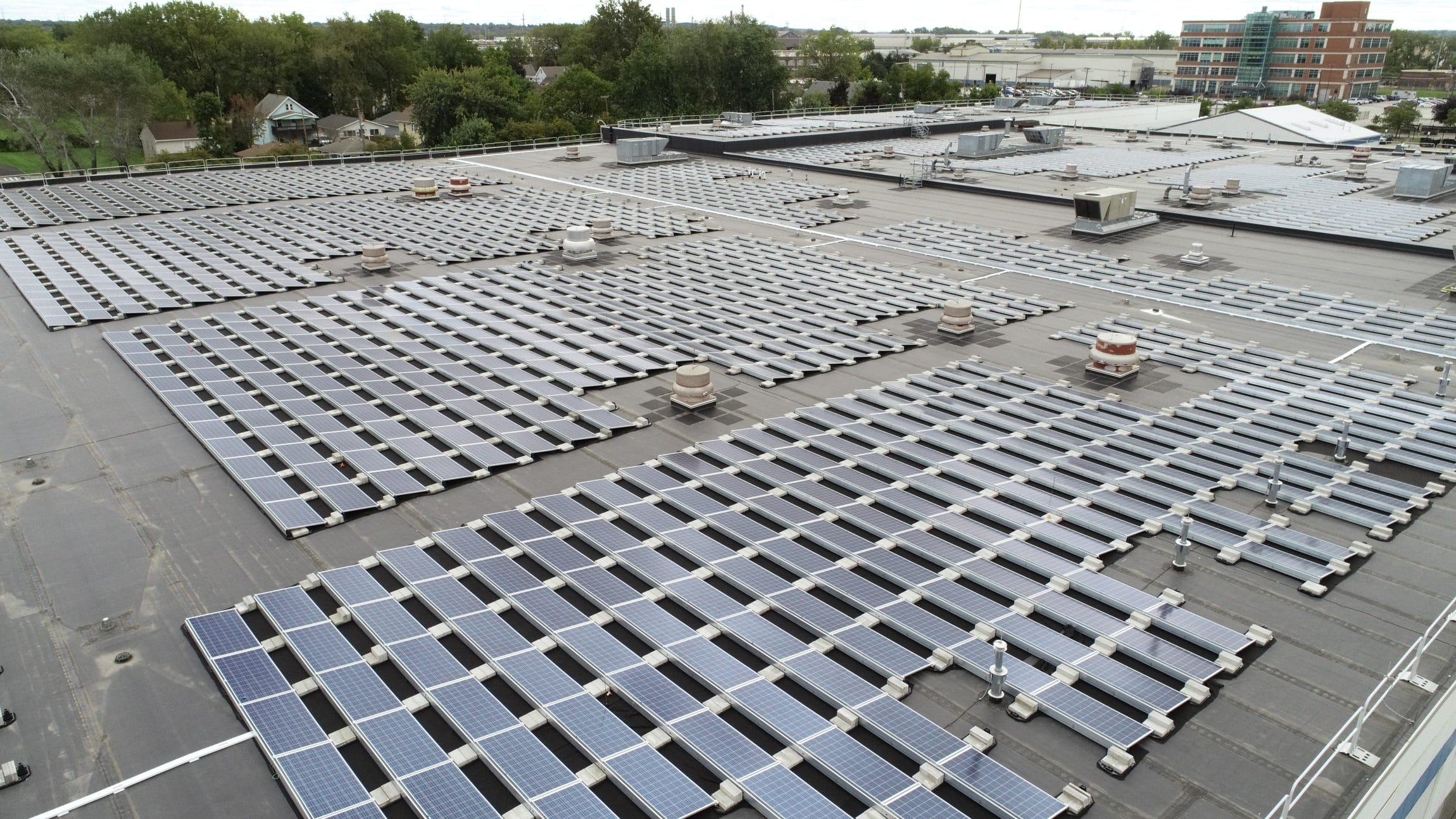
Warehouses often have a valuable asset for solar power: large, open roof areas that can support expansive solar arrays, driving significant energy production. Many warehouse operations have consistent energy usage linked to lighting, ventilation, dock equipment, and material handling.
A practical warehouse approach focuses on three design questions:
- Roof condition and structure: A commercial solar panel installation requires a roof that can support the racking and solar equipment, considering the remaining roof life.
- Load profile and operating hours: Warehouses often have steady daytime demand that aligns well with solar energy generation.
- Expansion plans: If the facility anticipates new shifts, automation, or added refrigerated space, the solar system design should account for future electricity costs.
From a business perspective, warehouses often evaluate commercial solar systems like other infrastructure investments, aiming for predictable cost savings and improved long-term cash flow. Delaying solar adoption means higher utility bills, while going solar keeps those dollars in your pocket.
Farms and agriculture: space options, seasonal energy needs, and resilience
Agricultural operations offer flexibility and complexity. Many farms can choose between rooftop solar panel installation on barns and outbuildings, ground-mounted solar farm-style layouts, or a mix of both. Energy needs can shift seasonally, driven by irrigation, grain drying, refrigeration, ventilation, and processing equipment. This seasonality influences solar solution engineering.
Farms also prioritize reliability and independence. Energy storage can support critical loads, and battery storage can help manage peaks or provide backup for specific equipment, depending on the facility’s goals and configuration. Whether the right fit is energy storage, a larger array, or a phased approach depends on the farm’s daily operations and site realities.
Solar also supports environmental goals by directly reducing carbon emissions tied to electricity use, helping lower a facility’s carbon footprint and reliance on fossil fuels. For many agricultural businesses, this aligns with stewardship values while delivering real cost savings.
Retail sites: daytime peaks, multiple meters, and visibility
Retail facilities often face high daytime loads tied to lighting, refrigeration, and HVAC, plus customer-facing hours that concentrate demand. Solar panels can offset a significant portion of those electric bills when peak electricity consumption overlaps with daylight.
Retail can also involve site constraints. Some stores have limited roof space due to mechanical equipment, parapets, or shading. Others operate as part of a portfolio of commercial properties with multiple meters and diverse utility bills. In these cases, careful production modeling and utility coordination are crucial.
Retail sites also have a public-facing dimension. A well-planned solar project can support clean energy goals while signaling operational efficiency to customers and staff. The best outcomes come from a commercial solar installation designed around the real-world details of the building, utility rate structure, and owner’s priorities.
What’s the difference between warehouse, farm, and retail solar design?
The difference lies in how power is used, where solar can be installed, and what success looks like for the organization. Warehouses often prioritize high energy production from large roof areas. Farms need design flexibility and may consider energy independence and resilience. Retail focuses on offsetting daytime peaks and navigating site constraints.
A strong commercial solar engineering process integrates these elements. It starts with a site review and data, then evolves into a design that matches the facility. Solar changes the financial equation when the system fits the operation.
Showing the math: how commercial solar supports ROI
Decision-makers deserve clear numbers. While every project is site-specific, the financial logic follows a consistent structure. A commercial solar power system reduces the portion of electricity purchased from the grid, lowering electricity bills and reducing exposure to rising utility rates.
Here’s a simple way many commercial businesses evaluate the opportunity:
- Current baseline: Review utility bills to understand electricity costs, demand patterns, and electricity prices over time.
- Projected offset: Estimate how much solar electricity the site can produce based on space, orientation, and expected energy production.
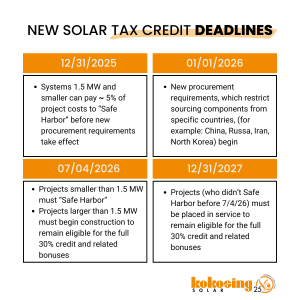
- Incentives and recovery: Factor in available tax incentives and benefits such as the federal solar tax credit, often referenced as the investment tax credit, plus depreciation benefits where applicable.
For businesses of all sizes, incentives can improve early-year economics. Common items include the federal tax credit and depreciation tools like the modified accelerated cost recovery system and bonus depreciation. Eligibility and value depend on your tax situation, project structure, and current law, so involving your tax advisor is wise. The key point is simple: financial incentives can reduce upfront costs and improve cost recovery, supporting stronger long-term cash flow.
Engineering and installation: what stays consistent across commercial properties
Different facility types call for different layouts, but a few elements should remain consistent on every commercial solar project:
- Custom system design: A solar system should be designed around the site, not pulled from a template.
- Quality installation: Professional solar installations rely on proven methods, safe work practices, and experienced crews.
- Long-term support: Operations and Maintenance Services protect performance over time and help preserve peace of mind.
Kokosing Solar’s model is built around that complete lifecycle. With internal design and NABCEP-certified installers, the goal remains steady: engineer a system that performs, install it right, and stand behind the work.
Incentives and policy basics for commercial solar projects
Commercial property owners often inquire about tax credits and policy because they impact installation costs and payback. At a high level, there are three common considerations:
- Federal tax credit: The federal solar tax credit can reduce the net cost of a qualifying solar panel system.
- Depreciation: The cost recovery system for solar equipment may allow accelerated depreciation under MACRS, and bonus depreciation may apply depending on the year and eligibility.
- Utility considerations: Utility rates, interconnection rules, and net metering policies (where available) can influence savings.
Because rules change and project structures vary, the best next step is to run the numbers for your specific commercial property and align with your accountant on tax incentives and any additional tax credits that may apply.
A practical next step: match the system to your operation
Warehouses, farms, and retail sites all benefit from clean energy, but in different ways. The right design reflects your roof, land, energy usage, utility bills, and long-term plan. Getting these details right protects performance and strengthens financial benefits for the business owner.
If you are considering commercial solar panels for a warehouse, agricultural facility, or retail location, Kokosing Solar can help you evaluate options with clear engineering and straightforward expectations. Schedule a free assessment to review your electricity bills, explore solar solutions for your site, and get a plan built for long-term energy savings.