Author: sydney mcclelland
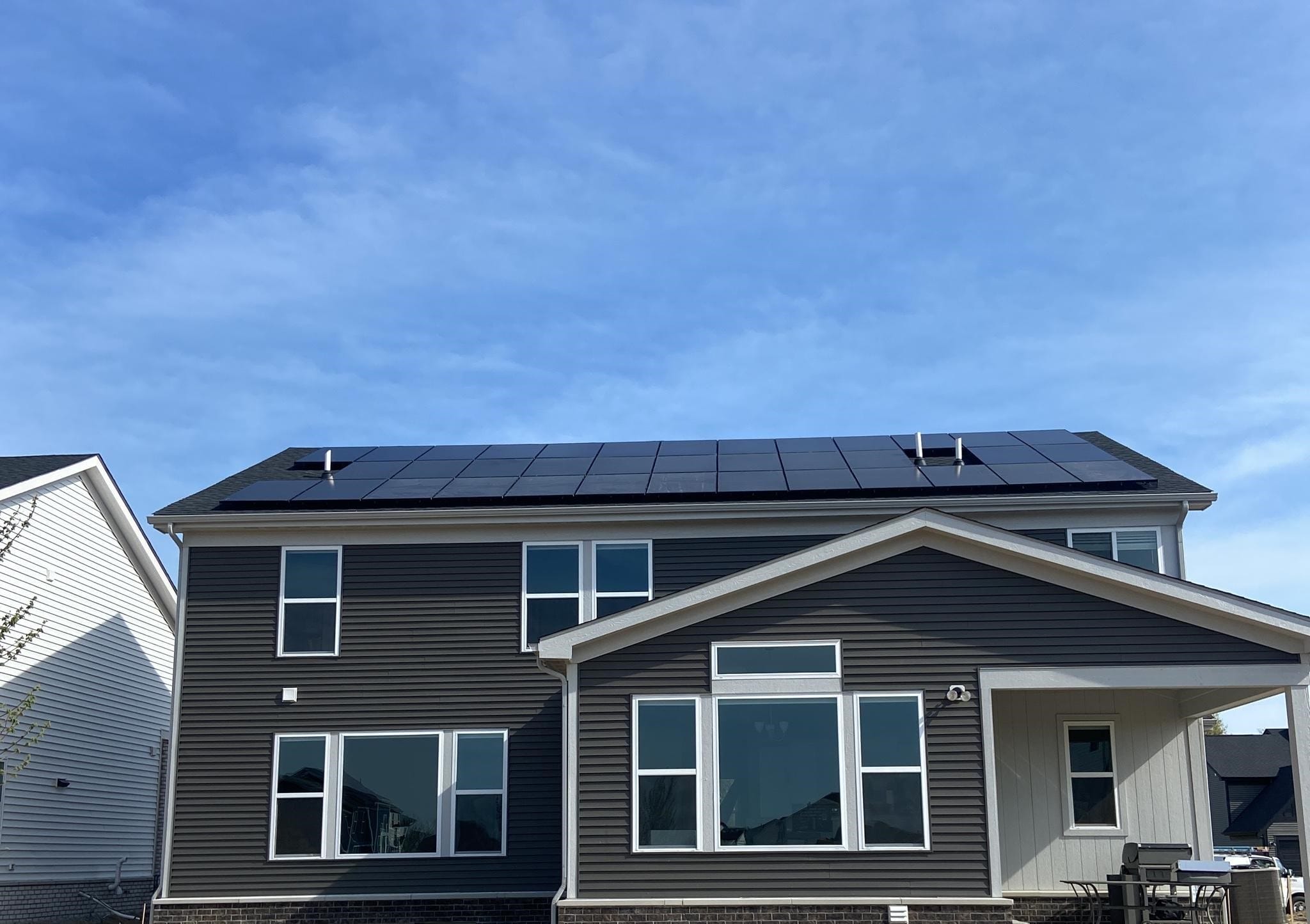
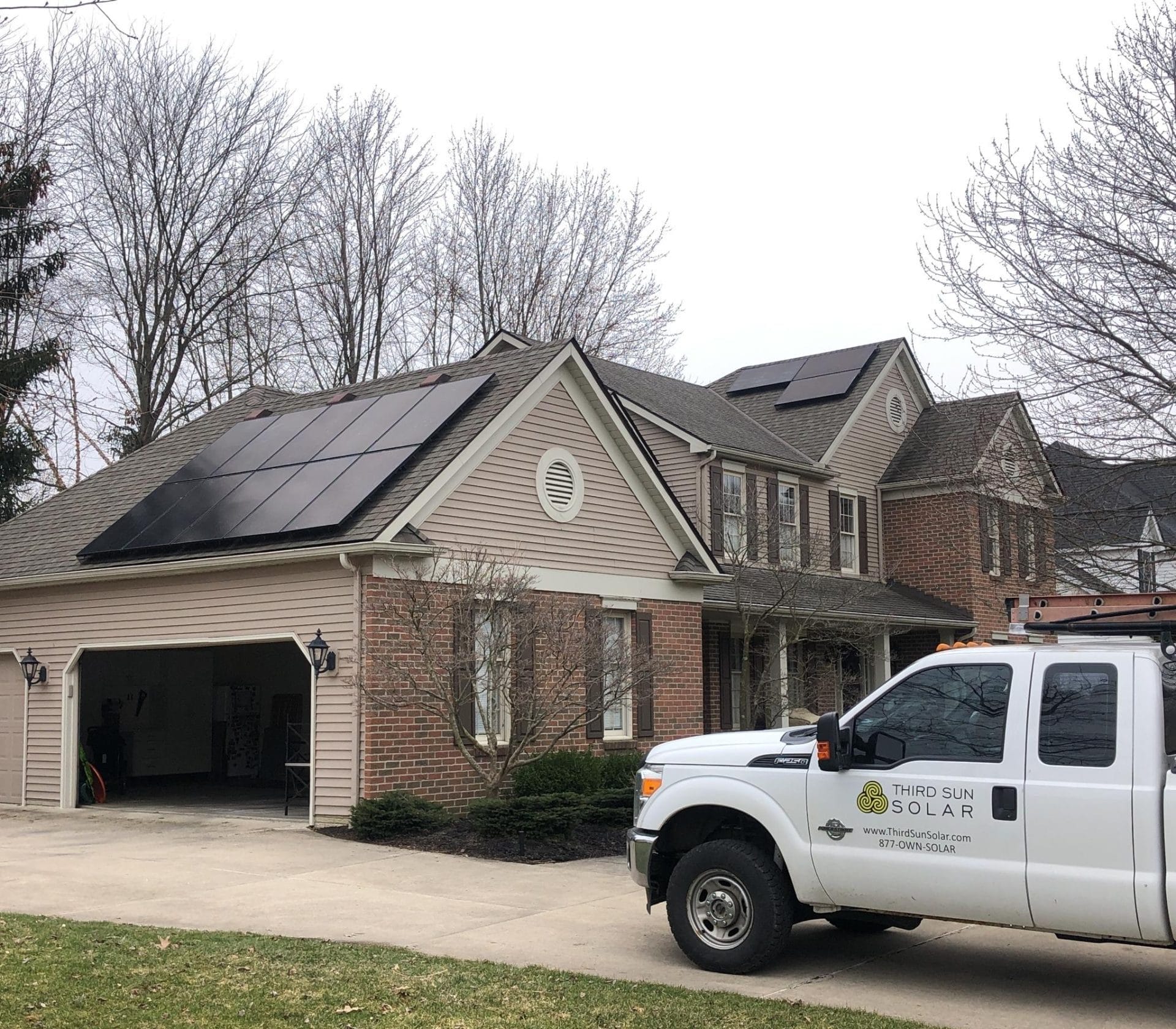
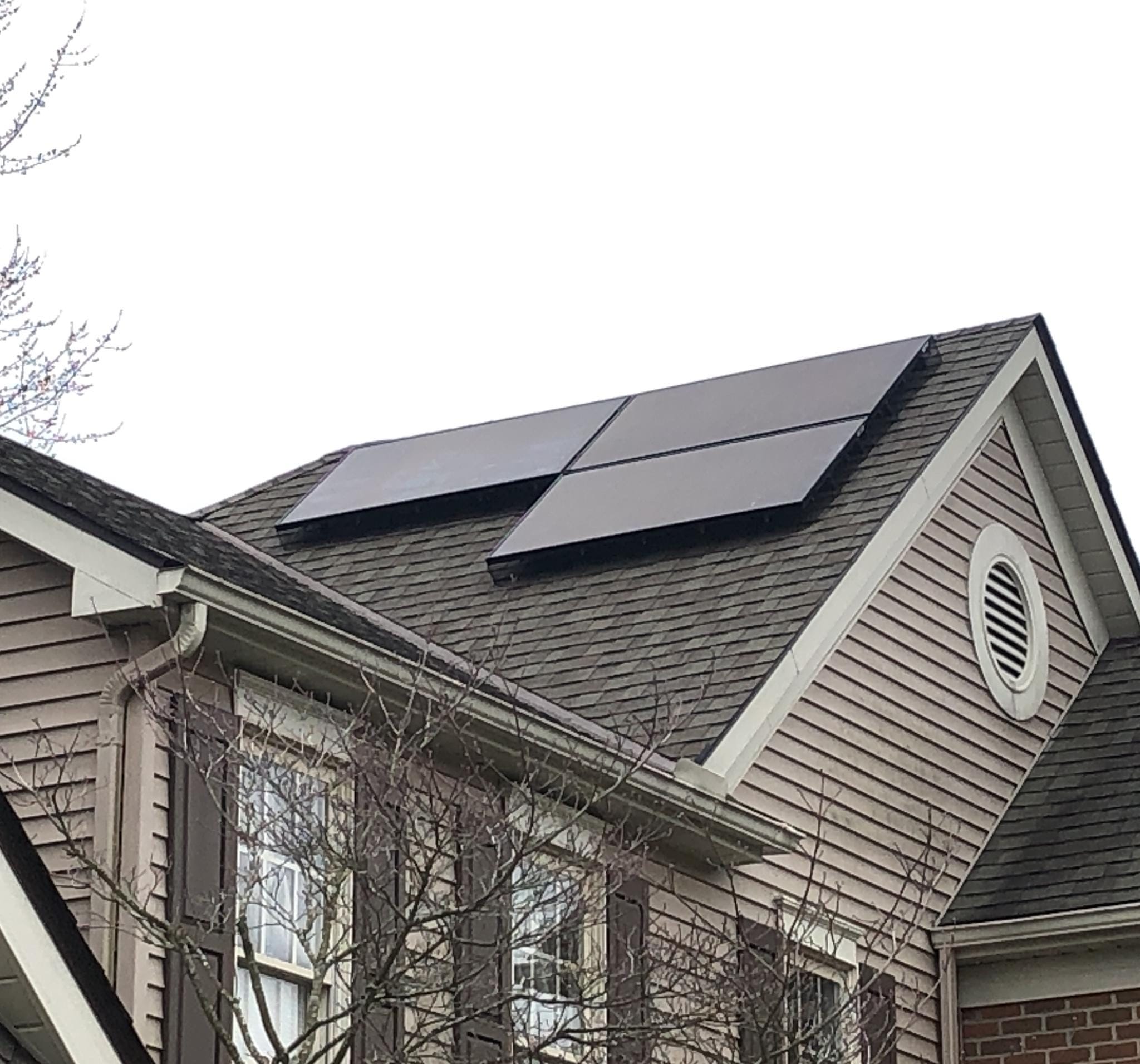
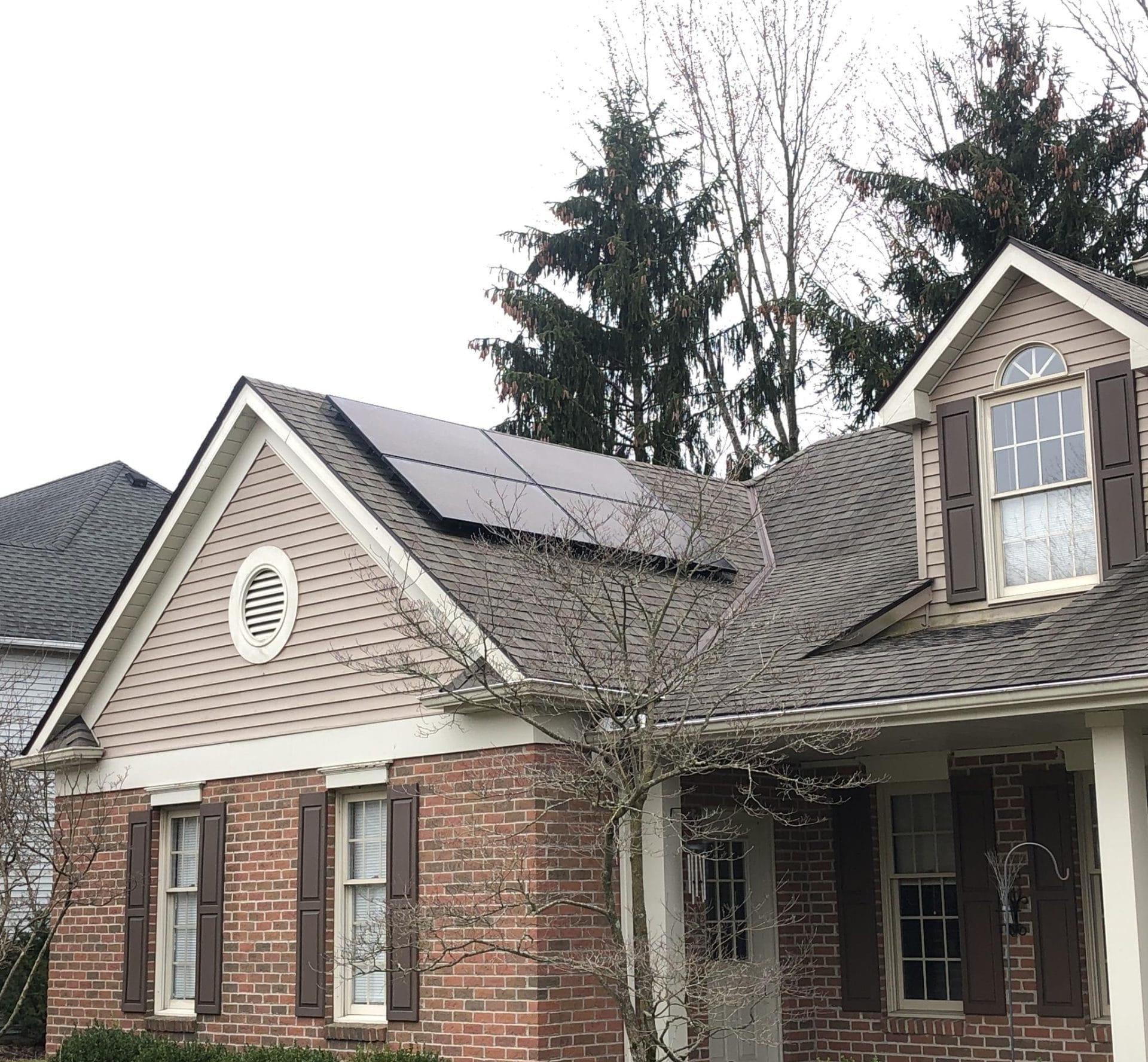
Athens , Ohio Case Study
Benefits of Powering Your Electric Vehicle with Solar Energy

Benefits of Powering Your Electric Vehicle with Solar Energy
Before we get into how you can benefit from charging your EV with solar energy you should know how solar works.
The process begins as sunlight strikes the panels, generating direct current (DC) electricity. This energy is then converted into alternating current (AC), used by the electrical network in your home to power appliances and your EV charging. It’s a clean, sustainable way to fuel your vehicle, harnessing renewable energy for a brighter, greener future.
Now, let’s explore the advantages of powering your EV with solar energy.
Cost Savings
Firstly, you can enjoy significant cost savings. When using electricity from your solar panels, you don’t have to rely on your utility company to fill your tank – this can save you hundreds of dollars a year. In that case, you can avoid that recurring expense entirely, keeping those savings for other essential needs or even investing in further sustainability measures for your home or vehicle.
Energy Independence
Another benefit of powering your Electric Vehicle with Solar Energy is your energy independence. You can reduce your reliance on the electricity grid by utilizing a renewable energy source to power your car, This gives you more control over your energy use. You can even add a battery to your system for power outages. Most EVs have a battery large enough to power different parts of your home; another plus is that, with solar storage, you can charge your EV during a grid outage with solar energy. Solar storage also gives you peace of mind in case of an emergency, knowing that you can keep your essentials up and running.
Environmental Benefit
Beyond financial and practical benefits, there’s a profound environmental impact to consider, charging your EV with solar energy helps to reduce your environmental impact significantly. Suppose you’re charging your EV from the grid. In that case, you’re still relying on fossil fuels, which consume finite resources and emit harmful pollutants into the atmosphere, contributing to global warming and air pollution. When using renewable resources like solar energy, you release no carbon dioxide into the environment and minimize other harmful emissions associated with traditional power generation. Switching to Solar Energy EV charging can greatly reduce your carbon footprint and lead you in the right direction toward sustainability. By switching to solar-powered EV charging, you’re reducing your own carbon emissions and also actively participating in the global effort to stop climate change, making a change for a cleaner and healthier planet for our future.
The Convenience of Charging at Home
Lastly, charging your EV at home with Solar Energy is convenient – by having an EV charging station at home, you’ll worry less about where the next charging station will be. Instead, you can wake up to a fully charged EV every morning, saying goodbye to searching for a charging station and waiting in line to use it. This convenience saves you time and hassle and provides a sense of security, knowing that your vehicle is always ready to go whenever you need it. With a solar-powered charging setup at home, you’re not just embracing sustainability but also enhancing your daily convenience and peace of mind.
Conclusion
In conclusion, charging your EV with solar energy offers many benefits. When understanding how it works and integrating it into your life you can unlock cost savings, energy independence, environmental stewardship, and convenience. By using the sun’s renewable energy, we reduce our carbon footprint but also play a part in fighting climate change and creating a sustainable future for generations to come. The savings mixed with the practicality of the convenience of a fully charged EV at home. As we embrace this clean and sustainable method of transportation, we take a significant step towards a greener and more resilient world. By investing in solar energy for EV charging, we enhance our own lives and contribute to the collective effort to build a brighter, greener future.
What Makes Kokosing Solar Different
Although all solar companies are trying to sell solar, not all of them are in it for the best interest of the customer. Many solar companies out there are misleading and in it for the wrong reasons. You have probably seen somewhere that you can get solar for free, Ohio will pay for your solar, or your utility company will cover your solar costs – if you believe this may be too good to be true, you’re probably right.
Hearing about these misleading and untrustworthy companies is a shame because it gives the companies that mean well a bad name.
At Kokosing Solar we have been designing, building, and financing clean energy solutions for both Commercial and Residential clients across Ohio since 2000. Kokosing brings more than 24 years of installation experience as Ohio’s longest-standing full-service solar installer. We are strengthened with 73 years of experience by one of the largest family-owned companies in the Midwest and Mid-Atlantic, Kokosing Inc. We are a fully insured and licensed Electrical Contractor with highly trained NABCEP-certified installers committed to delivering safe high-performance systems with top-notch customer service.
What makes Kokosing Different?
Our reputation: with over 20 years in the solar industry and over 1,300 clean energy installations we are a stable, local and committed partner.
Our Team: Our team is filled with passionate people who show pride in their work and who are well-trained.
Our results: Our business strategy is to provide a high-quality project to position ourselves as a lasting solar partner.
At Kokosing Solar our mission is putting people to work to build a clean energy future. Our business approach is all based on our core values.
- Safety first
- Customer Focused
- Have a concern for the well-being of every team member
- Continuously improve and take on new challenges
- Operate with honesty and integrity
- Shirt-Sleeve manage
- Be a good member of the community
- Financially Strong
What makes Kokosing Solar different is that we are mission-driven, we are a values-led organization with a mission to put people to work to build the clean energy future. Kokosing Solar has great employment practices. Not only is this the right way to do business but an approach that delivers better results with a stronger higher performing team. At Kokosing Solar we are building stronger communities. We are constantly building our communities through our way of business, our inclusion and equity focus, and by giving back. Kokosing Solar has a sustainable environmental impact, not only from our carbon–neutral fleet and solar branch but by zero-waste goal – we are taking serious actions to protect our planet.
Sales
Another thing that makes Kokosing Solar different is our sales team. Our consultations are low-pressure, and high information. Our sales team isn’t motivated by commission during the sales process. Our team wants to make sure you’re understanding everything and while yes, we do want to be your installer we also want to make the best decision for you, your family, and your company. During the process, you won’t be handed off to another party – we handle all marketing, sales, design, permitting, interconnection, and installation.
See what people have to say about Kokosing Solar
- “Awesome company! They handle all aspects of installing solar panels on your home or business from evaluating the applicability, calculating energy and cost savings, obtaining local approvals, and the installation. They installed a 13-panel system on my home and were great to work with. Very professional.”
- “Mission-driven solar company backed by a wealth of experience, great people, and just the right touch for delivering high-quality products and first-class service”
- “I’m writing a review, not as a customer, but as a solar contractor from another state. This company’s integrity shines through the information it provides on its website. There is a lot of misinformation related to solar throughout the United States and it is rare to see a company take a firm stance on honesty, even if it makes it harder to compete. Keep outlasting those “solar entrepreneurs”!”
- “They made switching to solar SO easy. Going solar is not cheap, but it saves you in the long run! They explained everything so well and everyone I dealt with was so kind! I will recommend them to anyone who chooses to go solar!”
Why is Kokosing Solar being different important?
Kokosing Solar’s experience and reputation, with over 20 years and 1,300 installations, make us a trusted and stable local partner. Our passionate and well-trained team ensures top-notch service and expertise throughout the process and our commitment to quality projects makes Kokosing Solar a long-term partner. The company’s mission-driven approach accelerates the shift to clean energy, reflecting core values of safety, customer focus, and integrity. Kokosing’s low-pressure, high-information sales consultations prioritize customer understanding and satisfaction over commissions. Our positive customer testimonials attest to Kokosing Solar’s excellence, integrity, and professionalism, setting a higher standard for the industry.
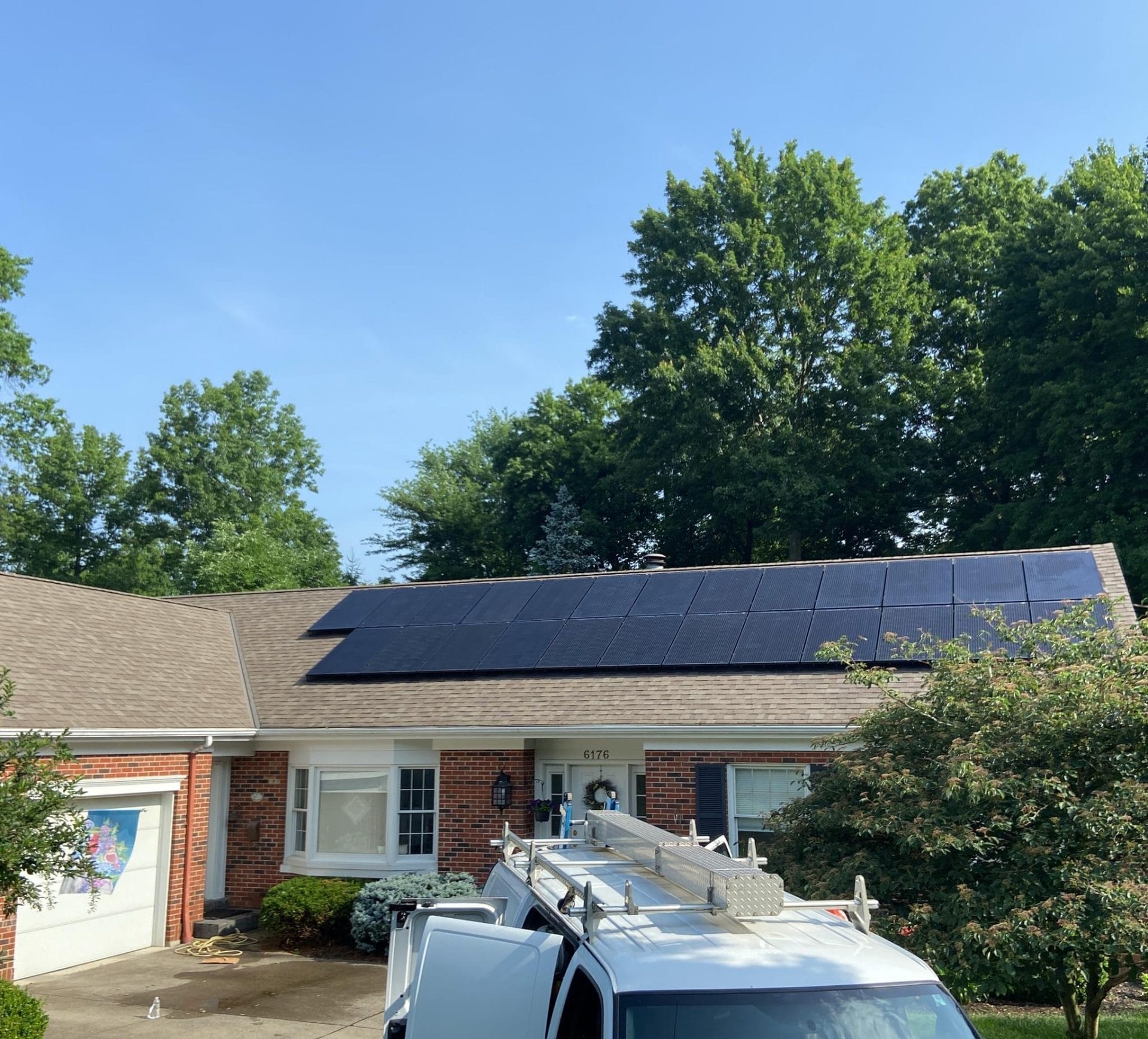
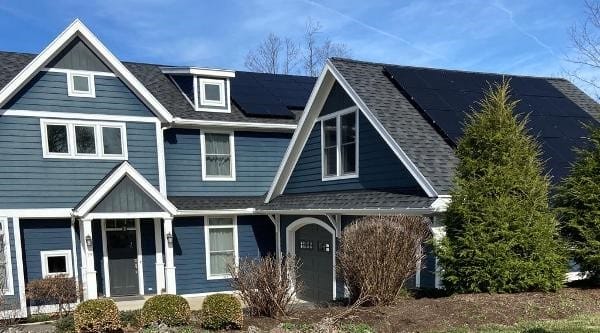
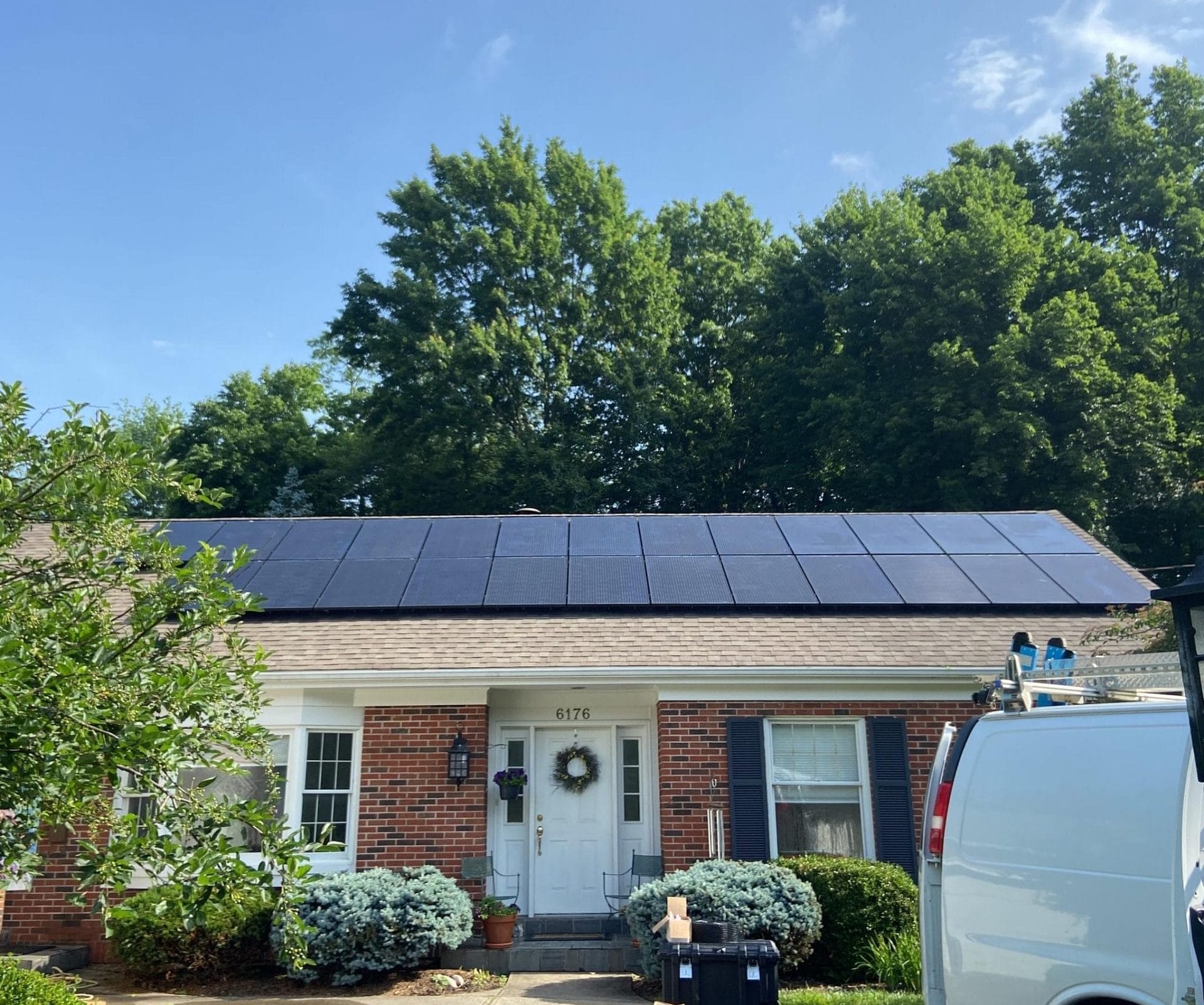
Cincinnati, Ohio Case Study
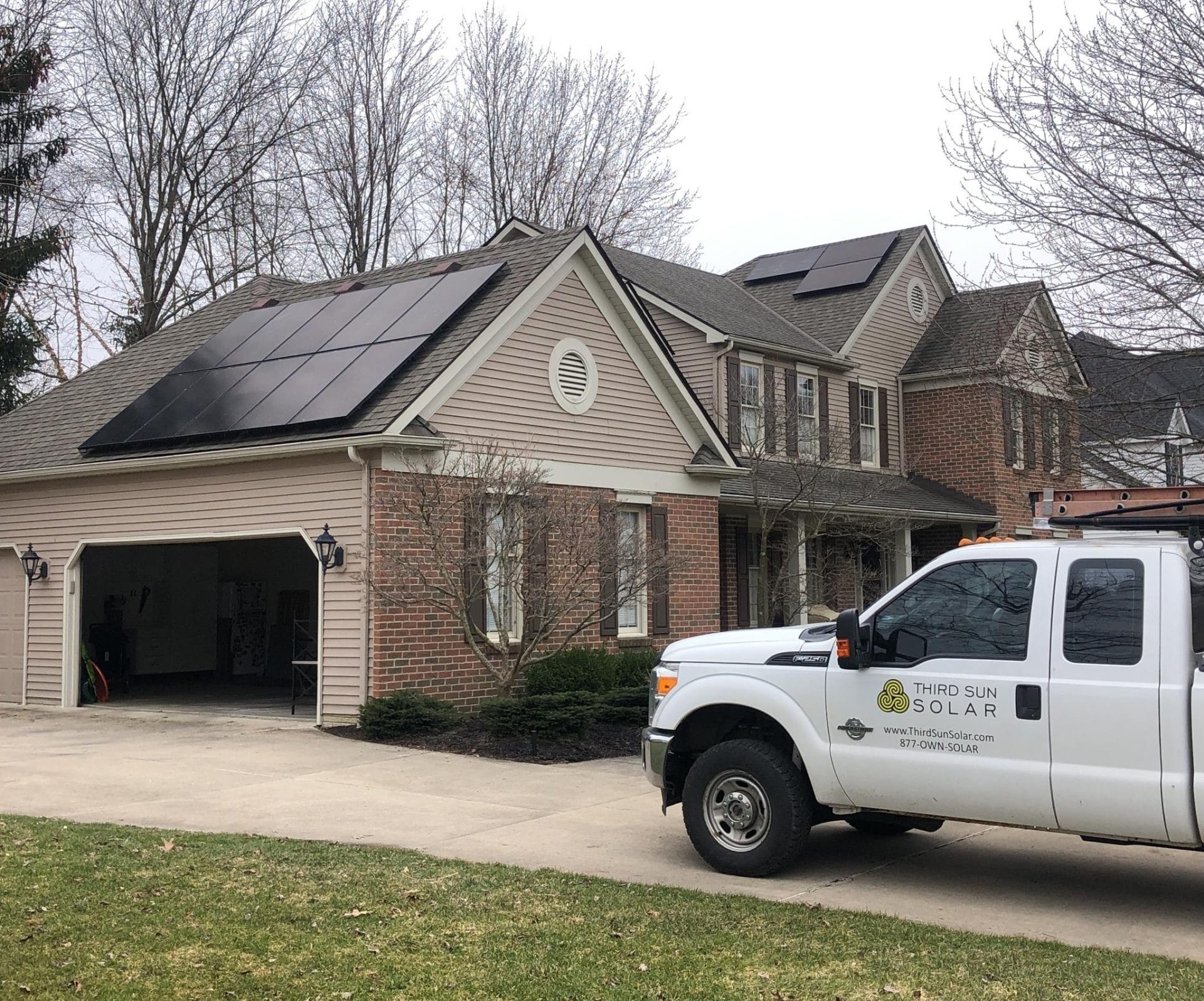
Westlake, Ohio Case Study
Ohio Community Solar
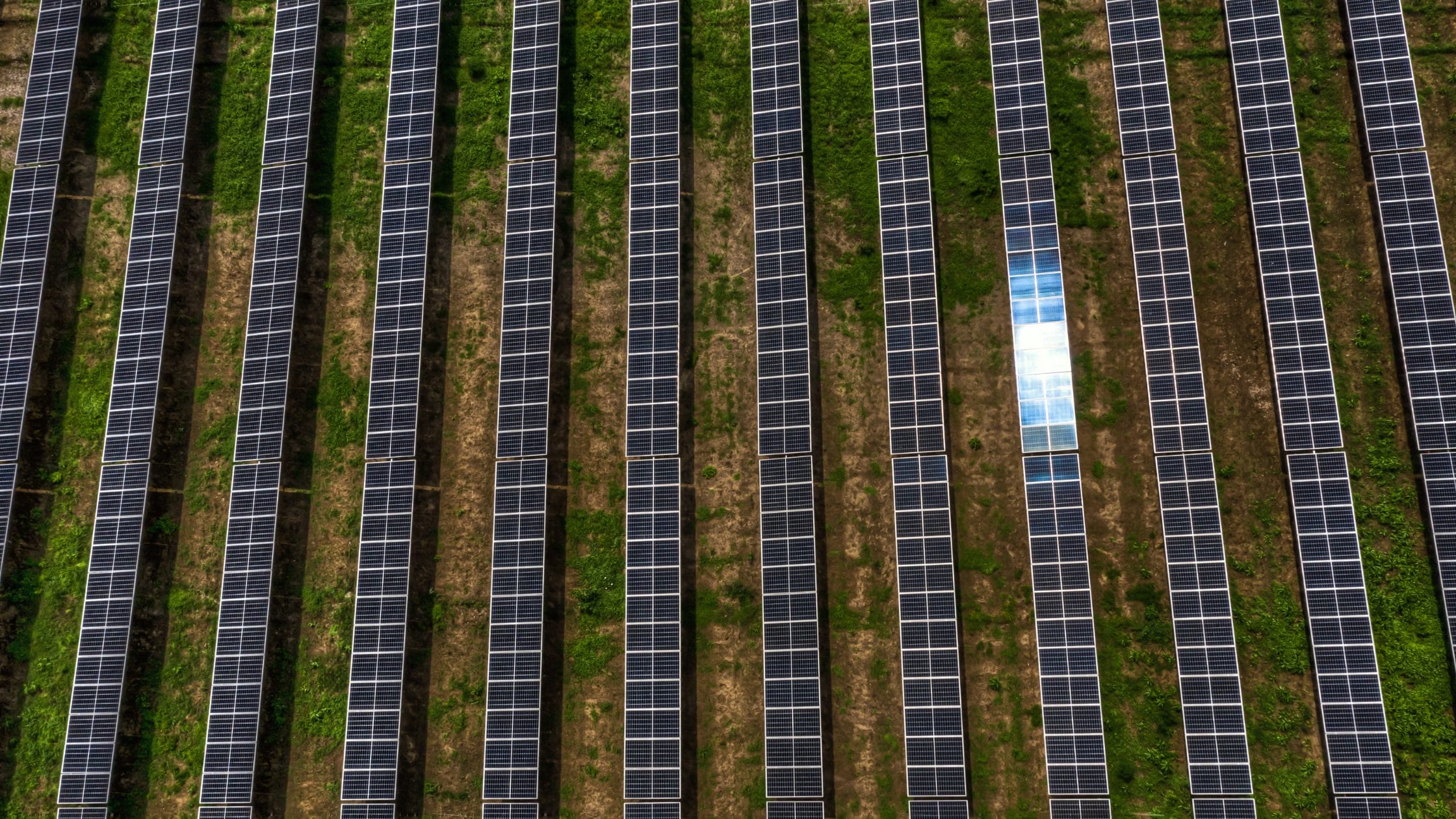
What is Community Solar?
In Ohio Community Solar is a program that allows individuals to share the benefits of solar that they may not be able to achieve with a single solar energy system.
Community Solar was designed to provide solar energy to people who are unable to install solar on their properties for whatever reason that may be – maybe they rent their home or don’t have enough available sunny space on their rooftop to get a solar panel system that meets 100% of their energy needs.
Whatever the case, Community Solar gives individuals the opportunity to own their renewable energy system, while getting credit on their electric bill.
How does it work?
Community Solar projects create electricity from the sunlight and that electricity flows into the utility grid, share owners then sell the energy generated back to the local utility company.
There are two models for Community Solar: Ownership and Subscription
Subscription:
With a subscription community Solar model, a solar field is owned and operated by a third party developer. This means they will receive some of the financial benefit. Community Solar members pay for a share of the electricity that is generated by their project, they will then receive a credit from the dollar value generated by the project. Members can be given a certain number of solar panels in the project or they purchase a certain amount of electricity.
Ownership:
When you purchase a number of panels, this is called an ownership model. If you are under an ownership model you will receive credits based on panels that you own in the project, which can save you money on your electric bill. The full benefits – tax benefits and electric savings – go to the owners of the solar field. This is an owned asset for the member-owners.
Why is Community Solar an option?
Community Solar gives everyone the opportunity to have the benefits of solar energy, even if/when they’re unable to have a system of their own.
It gives individuals the chance to save on their electric bills, lock in their electricity rates, help the community earn money and create jobs.
Pros of Community Solar
- It can be used by individuals whose homes have too much shading to go solar
- It can be used by homeowners whose roofs or home orientation make solar infeasible
- Community Solar is great for businesses who are leasing their buildings
- It makes solar accessible to people who own condos, townhomes, renters or people living in HOA’s with restrictions on solar.
- Contributes to the resilience of the Ohio utility grid by diversifying sources of electricity
- Subscribers receive similar benefits to homeowners who have gone solar
Cons of Community Solar
- It is not yet available in Ohio!
Community Solar in Ohio: Update 5/20/2025, Community Solar Left Out of Final Ohio Energy Bill
Ohio lawmakers passed major energy legislation on April 30, 2025, in which the provision for the community solar pilot program did not make it into the final bill.
Earlier versions of the bill included a community solar pilot program aimed at expanding access to solar through shared arrays. This program would have enabled renters and those without suitable rooftops to participate in solar energy and reduce their energy bills.
While community solar wasn’t included this time, advocates remain committed to bringing it back to the table in future policy efforts.
Kokosing Solar remains committed to expanding access to renewable, affordable energy across Ohio — and we’ll continue to support community solar efforts that give more people the power to benefit from the sun.
9 Reasons to Go Solar
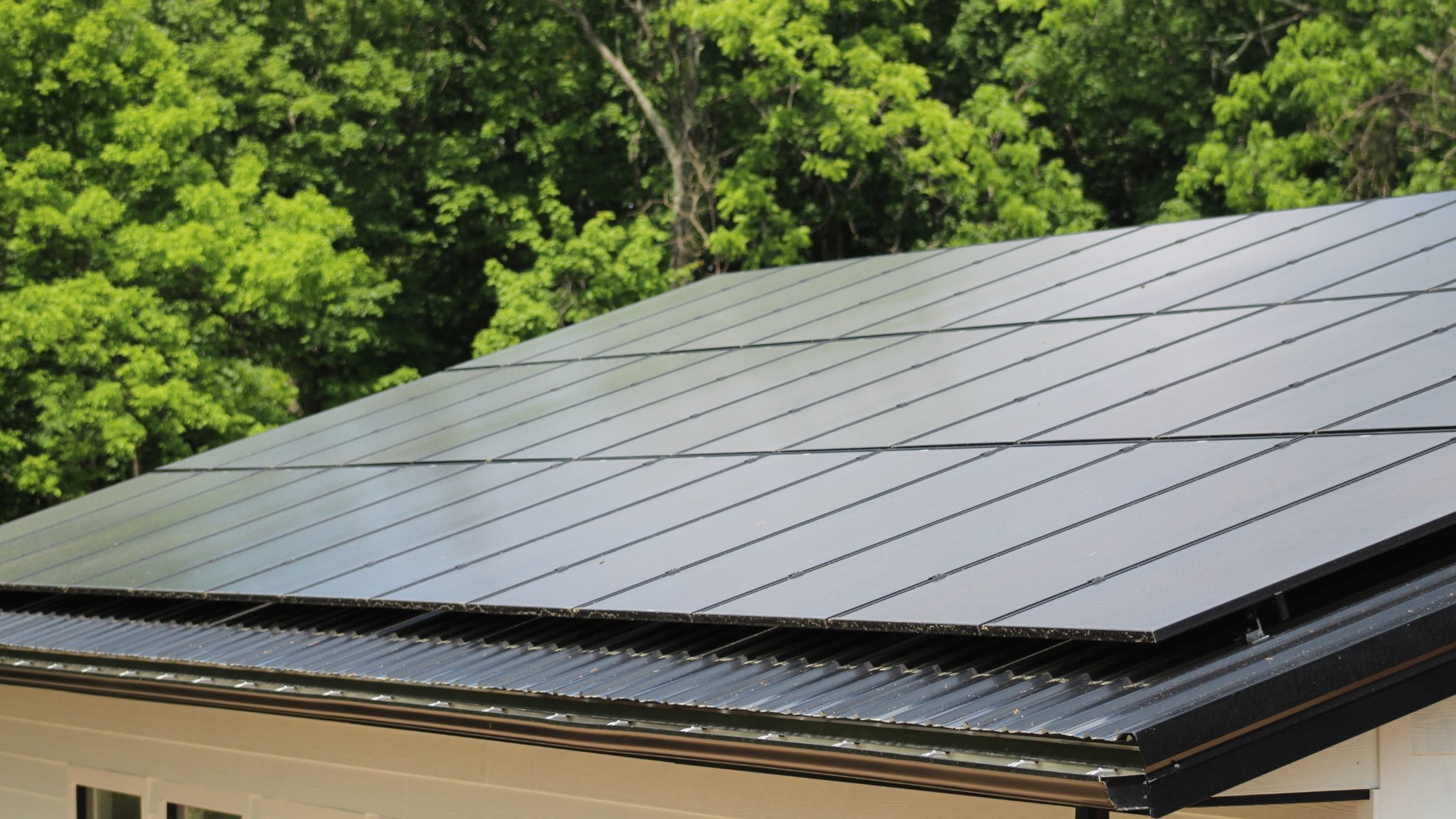
Thinking about going solar but you’re just not sure yet? Here are just a few reasons to switch to clean, renewable energy!
1. Benefits the Environment
Although saving money by eliminating your electricity bill is nice, going solar is more than that. Going solar can reduce your carbon footprint majorly – instead of pulling from the grid and purchasing carbon-emitting electricity, you can pull directly from your solar panels and produce clean, renewable energy.
Think of it like this, for every one residential solar system, we’re eliminating 3-4 tons of carbon emissions, that’s nearly 100 trees being planted a year!
When you go solar, you’re making a leap in the right direction by battling climate change and building a more sustainable future.
2. Financial Savings
Going solar can decrease or even eliminate your electricity bills. By going solar you’ll be able to generate your own power for free for the entirety of your system’s lifespan.
Even on cloudy days your solar panels can absorb energy from both direct and indirect sunlight.
Solar panels can set the price you pay for electricity lower than what you would be paying if you were getting all of your energy from the grid, roughly 8 cents per kWh, the average being 16.6 cents per kWh.
3. Energy Independence
When going solar you become less dependent on the grid. By being less dependent on the grid, the chance of losing power and the risk of an increased utility bill will decrease. When you have solar, you can produce your own electricity and have more control of your consumption and cost.
4. Government Incentives
Ohio residents going solar can receive tax credits on their solar PV systems. Some incentives available in Ohio for 2024 are the Federal Solar Tax Credit & $0 down financing options.
5. Increased Property Value
On average, homes with solar panels sell for 4.1% more than homes without solar. The value the solar panels add to the home gives real estate agents and sellers the opportunity to bump the price up for a home. The buyers benefit from the energy-efficient home, and the sellers can profit from this increased value.
6. Job Creation
The solar industry provides multiple jobs in manufacturing, installation, maintenance, sales, and research and development, making it a major source of employment. With each Solar project, individuals find meaningful work that pushes for a cleaner, more sustainable future.
7. Global Impact
On a larger scale, transitioning to solar energy can yield significant global advantages, such as reducing greenhouse gas emissions, minimizing the impact of climate change, and encouraging international collaboration on clean energy solutions.
8. Education
Solar can create an opportunity for education and awareness within communities. Places like schools, universities, and community centers can use solar energy as a teaching point on renewable energy, environmental responsibility, and sustainable living.
9. Resilience during outages
Solar can be a reliable source for electricity during grid outages, making sure that your essential appliances and devices remain up and running even when the grid fails – when adding a battery to your system your home can conserve your electricity supply at night or even during extended outages.
Investing in solar is a commitment to a brighter and more sustainable future. If you’re considering a solar panel installation in Ohio – reach out! We welcome the opportunity to speak with you about your ideas, goals and space for your solar energy project.
Kathryn Bigler, Lead Solar Designer

Kathryn Bigler
- Kathryn is a Lead Solar Designer
- A fun fact about Kathryn is that she is legally blind, which is interesting due to her detailed work!
- She has been with the company for 4 years!
Can you tell me about your role as a Lead Solar Designer at Kokosing?
- “I am a designer. I design the plan sets and ensure they’ll function electrically and structurally.”
How did you get into the Solar industry?
- “I went to school for drafting. I originally wanted to go into architecture and focus on sustainability, and I saw that I needed to understand electricity for sustainability to make sense to me. So, I got lucky and saw that there was a position open. I took it on, and it has been 4 years now.”
What is interesting about your role?
- “There’s a lot of change—my work is consistently changing because there are different jurisdictions and utility companies with different rules, so I am constantly learning and adapting. And I like that.”
How does your role help in keeping the company successful?
- “The industry is constantly changing. I have to learn new technologies and see how we can implement them in the company. Every job is permitted and inspected so I have to make sure that the plan sets are drawn to the manufacturers’ specifications and the national electric code for us to even, for the project to happen. My role is to ensure it passes inspection and design the system to function well. ”
What does a typical day look like for your position?
- “So, I review what the sales team created as far as contracted jobs go, I review site visits, and then I design the plan set based on those constraints and constraints existing at the house. I also do some estimating, so I consult the sales team if they have questions or concerns. I look at new products for us to sell and support our service department with troubleshooting issues.”
What’s the best thing about working for Kokosing? What stands out?
- “Having reliable coworkers, that’s really great, having a great leadership team that supports me, they make me feel heard and valued. It’s really cool that it’s family-owned and union-strong and still growing, and the growth is sustainable. That’s really cool. I would call them a powerhouse and feel really happy about being a part of it.”
How would you describe Kokosing’s culture?
- “Fair, practical, it all makes a lot of since I think, yeah, there’s no funny business, it all just makes sense.”
How does Kokosing align with your personal values?
- “I just think it’s very fair and practical. My values are about keeping myself happy, healthy and successful and I think Kokosing does the same. They want safety, so there’s the success aspect. They want to give to the community. I just think that all those things just make a lot of sense.”
Do I need batteries if I go solar?

What Are Solar Batteries?
Solar batteries store energy that is generated by your panels and keep it for when you need it. Do I need batteries if I go solar? During a power outage or at night, your batteries feed energy into your home. Whether the batteries power just some small, light loads or your entire house depends on your goals and budget!
There are two primary types of solar batteries: Lead-acid and lithium-ion. The most common type of battery used to be Lead-Acid. Though low energy density and cannot hold much energy, they are both cost effective and reliable. Today, Lithium-Ion batteries rule the market, due to their high energy density, light weight and high efficiency. With these batteries’ users are able to access more stored energy before a recharge.
How do batteries work?
For the solar batteries to work, you must have the right equipment.
The first piece of equipment you’ll need for your battery is the battery bank itself. Think of battery banks like the batteries that are in our phones and other electronics. The next piece is an inverter, the inverter acts as a distribution point, it can charge or drain your battery. It then converts the electricity to send to your electric panels. A backup subpanel isolates your backup system from the grid in case of a power outage. Next is a meter, a meter measures the energy you feed and pull from the grid, any extra energy that you don’t use, your meter runs it backward and when you pull from the grid, your meter runs forward, this is called net energy metering.
The Pros of Solar Batteries
By having batteries, you can save excess energy you produce. You’re producing so much energy, even more than you nee, instead of sending it back to the grid to power local homes, you store it. By obtaining a solar battery you’ll be able to store the extra energy instead of sending it back out to the grid. Solar batteries are great for emergencies, knowing that you’ll have the power you need when the grid goes down. With a solar battery you can store your power during the day, and it will be available at night, and if your battery bank is big enough, it will keep things running for the entire night.
Do I need batteries when I go solar?
The short answer is no, you don’t need batteries if you go solar but they are helpful and they do come with many benefits. Installing a solar battery comes with grid independence, energy security, and lower monthly electricity bills.
What are solar batteries?
Solar batteries store energy generated by your panels for use when you actually need it, for times like thunder storms and other natural disasters that result in power outages, or for days when your panels aren’t receiving enough sunlight for production, essentially making it to where your home is somewhat immune from a power outage.
The benefits of using a solar battery
Energy independence: Installing a solar battery means the less you have to rely on utility. A solar battery will help keep your lights on and phones charged during a power outage. Without a battery, your solar panels will stop producing electricity when the power goes out to prevent feedback to the grid—adding a battery to your system will enable your solar PV system to go into “islanding” mode and become it’s own grid while the power is down.
Reduce your carbon footprint: When you install a solar battery, you can use all of the clean energy that your panels produce. Without a battery, the electricity your home uses in the evenings or during the shorter winter days will be pulled from the traditional energy grid.
How do I know if solar is right for my home?
If you live some place that is prone to natural disasters and power outages or have critical appliances in your home, a solar battery is a great idea. This will also help in maximizing how much renewable energy your home uses.
Solar batteries aren’t for everyone, however, so it’s important to understand if your goals align with this investment, as they are just that, an investment!
Emily Nungesser, Solar Service Coordinator
Emily Nungesser, Solar Service Coordinator
- Emily’s master’s research on food waste and anaerobic digestion was published in a scientific, peer-reviewed journal!
- She has been with Kokosing for two years!
Can you tell me about your role at Kokosing?
- “My official title is Solar Service Coordinator for Kokosing Solar, so the big picture is that I coordinate our solar technicians’ schedules to assist customers when they need service or maintenance on their solar systems, and then file for potential warranty claims, invoicing, and put together Operations and Maintenance contracts for larger clients.”
How did you get into the solar industry?
- “I completed my master’s degree in Athens, Ohio, at OU in Environmental Studies in 2021, and my area of research was renewable energy, specifically biofuels. I knew I wanted to stay in the region if possible because Appalachia is gorgeous and full of potential! I also had a little bit of previous sales experience in Columbus and saw that Third Sun Solar was hiring a sales Consultant for the central Ohio region. And things kind of fell into place from there. A position in Service opened, and I knew I wanted to flex more of my technical skills, so I moved into this more exciting role a little less than a year ago.”
What is interesting about your role?
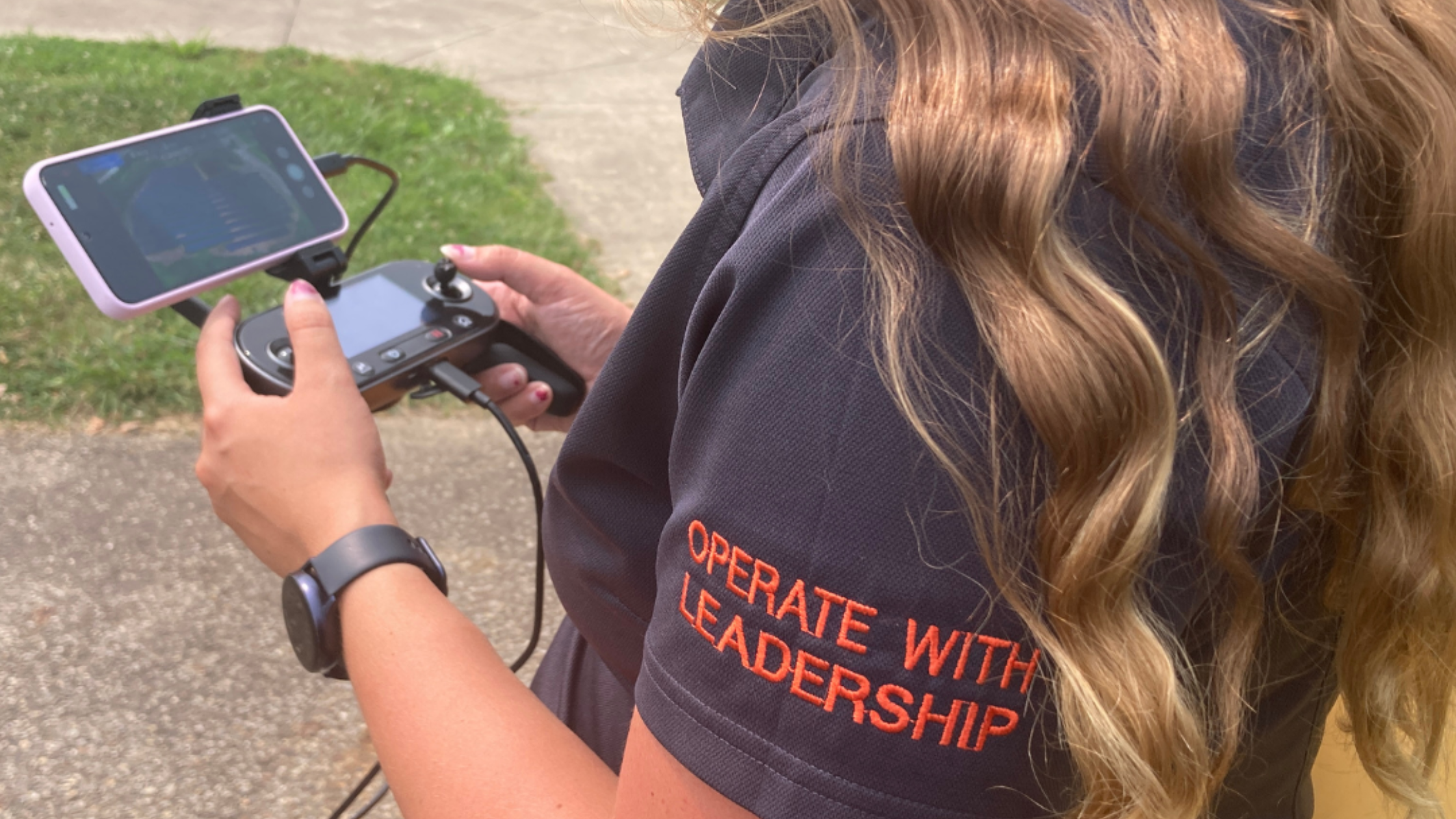
- “I also have my drone license, which you need if you are going to fly a drone for commercial reasons. Kokosing Solar bought a couple of drones recently, and I get to fly them over rooftops to capture pictures and videos. Not just for marketing purposes, but to also create a 3D model of the rooftops so we can more efficiently design solar systems without needing to spend hours measuring rooftops. That has been a blast, getting me out of the office when I can.”
Why is your role important at Kokosing Solar?
- “One of our department’s goals is to stress the importance of service after customers sign contracts. While solar systems are designed to be virtually maintenance-free throughout its 30+ years of operation, there may be instances where the homeowner needs a new roof, which means uninstalling the solar system and reinstalling it after the roof has been replaced. Or the customer changed their internet provider or router, and they need assistance in getting their system to communicate with their monitoring platform again. Service after the fact is an extremely important consideration when choosing the right installer to begin with, and I’m happy to say our department is one of the best in Ohio in keeping customers happy long after they sign their contract. And happy customers drive the success of any company!”
What does a typical day look like for your position?
- “This is difficult as every day can be very different, I try to get out of the office when I can to either fly the drone or learn in the field alongside our more experienced technicians. But I do answer the phones and emails whenever a customer has a service question, and if we need to dispatch a technician, I coordinate those schedules and log them in our system. If there is a service we charge for, I also create those invoices and file for warranty claims.”
What’s the best thing about working at Kokosing? What stands out about the company?
- “The best thing would be the amazing people and the support—I wouldn’t be successful in my role without everyone’s generous help. I’m really just getting started in this industry and trying to soak up everything I can, but there’s a lot to learn and I’m glad I have a great team to guide me through it.”
How would you describe Kokosing’s culture?
- “Again, I’ll go back to the previous question and talk about one of Kokosing’s core values which is having concern for the wellbeing of every team member. The atmosphere of being able to voice my concerns when I have them and being heard is so important. Safety is also an important aspect of our culture as well, because you can’t have concern for everyone’s wellbeing if you’re not considering safety, and Kokosing is great about prioritizing the health of our teammates.”
How does Kokosing align with your personal values?
- “I am very passionate about being a steward of the Earth, meaning leaving it a better place than when I found it. It was a game changer to have such a large company like Kokosing get into the renewable energy industry—this shows society that environmental responsibility needs to be taken seriously If future generations are to enjoy all the benefits the earth has to offer just like us.”
When is the best time to shop for solar?
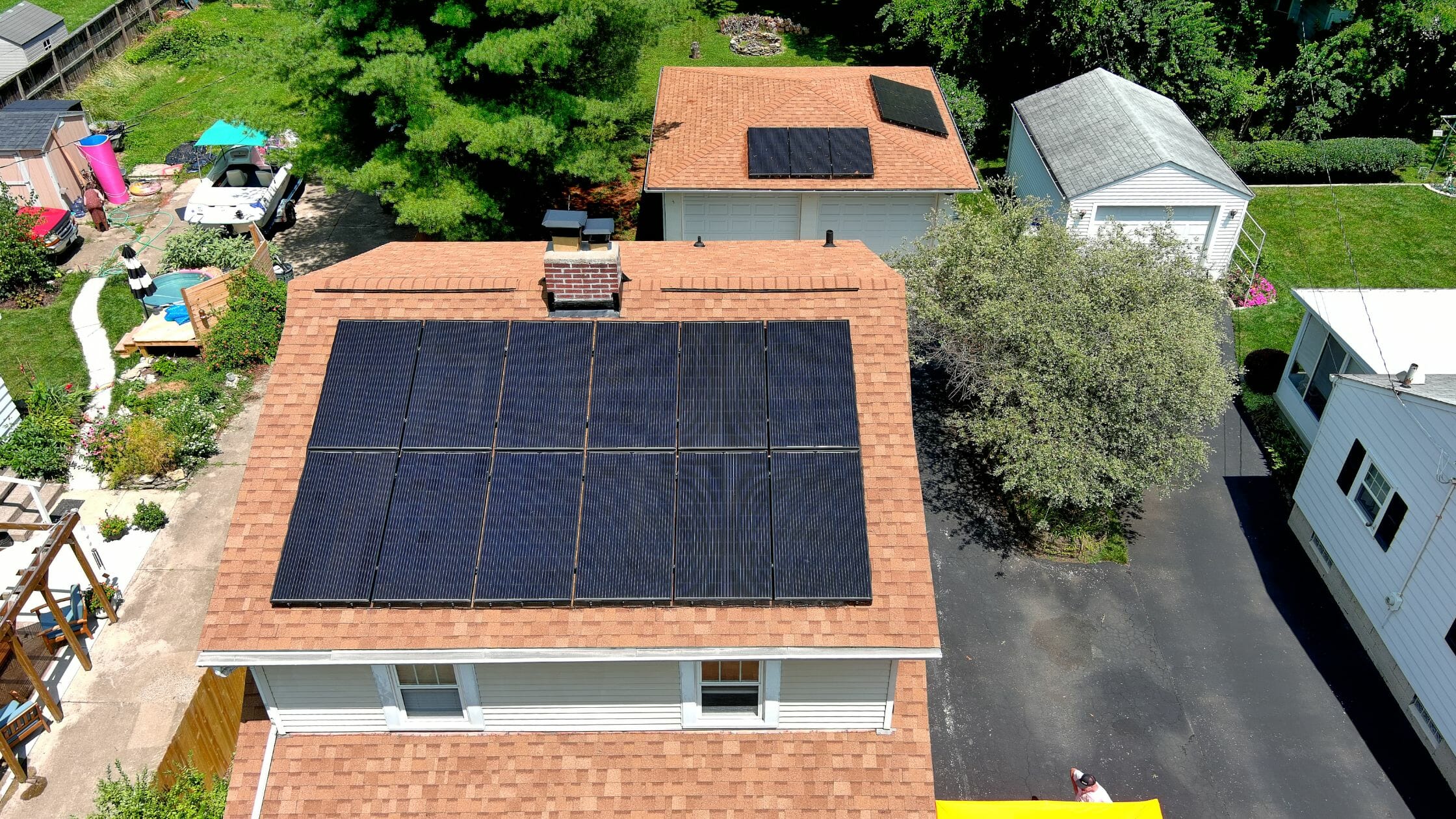
When is the best time to shop for solar? The best time to go solar is when you’re ready!
If you’re asking yourself “Should I go solar?” the answer is yes, if you’re ready. Right now is a great time to go solar. The cost of solar installation continues to decrease. To install a residential solar system today, it will cost you almost 13 percent less than it did five years ago.
You are probably conflicted between going solar now or if you should wait. You might be reading about the prices going lower and lower which might make you second guess yourself on whether or not you want to jump right into it now or wait.
Installing at the right time for you
Something to think of before going solar is what you will pay upfront for the solar panel system itself. With the decreasing price of solar, a 6-kilowatt system can cost roughly $16,000 without adding tax credits and rebates. If these prices continue to decrease you’re looking at saving about $150 on your system by just putting solar off for another year, as time goes on your savings will increase. On the other hand, the more you delay going solar is another year you miss out on the financial benefits that solar can provide for you. Your savings from switching to solar may outweigh how much you’re saving by waiting.
Increased Electricity
How would you feel about not paying an electric bill each month?
If you go solar, this is possible!
When you wait to go solar, this means paying an electric bill every month, with the cost of electric increasing this puts you in an expensive situation. In the last 10 years, electricity prices have risen over 20%. In 2023, Ohio utilities introduced new rates that will bring monthly costs up by approximately 30% more.
In the typical home, the electricity bill can cost up to $1,400 a year. Say you install a system that covers 100 percent of your electricity, after a year you would have essentially saved $1,400. As time goes on and when prices go up, you’ll save more and more as your system operates. This can be up to 25-35 years! When you think about it, each year you wait to install solar, it’s another year you’re missing out on that savings!
Financial Incentives
Incentives, tax credits and rebates are great and help encourage homeowners to go solar, but there is a downside to them. As solar gets more and more popular, the credit begins to decrease. Right now, the ITC credit is at 30%, it will continue to decrease and eventually ease off all together.
When is the best time to shop for solar?
By waiting to go solar you could be missing out on great opportunity for an easy way to make thousands of dollars from your solar energy system.
Before you decide you want to wait to go solar, check out the incentives that are available to you and figure out if putting off solar is the smartest decision for you.