Why We’re Partnering with Women for Recovery

We’re partnering with Women for Recovery this holiday season to use our business as a force for good – a central goal in our business- while supporting their mission to provide stable, safe, reliable housing to those in recovery.

We chose Women for Recovery to support their honorable work. Third Sun Solar believes that everyone has the right to a healthy environment and a brighter future.

The need is great

In 2016 a group of local stakeholders convened to address the need for recovery housing for women with substance abuse issues in Athens County. They affirmed that the need is critical. A call to action ensued. Stakeholders working on the project are comprised of local woman with experience in the recovery community and are personally familiar with individuals in recovery.

The project is budding

Women for Recovery became a 501c3 nonprofit organization in March 2017 and closed in July on their primary location: Serenity Grove. Located just outside the city of Athens and nestled among stately oak, hickory and chestnut trees, the house can accommodate up to eight women in a safe, secure, and sober environment. At Serenity Grove, women dedicated to the eventual goal of transitioning back into independent living will hone the skills necessary to live free of drugs and alcohol.

Feel Good about your power

We come to solar with a lot of heart. So do our customers, advocates, solar champions and partners. A commitment to better communities, care for our neighbors, and the desire to make the world a better place for generations to come is why we choose solar every day.

We know that, for many people, solar means cost savings and modern solutions. Solar also allows us to power our lives with clean, healthy, renewable energy. We’re happy to pass along this gift to Serenity Grove. Through the efforts of hardworking individuals, their residential facility has been made a space of comfort and recovery – soon to be powered by the sun!

[av_gallery ids=’6313,6312′ style=’thumbnails’ preview_size=’portfolio’ crop_big_preview_thumbnail=’avia-gallery-big-crop-thumb’ thumb_size=’portfolio’ columns=’2′ imagelink=’lightbox’ lazyload=’avia_lazyload’ av_uid=’av-2pm5hz’ admin_preview_bg=”]

Why We’re Partnering with Women for Recovery

We’re partnering with Women for Recovery this holiday season to use our business as a force for good – a central goal in our business- while supporting their mission to provide stable, safe, reliable housing to those in recovery.

We chose Women for Recovery to support their honorable work. Third Sun Solar believes that everyone has the right to a healthy environment and a brighter future.

The need is great

In 2016 a group of local stakeholders convened to address the need for recovery housing for women with substance abuse issues in Athens County. They affirmed that the need is critical. A call to action ensued. Stakeholders working on the project are comprised of local woman with experience in the recovery community and are personally familiar with individuals in recovery.

The project is budding

Women for Recovery became a 501c3 nonprofit organization in March 2017 and closed in July on their primary location: Serenity Grove. Located just outside the city of Athens and nestled among stately oak, hickory and chestnut trees, the house can accommodate up to eight women in a safe, secure, and sober environment. At Serenity Grove, women dedicated to the eventual goal of transitioning back into independent living will hone the skills necessary to live free of drugs and alcohol.

Feel Good about your power

We come to solar with a lot of heart. So do our customers, advocates, solar champions and partners. A commitment to better communities, care for our neighbors, and the desire to make the world a better place for generations to come is why we choose solar every day.

We know that, for many people, solar means cost savings and modern solutions. Solar also allows us to power our lives with clean, healthy, renewable energy. We’re happy to pass along this gift to Serenity Grove. Through the efforts of hardworking individuals, their residential facility has been made a space of comfort and recovery – soon to be powered by the sun!

From green-minded business owners to political activists: an industry shift in the Midwest

Third Sun Solar in the news: Solar Power World spoke with our Geoff Greenfield, who give a snapshot into the state of sustainability in 2019 in Ohio.

Read the full story here.

Posted in Uncategorized

From green-minded business owners to political activists: an industry shift in the Midwest

Third Sun Solar in the news: Solar Power World spoke with our Geoff Greenfield, who give a snapshot into the state of sustainability in 2019 in Ohio.

Read the full story here.

Solar Panel Installations to Save Cuyahoga County Money

Solar Part of Cuyahoga County’s Sustainability Plan

Medical Examiner’s Office, Animal Shelter and Harvard Road Garage to See Energy Savings


CUYAHOGA COUNTY, OH — The Cuyahoga County Department of Sustainability, in partnership with AEP Onsite Partners, LLC, is bringing energy savings to the County through the installation of solar panels on three County buildings.


The following properties have or will have solar panels installed:

  1. The Cuyahoga County Animal Shelter located at 9500 Sweet Valley Dr., Valley View 44125
  2. The Cuyahoga County Medical Examiner’s Office located at 11001 Cedar Ave., Cleveland 44106
  3. The Cuyahoga County Harvard Road Garage located at 2501 Harvard Ave., Newburgh Heights 44105


“As part of the County’s Climate Change Action Plan, we have committed to adding more renewable energy into both our properties and the local grid as a whole,” said County Executive Armond Budish. “We want to provide energy savings at all levels of the County, and with inaction at the federal level, local governments have a greater responsibility to step up and act.”


Two-hundred and twenty-two solar panels have been installed at the Animal Shelter. The Medical Examiner’s Office is currently having 488 solar panels installed. Roof repairs on the Harvard Road Garage are currently being conducted, then 1,948 panels will be installed.


All installations should be completed by Spring 2020. The solar panels are expected to yield a total of 1,147,000 kwh of energy. The panels would account for 13 percent of the total load for the Animal Shelter, three percent for the Medical Examiner’s Office and 25-30 percent for the Harvard Road Garage.


Last Monday, Lakewood approved legislation to join the County’s power purchasing agreement and add solar panels to four municipal buildings. Cleveland Heights anticipates introducing similar legislation within the next two or three months.


“The work we are doing at the County level is achievable and can be done at the local level as well,” said Director of Sustainability, Mike Foley. “We’re encouraging businesses and communities to learn about the benefits of solar and potentially join our power purchasing agreement for further energy savings, just like Lakewood did.”


“AEP OnSite Partners collaborates with communities and businesses to put in place advanced, clean energy resources in a way that is both affordable and hassle free. This project will enable Cuyahoga County to add sustainable, low-cost energy to help meet their power needs without requiring them to own or maintain a solar system,” said AEP OnSite Partners Chief Operating Officer, Joel Jansen. “Providing advanced energy solutions, like solar installations, is the type of innovative, customer-focused approach that AEP OnSite Partners can provide to help communities be more sustainable.”


Solar During a Power Outage: How It Works

Solar During a Power Outage

When you install a solar energy system, you might expect that the lights will stay on when the power goes out because you’re generating your own power. Unfortunately, this isn’t the case.

With grid tied solar systems, any excess power you create will be stored in the utility grid. The grid is sort of like a big battery, you send power to it when you have excess and take energy from it when you need more. Because of this connection, when grid power goes out – so does yours. This keeps electricity from leaking onto the grid lines and putting folks working to correct the issue in harm’s way.

To get power during a grid blackout, you will need a grid tied solar system with battery backup. When the grid is up and working, the system functions like a normal grid tied solar system. Some of the electricity your solar system produces will top off your batteries. In the case of grid failure, the batteries kick in to keep the lights on.

A solar system with battery backup costs more than your traditional grid tied solar system but having power during a blackout can be invaluable to some. Any home that already has solar panels, is battery backup ready.

You are a good candidate for a backup battery system if you:

  • Want to know that you will have seamless energy when the grid is down
  • Experience frequent power outages
  • Experience extreme weather conditions
  • Have critical appliances at your home

Power Outages Becoming Increasingly Common

Unfortunately, we’re seeing power outages becoming more common place as more and more people are in the path of severe weather patterns. In some places power companies are preemptively shutting down the grid when they anticipate a blackout.

The good news is that there are solutions to grid failures through battery and solar battery storage.

Tesla Powerwall: Home Battery Storage

Powerwall is a home battery system that turns your home’s solar panels into an all-day resource. Daily it increases your self-consumption of solar. In the event of an outage, it offers reliable home backup power. With Powerwall, more of your home’s electricity use will come from solar, which enhances solar functionality, reduces energy costs and provides peace of mind to homeowners.

Powerwall allows you to store 14 kWh of energy and use that energy to run your home with solar during the night and back up your home in the event of a power outage.

The technology withing Powerwall is able to detect a grid outage, disconnect from the grid and bring power back to your home in a fraction of a second. That is over 100x faster than typical standby generators, and fast enough to keep your appliances running without interruption. You will not have to reset your clocks or your alarm. Powerwall can provide backup to your entire home. However, depending on the type of appliances at your home, we may recommend an essential load backup instead of whole home backup. Read more about Tesla here.

Right Sizing Your Backup System:

Whole Home Backup

If you’re interested in whole home backup, our Solar Designers can analyze your homes electric use patterns and the recommended number of Powerwall’s needed to keep all loads running. In some cases, an upgrade to your electrical panel may be needed and we will advise you if this is the case. You can add more Powerwall’s to keep your house operational longer during an outage.

Essential Load Backup

If your electrical situation doesn’t require whole home backup, we can backup select essential loads. Since lights and outlets require less energy, a single Powerwall will typically be enough.

In summary, during a grid blackout, power from your solar system won’t be available for you to use unless you have a backup battery system. If you’re interested to learn more about solar or battery back-up, give us a call today! 1-877-OWN-SOLAR.


https://kokosingsolar.com/residential/does-solar-work-in-a-blackout/

How To: Take Advantage of Solar Tax Credits Before They Expire

The federal solar tax credit is stepping down over the next few years. If you’re a home or business owner you should be thinking about moving quickly to take advantage of the savings the tax credit offers.

Homeowners must have permission to operate their system by their utility company, which is the last step in your solar installation, by December 31 to receive that year’s tax credit.

The IRS states the system must be fully operational, or “placed in service.”

The tax credit drops from 30 percent in 2019 to 26 percent in 2020 and 22 percent in 2021.

Read more about the Federal Solar Tax Credit Phase-down for Residential Solar Energy Systems from the Solar Energy Industries Association here.

Get started with a free, no obligation solar estimate to find out about the benefits of clean, affordable solar energy!

Here is the tax form for you to bring with you when you meet with your accountant or finance professional.

How To: Take Advantage of Solar Tax Credits Before They Expire

The federal solar tax credit is stepping down over the next few years. If you’re a home or business owner you should be thinking about moving quickly to take advantage of the savings the tax credit offers.

Homeowners must have permission to operate their system by their utility company, which is the last step in your solar installation, by December 31 to receive that year’s tax credit.

The IRS states the system must be fully operational, or “placed in service.”

[av_image src=’https://kokosingsolar.com/wp-content/uploads/2019/10/Federal-Tax-Credit-step-down.png’ attachment=’6175′ attachment_size=’full’ align=’center’ styling=” hover=” link=” target=” caption=” font_size=” appearance=” overlay_opacity=’0.4′ overlay_color=’#000000′ overlay_text_color=’#ffffff’ copyright=” animation=’no-animation’ av_uid=’av-33bc0u’ admin_preview_bg=”][/av_image]

The tax credit drops from 30 percent in 2019 to 26 percent in 2020 and 22 percent in 2021.

Read more about the Federal Solar Tax Credit Phase-down for Residential Solar Energy Systems from the Solar Energy Industries Association here.

Get started with a free, no obligation solar estimate to find out about the benefits of clean, affordable solar energy!

Here is the tax form for you to bring with you when you meet with your accountant or finance professional.

Lithium Ion Batteries & New Advancements in Solar Storage

This week we celebrate advancements in the field of lithium-ion battery storage, with The Nobel Prize in Chemistry 2019 awarded to John B. Goodenough, M. Stanley Whittingham, Akira Yoshino “for the development of lithium-ion batteries.” These batteries are the central technology in contemporary solar storage. While Lithium-Ion batteries are used in devices of all types, they have enabled huge developments in fossil-free energy storage. They have also enabled the development of long range electric cars.

Join Solar Designer, Jack Hadley as he discusses solar batteries, why solar batteries are useful and what makes Tesla Powerwall different.

What type of home needs solar batteries?

While solar batteries add to the cost of your solar project and lessen the ROI, some households find they are worth the investment. You should consider batteries for your solar system if…

  • Your home is remote and isn’t tied into the utility grid;
  • You experience frequent power outages;
  • You have critical appliances; or
  • You experience extreme weather conditions

Lithium Ion Batteries & New Advancements in Solar Storage

This week we celebrate advancements in the field of lithium-ion battery storage, with The Nobel Prize in Chemistry 2019 awarded to John B. Goodenough, M. Stanley Whittingham, Akira Yoshino “for the development of lithium-ion batteries.” These batteries are the central technology in contemporary solar storage. While Lithium-Ion batteries are used in devices of all types, they have enabled huge developments in fossil-free energy storage. They have also enabled the development of long range electric cars.

Join Solar Designer, Jack Hadley as he discusses solar batteries, why solar batteries are useful and what makes Tesla Powerwall different.

What type of home needs solar batteries?

While solar batteries add to the cost of your solar project and lessen the ROI, some households find they are worth the investment. You should consider batteries for your solar system if…

  • Your home is remote and isn’t tied into the utility grid;
  • You experience frequent power outages;
  • You have critical appliances; or
  • You experience extreme weather conditions

Learn more or to sign up to chat with a solar & Powerwall expert…

[av_button label=’Tesla Powerwall’ link=’manually,https://kokosingsolar.com/certified-tesla-powerwall/’ link_target=” size=’large’ position=’center’ label_display=” icon_select=’no’ icon=’ue800′ font=’entypo-fontello’ color=’dark’ custom_bg=’#444444′ custom_font=’#ffffff’ av_uid=’av-2s0ydi’ admin_preview_bg=”]

Third Sun Solar Homes & Brewery on the National Solar Tour

On October 5 & 6, 2019, hundreds of home and business owners who have gone solar across the United States hosted solar open houses on the National Solar Tour, to share the power of solar energy with their communities. Homeowners welcome members of the community into their homes to see their solar system up close and hear testimonial experience and reasoning for going solar.

For a complete list of participating homes across the states and across Ohio, visit the National Solar Tour Map page here.

Who is participating?

  • The 2019 National Solar Tour brought together solar energy supporters from all across the country and all walks of life.
  • There were more than 800 sites and 70 local solar tours participating across 46 states.

What did attendees learn?

  • Solar open houses are a chance to visit homes and businesses that use solar energy, green building design, energy efficiency, electric vehicles, and other innovative or proven technologies.
  • Tour attendees will be able to see local renewable energy in action. They can ask home and business owners about their systems.
  • The Tour is an opportunity for solar supporters to network with each other for a fun and educational experience.
  • Solar tour visitors will learn about:
    • Reducing electricity costs;
    • Supporting energy independence;
    • Protecting against power outages; and
    • Reducing carbon emissions.

Why Attend?

  • Connect with others who are interested in solar;
  • See a solar system in action;
  • Find answers to your questions;
  • Share stories of your solar journey; and
  • Celebrate the power of solar energy!

Sunbury, Ohio

Event information: https://www.nationalsolartour.org/open-houses/1468/

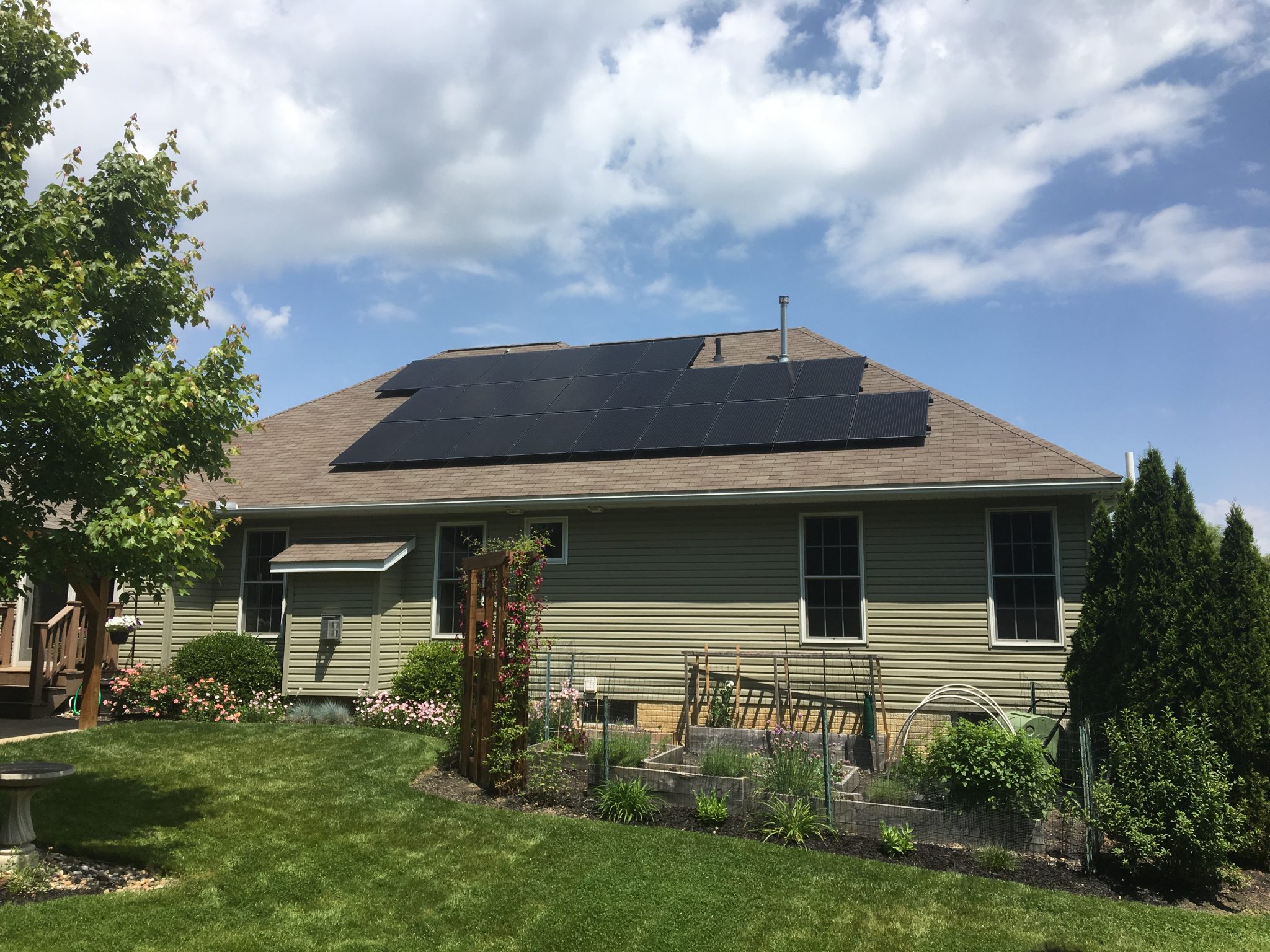
This 28 panel ground mounted array is a 7.5 kW solar system. It offsets the homes energy consumption by 68% and will save the homeowners $62,543 over the lifetime of the system.

Powell, Ohio

Event information: https://www.nationalsolartour.org/open-houses/1314/

Solar homeowner & host, Michael Schaal is a renewable energy advocate and independent solar consultant. While relatively new to commercial solar, Michael has been passionate about renewable energy for many years. His initial interest led him to pursue solar energy for his own home after successfully overturning local homeowner association restrictions on solar. In addition to promoting solar in his neighborhood (3 homes and counting!), Michael is also active regionally with Solar United Neighbors and has presented at their annual conference on overcoming HOA obstacles.

Athens, Ohio

Event information: https://www.nationalsolartour.org/open-houses/1089/

Did you know that Ohio favorite Jackie O’s is a solar powered brewery?

“Our eventual goal is 100 percent sustainability,” said Founder Art Osterike, “A good economy and healthy planet aren’t mutually exclusive and we look forward to working with Third Sun Solar to show that to beer lovers and decision makers across Ohio, the Midwest and the entire country.”

Akron, Ohio

Event information: https://www.nationalsolartour.org/open-houses/535/

43 black on black solar panels make up this 13.5 kW array. The array is offsetting 92% of the home’s energy usage over the course of the year. Over the lifetime of the system, we estimate that these Akron homeowners will save $116,594 in energy costs. Check out the energy & sustainability upgrades the homeowners have made to their home in addition to solar!

Third Sun Solar Homes & Brewery on the National Solar Tour

On October 5 & 6, 2019, hundreds of home and business owners who have gone solar across the United States hosted solar open houses on the National Solar Tour, to share the power of solar energy with their communities. Homeowners welcome members of the community into their homes to see their solar system up close and hear testimonial experience and reasoning for going solar.

For a complete list of participating homes across the states and across Ohio, visit the National Solar Tour Map page here.

Who is participating?

  • The 2019 National Solar Tour brought together solar energy supporters from all across the country and all walks of life.
  • There were more than 800 sites and 70 local solar tours participating across 46 states.

What did attendees learn?

  • Solar open houses are a chance to visit homes and businesses that use solar energy, green building design, energy efficiency, electric vehicles, and other innovative or proven technologies.
  • Tour attendees will be able to see local renewable energy in action. They can ask home and business owners about their systems.
  • The Tour is an opportunity for solar supporters to network with each other for a fun and educational experience.
  • Solar tour visitors will learn about:
    • Reducing electricity costs;
    • Supporting energy independence;
    • Protecting against power outages; and
    • Reducing carbon emissions.

Why Attend?

  • Connect with others who are interested in solar;
  • See a solar system in action;
  • Find answers to your questions;
  • Share stories of your solar journey; and
  • Celebrate the power of solar energy!

[av_hr class=’invisible’ height=’50’ shadow=’no-shadow’ position=’center’ custom_border=’av-border-thin’ custom_width=’50px’ custom_border_color=” custom_margin_top=’30px’ custom_margin_bottom=’30px’ icon_select=’yes’ custom_icon_color=” icon=’ue808′ font=’entypo-fontello’ av_uid=’av-ch2yuu’ admin_preview_bg=”]

Sunbury, Ohio

Event information: https://www.nationalsolartour.org/open-houses/1468/

This 28 panel ground mounted array is a 7.5 kW solar system. It offsets the homes energy consumption by 68% and will save the homeowners $62,543 over the lifetime of the system.

[av_gallery ids=’6087,6088′ style=’thumbnails’ preview_size=’portfolio’ crop_big_preview_thumbnail=’avia-gallery-big-crop-thumb’ thumb_size=’portfolio’ columns=’2′ imagelink=’lightbox’ lazyload=’avia_lazyload’ av_uid=’av-bbjrp2′ admin_preview_bg=”]

[av_hr class=’invisible’ height=’50’ shadow=’no-shadow’ position=’center’ custom_border=’av-border-thin’ custom_width=’50px’ custom_border_color=” custom_margin_top=’30px’ custom_margin_bottom=’30px’ icon_select=’yes’ custom_icon_color=” icon=’ue808′ font=’entypo-fontello’ av_uid=’av-8s8ina’ admin_preview_bg=”]

Powell, Ohio

Event information: https://www.nationalsolartour.org/open-houses/1314/

Solar homeowner & host, Michael Schaal is a renewable energy advocate and independent solar consultant. While relatively new to commercial solar, Michael has been passionate about renewable energy for many years. His initial interest led him to pursue solar energy for his own home after successfully overturning local homeowner association restrictions on solar. In addition to promoting solar in his neighborhood (3 homes and counting!), Michael is also active regionally with Solar United Neighbors and has presented at their annual conference on overcoming HOA obstacles.

Check out his 7.5 kW black on black solar array, learn about Home Owners Associations & get all of your solar questions answered.

[av_gallery ids=’6094,6095,6096,6097′ style=’thumbnails’ preview_size=’portfolio’ crop_big_preview_thumbnail=’avia-gallery-big-crop-thumb’ thumb_size=’portfolio’ columns=’4′ imagelink=’lightbox’ lazyload=’avia_lazyload’ av_uid=’av-7q1rwm’ admin_preview_bg=”]

[av_hr class=’invisible’ height=’50’ shadow=’no-shadow’ position=’center’ custom_border=’av-border-thin’ custom_width=’50px’ custom_border_color=” custom_margin_top=’30px’ custom_margin_bottom=’30px’ icon_select=’yes’ custom_icon_color=” icon=’ue808′ font=’entypo-fontello’ av_uid=’av-5ut2ue’ admin_preview_bg=”]

Athens, Ohio

Event information: https://www.nationalsolartour.org/open-houses/1089/

Did you know that Ohio favorite Jackie O’s is a solar powered brewery?

“Our eventual goal is 100 percent sustainability,” said Founder Art Osterike, “A good economy and healthy planet aren’t mutually exclusive and we look forward to working with Third Sun Solar to show that to beer lovers and decision makers across Ohio, the Midwest and the entire country.”

[av_gallery ids=’6081′ style=’thumbnails’ preview_size=’portfolio’ crop_big_preview_thumbnail=’avia-gallery-big-crop-thumb’ thumb_size=’portfolio’ columns=’2′ imagelink=’lightbox’ lazyload=’avia_lazyload’ av_uid=’av-3u8jx2′ admin_preview_bg=”]

[av_hr class=’invisible’ height=’50’ shadow=’no-shadow’ position=’center’ custom_border=’av-border-thin’ custom_width=’50px’ custom_border_color=” custom_margin_top=’30px’ custom_margin_bottom=’30px’ icon_select=’yes’ custom_icon_color=” icon=’ue808′ font=’entypo-fontello’ av_uid=’av-3xtsp2′ admin_preview_bg=”]

Akron, Ohio

Event information: https://www.nationalsolartour.org/open-houses/535/

43 black on black solar panels make up this 13.5 kW array. The array is offsetting 92% of the home’s energy usage over the course of the year. Over the lifetime of the system, we estimate that these Akron homeowners will save $116,594 in energy costs. Check out the energy & sustainability upgrades the homeowners have made to their home in addition to solar!

[av_gallery ids=’6071,6072′ style=’thumbnails’ preview_size=’portfolio’ crop_big_preview_thumbnail=’avia-gallery-big-crop-thumb’ thumb_size=’portfolio’ columns=’2′ imagelink=’lightbox’ lazyload=’avia_lazyload’ av_uid=’av-2o09za’ admin_preview_bg=”]

[av_hr class=’invisible’ height=’50’ shadow=’no-shadow’ position=’center’ custom_border=’av-border-thin’ custom_width=’50px’ custom_border_color=” custom_margin_top=’30px’ custom_margin_bottom=’30px’ icon_select=’yes’ custom_icon_color=” icon=’ue808′ font=’entypo-fontello’ av_uid=’av-343mgm’ admin_preview_bg=”]

Our Journey to Become a Certified Benefit Cooperation

[av_hr class=’invisible’ height=’50’ shadow=’no-shadow’ position=’center’ custom_border=’av-border-thin’ custom_width=’50px’ custom_border_color=” custom_margin_top=’30px’ custom_margin_bottom=’30px’ icon_select=’yes’ custom_icon_color=” icon=’ue808′ font=’entypo-fontello’ av_uid=’av-ct4zre’ admin_preview_bg=”]

Third Sun Solar is proud to be part of a larger movement which is striving to redefine success in business so all companies compete to not only be the best in the world, but best for the world.

[av_hr class=’invisible’ height=’50’ shadow=’no-shadow’ position=’center’ custom_border=’av-border-thin’ custom_width=’50px’ custom_border_color=” custom_margin_top=’30px’ custom_margin_bottom=’30px’ icon_select=’yes’ custom_icon_color=” icon=’ue808′ font=’entypo-fontello’ av_uid=’av-ao7cyy’ admin_preview_bg=”]

A B Corp since 2012, we’re leading a global movement to redefine success in business. We’re part of over 1,700 other companies worldwide committed to using business as a force for good. Check them all out at www.bcorporation.net.

Certified B Corporations are for profit companies, anywhere in the world, that meet the highest standards of social and environmental performance, transparency and legal accountability. This notion is gaining traction, as CEO’s nationwide see the importance of using business as a force for good.

Chief executives from the Business Roundtable, including the leaders of Apple and JPMorgan Chase, argued that companies must also invest in employees and deliver value to customers.” – The New York Times

Taking people and planet seriously is at the heart of our company’s mission. That’s why we have done things like:

  • Installed solar on our own offices to produce almost 70% of our company’s electricity through clean power;
  • Conduct waste audits to see how we could cut down on our waste products even further;
  • Encouraged and assisted other businesses to take action to become B Corporations;
  • Sell a clean energy product every day with the mission to accelerate the shift to clean energy.

We couldn’t do all this without the support of our customers, our employees and our community. These are people like you who believe in our mission—people who prove that doing good is also good for business. Thank you helping us to succeed where it truly matters.

[av_hr class=’invisible’ height=’50’ shadow=’no-shadow’ position=’center’ custom_border=’av-border-thin’ custom_width=’50px’ custom_border_color=” custom_margin_top=’30px’ custom_margin_bottom=’30px’ icon_select=’yes’ custom_icon_color=” icon=’ue808′ font=’entypo-fontello’ av_uid=’av-zff2y’ admin_preview_bg=”]

Our B-Corps Journey…

We became a Certified BCorps in March 2012. We were re certified in 2014 and 2016 and are currently in the process of re-certification.

[av_hr class=’invisible’ height=’50’ shadow=’no-shadow’ position=’center’ custom_border=’av-border-thin’ custom_width=’50px’ custom_border_color=” custom_margin_top=’30px’ custom_margin_bottom=’30px’ icon_select=’yes’ custom_icon_color=” icon=’ue808′ font=’entypo-fontello’ av_uid=’av-7dqbay’ admin_preview_bg=”]

Why did we do it?

We became a Certified Benefit Cooperation because we want to be an example of how business can be a force for good. Our founders, while committed to spreading solar through business, also wanted to show that all businesses are not all profit and hungry at all costs. At one time this was a novel idea & there were a few stand out businesses that were doing their business and also striving to do no harm. Now we’re seeing the notion hit the mainstream – and we’re glad!
At the time we were certified, we also had just begun discussions with some of our peer solar companies in other parts of the country about banding together in some way- the birth of Amicus solar cooperative– and several of those companies that we really respected were B Corps.

[av_hr class=’invisible’ height=’50’ shadow=’no-shadow’ position=’center’ custom_border=’av-border-thin’ custom_width=’50px’ custom_border_color=” custom_margin_top=’30px’ custom_margin_bottom=’30px’ icon_select=’yes’ custom_icon_color=” icon=’ue808′ font=’entypo-fontello’ av_uid=’av-612rqy’ admin_preview_bg=”]

How do you become a B Corp?

The process is a multi-step one, starting with an Impact Assessment. Questions are categorized to assess all facets of business:
  • Governance
  • Workers
  • Community
  • Environment
  • Customers

We provide information & documentation for:

  • How much waste and recycling we produce
  • The percentage of clean power we use at our headquarters
  • Our products benefit environmentally
  • Salary & benefits structures for our employees
  • Transparency structures in management
  • Contribution to the larger community through donations or activities
  • Sustainable practices in how we deploy our product and run our offices
  • … and much more.

80 is the cut off points for a business to become certified. 50.9 is the average score of just any mainstream business. Our current score is 88.5.

Changes needed…

To become certified we needed to make some changes…
  • We had a zero waste assessment from Rural Action & put those practices into play
  • Almost 100% of our electricity from solar, and our product eliminates greenhouse gases, so we already were doing a lot on the environmental front
  • Every year we purchase carbon offsets for our vehicle fleet
  • We began to hire and review employees based on their commitment to the BCorps values (which largely overlap with our values)
  • We became more transparent on our financials and metrics with the entire company
  • Wages were raised for employees
  • The last legal thing that we had to do was to insert into our corporate Operating Agreement that we would always consider the people and the planet as much in our decisions as we consider profit

[av_hr class=’invisible’ height=’50’ shadow=’no-shadow’ position=’center’ custom_border=’av-border-thin’ custom_width=’50px’ custom_border_color=” custom_margin_top=’30px’ custom_margin_bottom=’30px’ icon_select=’yes’ custom_icon_color=” icon=’ue808′ font=’entypo-fontello’ av_uid=’av-1na7u’ admin_preview_bg=”]

We still have a lot of potential progress and changes that we can make…

One thing that the assessment always shows us is the areas where we can do better. Going into 2020, one of those areas we plan on examining is our supply chain to ensure that their practices include fair labor practices, environmental sustainability. It would be great if a % of our vendors could be B Corps themselves.
[av_hr class=’invisible’ height=’50’ shadow=’no-shadow’ position=’center’ custom_border=’av-border-thin’ custom_width=’50px’ custom_border_color=” custom_margin_top=’30px’ custom_margin_bottom=’30px’ icon_select=’yes’ custom_icon_color=” icon=’ue808′ font=’entypo-fontello’ av_uid=’av-2uwosa’ admin_preview_bg=”]

When we were first certified, we were one of only 3 companies in Ohio. Now there are 14.

Our Journey to Become a Certified Benefit Cooperation

Third Sun Solar is proud to be part of a larger movement which is striving to redefine success in business so all companies compete to not only be the best in the world, but best for the world.

A B Corp since 2012, we’re leading a global movement to redefine success in business. We’re part of over 1,700 other companies worldwide committed to using business as a force for good. Check them all out at www.bcorporation.net.

Certified B Corporations are for profit companies, anywhere in the world, that meet the highest standards of social and environmental performance, transparency and legal accountability. This notion is gaining traction, as CEO’s nationwide see the importance of using business as a force for good.


Chief executives from the Business Roundtable, including the leaders of Apple and JPMorgan Chase, argued that companies must also invest in employees and deliver value to customers.” – The New York Times


Taking people and planet seriously is at the heart of our company’s mission. That’s why we have done things like:

  • Installed solar on our own offices to produce almost 70% of our company’s electricity through clean power;
  • Conduct waste audits to see how we could cut down on our waste products even further;
  • Encouraged and assisted other businesses to take action to become B Corporations;
  • Sell a clean energy product every day with the mission to accelerate the shift to clean energy.

We couldn’t do all this without the support of our customers, our employees and our community. These are people like you who believe in our mission—people who prove that doing good is also good for business. Thank you helping us to succeed where it truly matters.


Our B-Corps Journey…

We became a Certified BCorps in March 2012. We were re certified in 2014 and 2016 and are currently in the process of re-certification.

Why did we do it?

We became a Certified Benefit Cooperation because we want to be an example of how business can be a force for good. Our founders, while committed to spreading solar through business, also wanted to show that all businesses are not all profit and hungry at all costs. At one time this was a novel idea & there were a few stand out businesses that were doing their business and also striving to do no harm. Now we’re seeing the notion hit the mainstream – and we’re glad!
At the time we were certified, we also had just begun discussions with some of our peer solar companies in other parts of the country about banding together in some way- the birth of Amicus solar cooperative- and several of those companies that we really respected were B Corps.

How do you become a B Corp?

The process is a multi-step one, starting with an Impact Assessment. Questions are categorized to assess all facets of business:
  • Governance
  • Workers
  • Community
  • Environment
  • Customers

We provide information & documentation for:

  • How much waste and recycling we produce
  • The percentage of clean power we use at our headquarters
  • Our products benefit environmentally
  • Salary & benefits structures for our employees
  • Transparency structures in management
  • Contribution to the larger community through donations or activities
  • Sustainable practices in how we deploy our product and run our offices
  • … and much more.

80 is the cut off points for a business to become certified. 50.9 is the average score of just any mainstream business. Our current score is 88.5.

Changes needed…

To become certified we needed to make some changes…
  • We had a zero waste assessment from Rural Action & put those practices into play
  • Almost 100% of our electricity from solar, and our product eliminates greenhouse gases, so we already were doing a lot on the environmental front
  • Every year we purchase carbon offsets for our vehicle fleet
  • We began to hire and review employees based on their commitment to the BCorps values (which largely overlap with our values)
  • We became more transparent on our financials and metrics with the entire company
  • Wages were raised for employees
  • The last legal thing that we had to do was to insert into our corporate Operating Agreement that we would always consider the people and the planet as much in our decisions as we consider profit

We still have a lot of potential progress and changes that we can make…

One thing that the assessment always shows us is the areas where we can do better. Going into 2020, one of those areas we plan on examining is our supply chain to ensure that their practices include fair labor practices, environmental sustainability. It would be great if a % of our vendors could be B Corps themselves.

When we were first certified, we were one of only 3 companies in Ohio. Now there are 14.

A Case Study in Compassionate Transition from Coal to Solar

How is Athens County leading the way in Ohio? In solar workforce development! Employing former coal miners as solar installers has been an added benefit to situating our solar business in Appalachian Ohio. Read more here.

A Case Study in Compassionate Transition from Coal to Solar

How is Athens County leading the way in Ohio? In solar workforce development! Employing former coal miners as solar installers has been an added benefit to situating our solar business in Appalachian Ohio. Read more here.

Posted in Uncategorized

New Resource Solutions Listed as a “Best for the World: Environment” Honoree

New Resource Solutions recognized as a “Best For The World” B Corp for sustainability and environmental excellence


Third Sun Solar Co-Founder, Geoff Greenfield is a Co-Founder and Board Member of New Resource Solutions– a platform developed to efficiently connect clean energy projects with clean energy investors.

Athens, Ohio; September 4, 2019 – New Resource Solutions (“NRS”), a Certified B Corp, has been named a Best For The World honoree in recognition of their environmental performance and sustainable business practices. Ranking in the top 10% of all B Corps for their environmental and social responsibility, New Resource Solutions earned this honor through the Company’s tireless efforts to unlock affordable solar power for schools, municipalities, nonprofits and businesses unable to “go solar” through more traditional cash transactions.

“New Resource Solutions is democratizing solar across the United States,” says Marc Palmer, Managing Director for NRS. “Our business model promotes local development and jobs, bringing non-extractive investment capital into local economies. Local companies are essential to the proliferation of commercial-scale solar. We are grateful to be a Best For the World honoree and couldn’t have done this without our enthusiastic installer and investor partners.”


Best For The World recognition is administered by B Lab, the global nonprofit that certifies and supports Certified B Corporations, which are for-profit companies dedicated to using business as a force for good. Today there are 3,000 Certified B Corporations across 64 countries and 150 industries, unified by one common goal: to redefine success in business.


B Corps meet the highest standards of verified social and environmental performance, public transparency, and legal accountability to balance profit and purpose. B Corp Certification doesn’t just evaluate a product or service, it assesses the overall positive impact of the company that stands behind it—like New Resource Solutions. Using the B Impact Assessment, B Lab evaluates how a company’s operations and business model impact its workers, community, environment, and customers. To achieve the B Corp Certification, a company must achieve a score of at least 80 points on the assessment.


“We’re incredibly proud of this year’s Best For The World honorees,” says Anthea Kelsick, Chief Marketing Officer of B Lab. “These inspiring companies represent the kinds of business models and impact-driven business strategies that are building a new economy—one that is inclusive, regenerative, and delivers value to all stakeholders, not just shareholders. To that end, B Corps like New Resource Solutions are redefining capitalism and showing that it actually can work for everyone.”


1,000 B Corps from 44 countries were named to the 2019 Best For The World lists, including Patagonia, Beautycounter, Dr. Bronner’s, TOMS, Seventh Generation, and Greyston Bakery. The 2019 Best For The World honorees are determined based on the verified B Impact Assessments of Certified B Corporations. The full lists are available on https://bcorporation.net/.

****

About New Resource Solutions:

New Resource Solutions (“NRS”) is disrupting the commercial solar market across the US. It solves the pain points of third-party ownership, or “PPAs”, for anchor community entities like schools, municipalities, nonprofits, and private companies by efficiently connecting trusted local solar installers with solar project investors. While most companies are only looking to do larger deals, NRS makes the medium and small ones financially attractive for all parties involved.


Contact: Marc Palmer; Managing Director

[email protected]; 937-541-1121

About B Lab:

B Lab is a nonprofit that serves a global movement of people using business as a force for good. B Lab’s initiatives include B Corp Certification, administration of the B Impact Management programs and software, and advocacy for governance structures like the benefit corporation. B Lab’s vision is of an inclusive and sustainable economy that creates a shared prosperity for all. To date, there are 3,000 Certified B Corps in over 150 industries and 64 countries, and over 50,000 companies use the B Impact Assessment. For more information, visit https://bcorporation.net/


B Lab Contact: Hannah Munger; Manager, PR & Communications; [email protected]; +1 212-608-4150


All Your Home Orientation, Roof Slop & Shade Questions Answered

When we design your solar energy system, First, we use satellite imagery and your electric bill to give you an initial review of your solar potential.

We discuss system sizes, locations, and costs. We review all system plans with you before installing, connecting, and commissioning your solar electric. Here are some guidelines to help you determine whether solar can work well for you:

Orientation

South-facing is best. Either the front or back of the house faces directly south. South-east facing can also work well, either the front or back of the house. South-west facing can also work well, either the front or back of the house.

A house facing east-west can also work—panels on the east side will get morning sunlight, those on the west will get afternoon sunlight.

[av_gallery ids=’4118,4121,4120′ style=’thumbnails’ preview_size=’portfolio’ crop_big_preview_thumbnail=’avia-gallery-big-crop-thumb’ thumb_size=’portfolio’ columns=’3′ imagelink=’lightbox’ lazyload=’avia_lazyload’ av_uid=’av-ete19′ admin_preview_bg=”]

Shade

  • A Completely un-shaded house is best. Sunlight covers the roof all day.
  • A lightly-shaded house can work for solar — we can position the solar panels to avoid shade. Module level optimizers prevent the old problem of losing the output of an entire string of panels when one module gets shaded. However, shade is still an important factor in good solar design.
  • A heavily-shaded house will not work for rooftop solar—but, give the amount of available space, we can do a ground-mounted system in that case.

[av_gallery ids=’4164,4160,4161′ style=’thumbnails’ preview_size=’portfolio’ crop_big_preview_thumbnail=’avia-gallery-big-crop-thumb’ thumb_size=’portfolio’ columns=’3′ imagelink=’lightbox’ lazyload=’avia_lazyload’ av_uid=’av-2yhabx’ admin_preview_bg=”]

Roof Slope & Shape

  • On a flat roof, solar panels can be easily mounted on ballasted racks that tilt them toward the sun.
  • A 30-degree roof pitch is ideal. We can flush-mount the solar panels for best sun exposure.
  • A 15-degree pitch works well. Our racking can tilt the solar panels slightly steeper to get the best sun exposure.
  • Complex roof lines can also work well, depending upon the size and orientation of the different roof facets.

Energy Offset

A properly-sized solar electric system is a function of 3 factors: How much energy do you typically use? How much available space do you have? What is your budget?

A good solar installer will have system designers & solar consultants who will optimize these variables find the “sweet spot” for your system—the best size for your available electric needs, space and budget.

By right-sizing your system, a good installer will shorten your payback period.

  • How much energy you use – your home’s energy consumption tell us the maximum limit of how much solar energy you will need to power your home. This is why many installers request an electric bill with your homes annual usage to create a solar estimate.
  • How much space you have – How much space do you have on your roof or on the ground for solar? We look for space that is free from shade, is free from roof obstructions and is not facing northward.
  • Your budget – How much do you plan to spend on solar? Do you want premium solar panels or our more cost-effective option?

All Your Home Orientation, Roof Slop & Shade Questions Answered

When we design your solar energy system, First, we use satellite imagery and your electric bill to give you an initial review of your solar potential.

We discuss system sizes, locations, and costs. We review all system plans with you before installing, connecting, and commissioning your solar electric. Here are some guidelines to help you determine whether solar can work well for you:

Orientation

South-facing is best. Either the front or back of the house faces directly south. South-east facing can also work well, either the front or back of the house. South-west facing can also work well, either the front or back of the house.

A house facing east-west can also work—panels on the east side will get morning sunlight, those on the west will get afternoon sunlight.

Shade

  • A Completely un-shaded house is best. Sunlight covers the roof all day.
  • A lightly-shaded house can work for solar — we can position the solar panels to avoid shade. Module level optimizers prevent the old problem of losing the output of an entire string of panels when one module gets shaded. However, shade is still an important factor in good solar design.
  • A heavily-shaded house will not work for rooftop solar—but, give the amount of available space, we can do a ground-mounted system in that case.

Roof Slope & Shape

  • On a flat roof, solar panels can be easily mounted on ballasted racks that tilt them toward the sun.
  • A 30-degree roof pitch is ideal. We can flush-mount the solar panels for best sun exposure.
  • A 15-degree pitch works well. Our racking can tilt the solar panels slightly steeper to get the best sun exposure.
  • Complex roof lines can also work well, depending upon the size and orientation of the different roof facets.

Energy Offset

A properly-sized solar electric system is a function of 3 factors: How much energy do you typically use? How much available space do you have? What is your budget?

A good solar installer will have system designers & solar consultants who will optimize these variables find the “sweet spot” for your system—the best size for your available electric needs, space and budget.

By right-sizing your system, a good installer will shorten your payback period.

  • How much energy you use – your home’s energy consumption tell us the maximum limit of how much solar energy you will need to power your home. This is why many installers request an electric bill with your homes annual usage to create a solar estimate.
  • How much space you have – How much space do you have on your roof or on the ground for solar? We look for space that is free from shade, is free from roof obstructions and is not facing northward.
  • Your budget – How much do you plan to spend on solar? Do you want premium solar panels or our more cost-effective option?

How Ohio’s House Bill 6 Impacts Residential Solar

Summary

On July 23rd 2019, The Ohio House of Representatives approved and Governor Mike DeWine signed House Bill 6, legislation to subsidize two failing nuclear power plants and reduce Ohio’s Renewable Portfolio Standards.

House Bill 6 in Ohio does the following:

  • Through rate-payer charges, $150 million per year will go to fund two failing FirstEnergy nuclear power plants
  • $50 million a year will go to fund two aging coal-fired power plants
  • Lowers the states Renewable Portfolio Standards, the mandated percentage of renewable energy utilities provide to rate-payers, from 12.5% to 8.5% by 2026
  • Eliminates mandates for solar specific energy purchasing, or SRECs, from 2020 onward

House Bill 6 does not represent the end for residential solar – not by a long shot. What Ohio’s House Bill 6 means for solar homeowners, is that the price of Solar Renewable Energy Credits in Ohio will drop. For the most part, the fluctuating, often already low prices of SRECs do not affect the economics of our customer’s solar projects.

Additionally, HB6 indicates that there will be no state incentives for solar in the foreseeable future. Incentives would have boosted the market for solar and made renewable energy more accessible in Ohio. But Ohioans have been without any robust solar incentives for many years now, and the economics of installing solar have gotten better during this time because of the naturally declining price of solar modules and equipment.

History

In 2008 Ohio passed a law (SB 221) that, among other things, requires the four investor owned utilities to add solar to their energy mix, at an increasing rate each year. The law also addressed wind and other renewables but called out a special category for solar. It established a financial penalty for the utility for any shortfall (called the ACP, or alternative compliance payment), and various rules of the policy. Ohio is one of 24 states with Renewable Portfolio Standards (RPS), all of them different, and controlled at the state level.

Ohio has seen this mechanism be an effective and flexible way to spur solar development in the state. The utilities have built their own solar plants to achieve these annual benchmarks, or they meet all or part of their obligations by encouraging the private development of solar projects through the purchase of Solar Renewable Energy Credits (SRECs) from the owners of the solar projects. An SREC is simply the intangible “green energy attributes” associated with 1,000 kWh of solar power. The law allows the purchase of SRECs from projects in contiguous states as well. There is no obligation for homeowners and private solar projects to sell SRECs, but they can sell them to the utility or private buyer (aggregator, traders or other middlemen) with the best price and terms.

What are SRECs?

Solar Renewable Energy Credits are annual credits for the clean electricity produced by your solar PV system. For every one megawatt-hour of electricity produced by your system each year (one megawatt-hour is equal to 1,000 kilowatt hours of solar) one SREC is created. A general rule of thumb in Ohio is 1kW of solar capacity will produce approximately 1 SREC per year. Therefore, a 5kW solar PV system will produce about 5 SRECs per year and a 10kW system will produce about 10 SRECs per year.

What gives SRECs their value?

The state governments Renewable Portfolio Standards (RPS) create the market for SRECs. These are shaped by both federal and state policy. These policies aim to reduce the reliance on fossil fuels and carbon emissions that are contributing to global climate change.

At a state level, SB 221 created the Renewable Portfolio Standards in Ohio. Another example of policy that shapes states renewable energy standards is the 2015 Clean Power Plan. This federal legislation required states to meet specific standards with respect to reduction of carbon dioxide emissions. This federal legislation informed Ohio’s goals and bolstered the case for the 2008 plan.

In Conclusion…

The state government can create the market for solar incentives. In Ohio this has been done by a special carve out for solar in the form of Solar Renewable Energy Credits (SRECs) in the Renewable Portfolio Standards. With the elimination of the special carve out for solar, House Bill 6 will keep the pricing for SRECs low. But this doesn’t move the needle too much. Individuals who are thinking about going solar will not be greatly affected by this change in policy.

While HB6 does not pose a threat to residential solar homeowners, the state of the Renewable Energy Standards in Ohio is something to pay attention to. Renewable energy is a growing sector, as of 2018 employing 112,486 Ohioans, and with job growth 12 times as fast as the rest of the US economy. There is great economic opportunity presented by renewable energy and energy efficiency. House Bill 6 is a setback for the clean energy economy and the jobs that are created for Ohioans in this industry.

According to the Midwest Energy Efficiency Alliance, from 2009-2017 the Renewable Energy Standards established in SB 221 have created $5.1 billion in energy bill savings for customers. Additionally, Ohio’s energy efficiency programs have saved Ohioans 49 MWh for electricity, enough to power every home in Ohio for 10.5 months. Losing these benefits will cost consumers money, but if homeowners install a solar power system on their home, they will be able to save even more than they have lost.

At Third Sun Solar our mission is to accelerate the shift to clean energy. We are advocates for strong renewable energy standards that keep the market for renewable energy flourishing. We will continue to advocate for strong renewable energy standards and educate our customers about their importance as we go about our daily business installing solar on homes and businesses across Ohio & beyond.

Get Started

Get Started