Solar Tax Credit Extension is Included in the Covid-19 Relief Bill

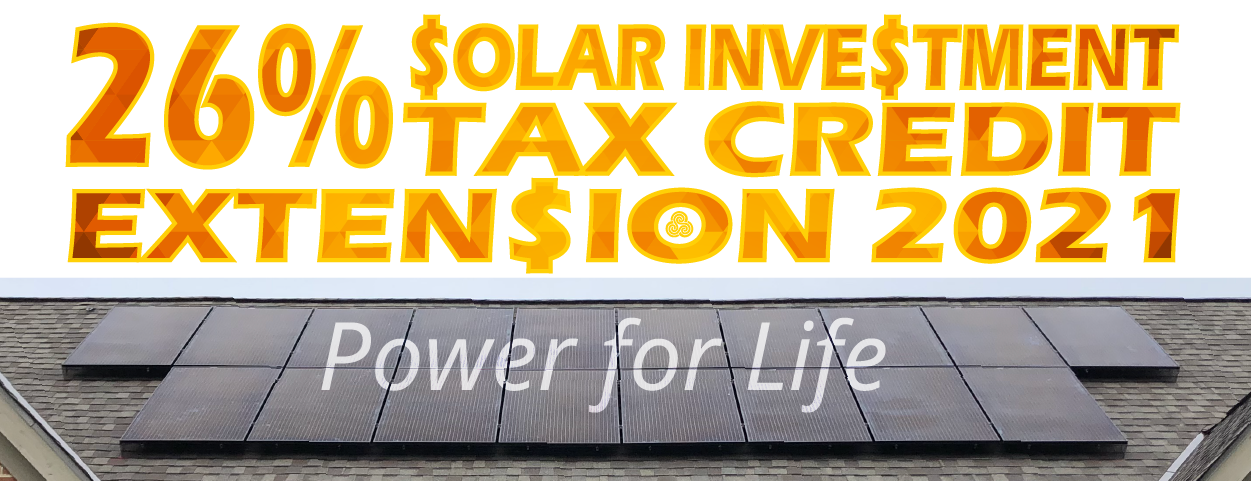
We are thrilled to announce the Extension of the 26% Solar Investment Tax Credit!

The United States federal spending and tax extension package was passed by congress alongside the $900 Billion Covid Relief package last week and signed into law by the President on Sunday night. This package will bring huge relief to Americans who are struggling in the face of the pandemic. It also includes several critical extensions to the solar investment tax credit (ITC).

What This Mean for Solar Shoppers and Customers

The ITC dropped from 30% to 26% in January of 2020. The solar industry has been bracing for another step down in the (quickly approaching) new year. Just a few days away from the end of the year โ€“ solar shoppers who have not yet gone solar, or have not had their project installed– have more time!

With the Extension outlined in the stimulus bill, solar buyers will receive 26% back from their system’s full turnkey cost if installed before the end of 2022. So, solar projects constructed in 2020, 2021, or 2022 are now eligible for the full 26% ITC.

Solar projects constructed in 2023 will be eligible for a 22% tax credits. After 2023, there will be no tax credit for residential solar installations. Commercial-scale solar projects will be eligible for a 10% tax credit from 2024 onwards.

Tax Credit Law โ€“ Locations

  • Original code for residential solar properties can be found in Title 26 Section 25D of the U.S. Tax Code
  • Original code for commercial solar projects can be found under Title 26, section 48
  • Extension language for residential solar can be found in the relief bill on page 4915
  • Extension language for commercial solar can be found in the relief bill on page 4908

Clean Energy Growth

We are excited by the inclusion of so many renewable energies in the bill. The inclusion of solar energy and so many clean energy alternatives in this bill will certainly spur tremendous growth and clean energy investment for years to come.

The solar tax credit has been the most significant stimulus for residential and commercial solar that the industry has seen. According to the Solar Energy Industries Association, since its implementation in 2006, the residential and commercial solar tax credit has helped the U.S. solar industry grow by more than 10,000 percent, with an average annual growth of 50% over the last decade alone.

We expect to see solar industry professions keep their stance at the top of lists predicting job growth in the years to come. This Extension will undoubtedly help us deploy more solar energy more quickly across homes and businesses across the state of Ohio and beyond. Third Sun Solar and our partners across the country are excited to continue to deploy solar energy and supply a means of gainful employment to our communities in these times of economic hardship.

To find out more about the Solar Investment Tax Credit, the Extension, and what it all means for your solar project, get in touch!

"*" indicates required fields

Name*
Subscribe to Our Newsletter

Santa Goes Solar: Case Study

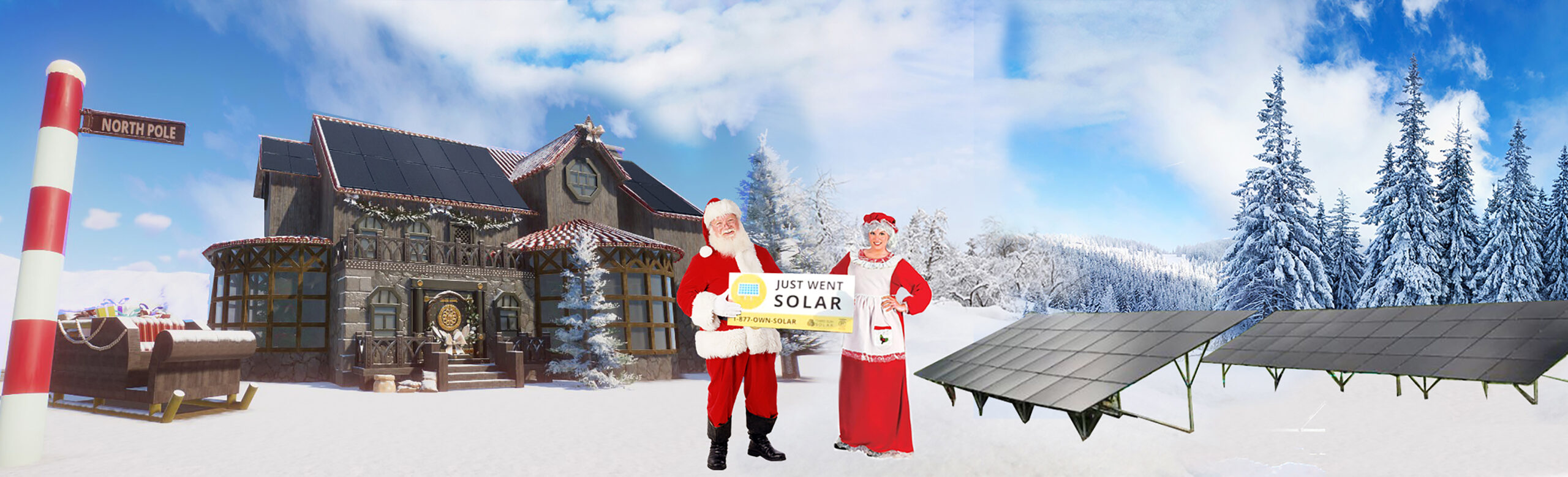
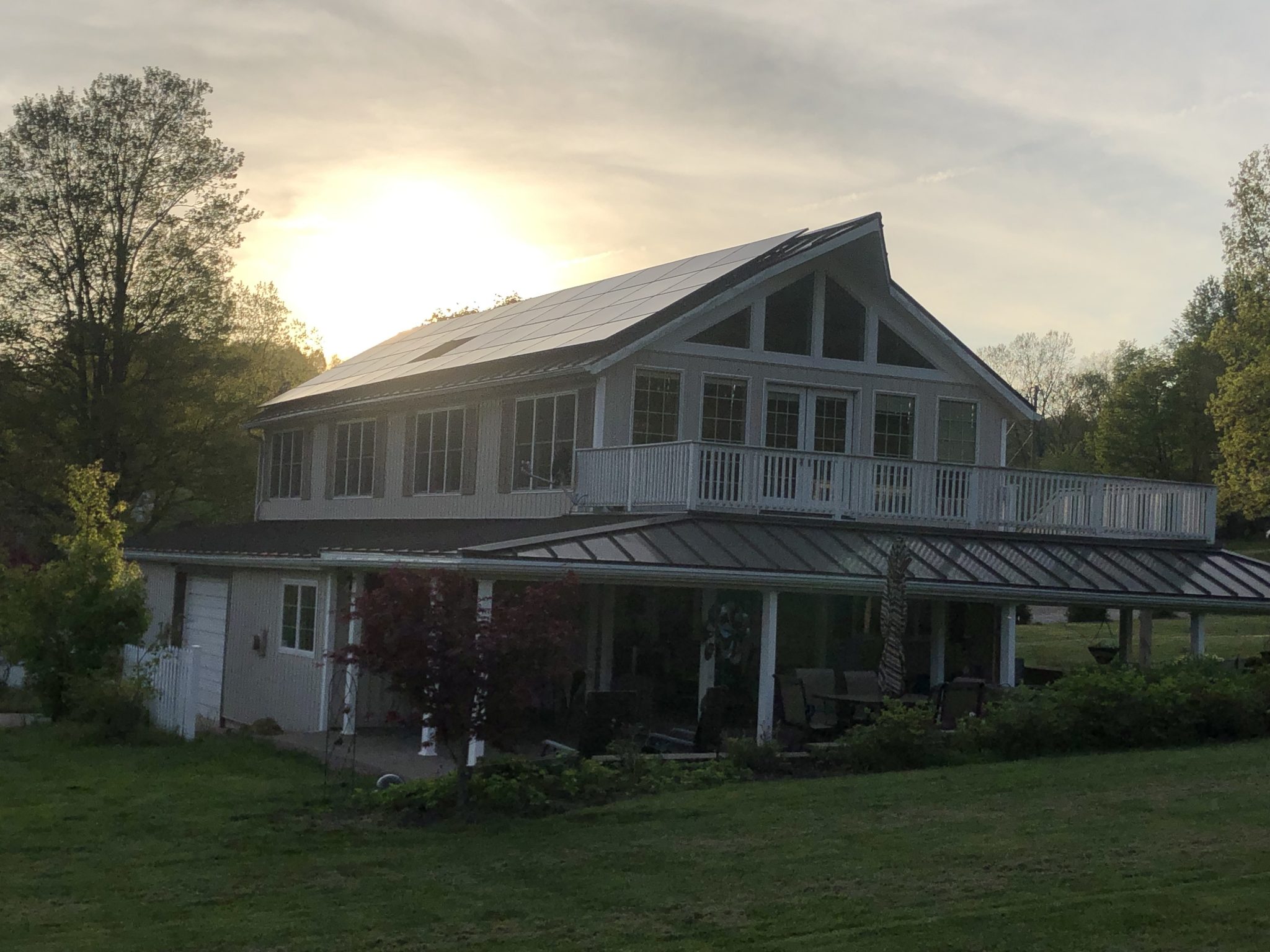
All Santa & Mrs. Clause wanted for Christmas this year was to GO SOLAR. This holiday season Mr. & Mrs. Claus installed a 27.6 kW solar array at their personal home on the North Pole. They paired their solar purchase with the addition of four Tesla Powerwall’s to keep the Christmas lights lit and hot cocoa steaming hot when Northern Lights flash. These electric outbursts of solar particles often are the cause of grid failure at the North Pole.

Why Did Santa Go Solar?

This year Santa wanted to give a gift that could heal the world. And like a true Christmas Miracle, Olโ€™ Saint Nicholas discovered the wonders of Solar. He believed if he did his part in accelerating the shift to clean energy with a home solar installation, he really COULD begin to heal the world.

Like many folks, Kris Kringle has switched out all his holiday lights for LEDโ€™s. He knows that running lights year-round is an added household expense. โ€œIโ€™m not the Financial Manager at home,โ€ Santa says with a Ho Ho Ho, โ€œThatโ€™s my wife, Mrs. Claus.โ€

After undergoing a huge expansion of his personal holiday light display five years ago, which included the addition of an eleven-story fully lit Christmas Tree, the electricity bills began climbing. Mrs. Claus says: โ€œIโ€™ve been making a list of electric expenses and checking it twice. It was time that we started looking for an alternative to the way weโ€™ve been doing things for the past hundred or so years. Of course, I will never get in the way of adding lights, candy cane machines, and additional tools in Santa’s home office. But when I saw the electricity rates begin to climb, I told Santa that we may need to look for alternatives.โ€

For Santa, his motivations for going solar were primarily environmental.

In the spirit of Christmas, Santa says that heโ€™s most excited to comply with the Paris Climate Agreement. Santa recognizes his visibility and, as a public figure, is determined to comply with guidelines surrounding the reduction of greenhouse gas emissions and the advancement of sustainable energy.

โ€œI used to abide by the old adage: โ€œNaughty kids get coal, Nice kids get solar panels!โ€ but over the years, Iโ€™ve come to realize the bigger picture โ€“ all kids get Solar Panels.

โ€œThis year weโ€™re experiencing some changes. We are having to walk further and further to find a decent ice-skating rink. It is harder and harder to recruit reindeer to fly the sleigh. And on the big night when Santa Clause comes to town, in some places of the world the air quality is so poor Rudolphโ€™s nose canโ€™t shine so bright.โ€

It is important to start sending the message now to kids, Naughty or Nice – theyโ€™re going to need to be a part of the solution!

Solar Incentives

When asked about incentives, Santa said that the United States tax credits did not apply in the North Pole. But he is glad that the US Federal Tax Credit for solar will be available until the end of 2021. Speaking from experience Santa says: โ€œEven without incentives, it is still worth going solar!โ€

The Solar Installation…

Santa can recognize a specialty when he sees one. The solar installers werenโ€™t the first humans to visit Santa and the elves over the years, but they have been some of the few.

He said he thought about asking the elves to design, permit & install the system, but between their lack of expertise in anything outside of small toy electronics and the backlog of holiday toy-making โ€“ it was worth inviting humans up to the north pole to install the solar energy system professionally.

Santa chose REC solar panels for their high-efficiency, durability and 25-year product warranty. He was also quite pleased with the black-on-black design, which he knows his out-of-town guests will find quite attractive.

Always looking to the future…

โ€œWeโ€™re excited to have an electric powered sleigh of the fleet this year. And to be delivering solar panels to homes across the world. Itโ€™s an honor to do my part in creating a brighter future.โ€

โ€œAnd donโ€™t think that up on the rooftop I donโ€™t notice who is else is doing their part, Santa is always watching!โ€ he said with a wink.

20 Years of Back and 20 Years Forward, Solar in Ohio

20th Anniversary Celebrations Coming to a Close

2020 is just about over, which means that Third Sun Solarโ€™s 20th Anniversary year is coming to a close. We have published blog posts, videos, photos and social media items all year long to illustrate our long and interesting history in the young and inspiring clean energy industry.

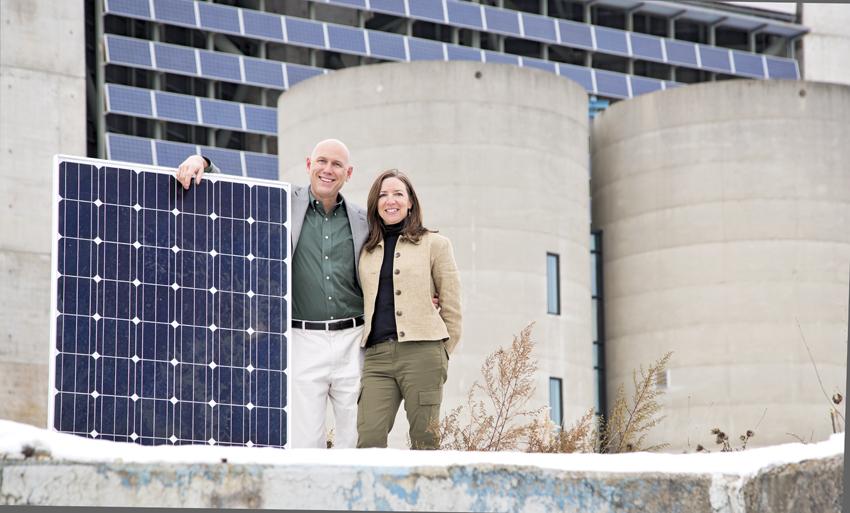
When Geoff and Michelle started Third Sun Solar in the year 2000, they had a dream to follow their passion for โ€œright livelihoodโ€ – to start a business that aligned with their desire to prove that clean electricity production is possible, that environmental preservation and reducing pollution is imperative, and that there is an alternative to the status quo of buying electricity from large billion-dollar corporations.

From their first employee in 2002, to their current team of 35 and growing, the Greenfields have stood by those founding passions and inspired others to join them in the mission to Accelerate the Shift to Clean Energy. Third Sun Solar was one of the first in Ohio to build solar before net metering existed and when costs were over $10 a watt in the early 2000s. They have watched as costs have fallen over the years: $9 a watt in 2007, $7.5 a watt in 2010, below $4 by 2016, and now 2020 hovering around $3 a watt. With each drop in costs, solar has become more and more accessible to more of the population.

Business as a Force for Good

Third Sun Solar put its notion of โ€œbusiness as a force for goodโ€ as a public priority in 2012 when it became certified as a B Corporation โ€“ an expression of its commitment to not only being a profitable company, but also putting the planet and people on equal footing with monetary measures of success. The following year, 2013, the company hit the Inc. 5000 fastest-growing companies list for the 5th time in a row, proving that a company can do well by doing good.

In 2020, Solar Power Worldโ€™s Top Solar Contractors listing ranked Third Sun Solar is the #1 solar installer in Ohio and #50 in the nation for lifetime kilowatts installed. With over $75 million in sales and more than 1200 projects installed, Third Sun is truly living out the foundersโ€™ dreams of proving that producing clean electricity from the sun is not only a possibility, but that it is a growing reality.

The momentum of 20 years of expertise and action is the foundation on which Third Sun stands poised and ready for the next 20 years.

Third Sun Solarโ€™s long tenure in solar has given them a front seat on the โ€œsolar coasterโ€. They know what it means to ride the ups and downs of this emerging industry, subject to the changes in political will or lack thereof; issues of global supply and tariffs; and both lack of consumer knowledge and an emerging boom in solar awareness.

The next 20 years of solar and clean energy looks bright.

The next 20 years of solar and clean energy looks bright. The industry has scaled to the point that costs are competitive with fossil fuel energy sources. It is no longer an environmental or an economic decision to go solar. It now makes sense on both counts. Soon, solar panels on homes, schools, businesses, and on rural farms will be as commonplace as air conditioning units or refrigerators are in our buildings. The market for solar power, while it has gone up and down over the last 20 years has been on a steady and consistent climb, with no indication of slowing the ascent.

As the solar coaster continues its upward ride, so will Third Sun Solar. In the unfolding of the next 20 years, expect to see the Third Sun team in more places around the region, making it even easier for people to take producing their own clean power into their own hands. There are exciting times ahead, for the company, the region, and the planet. The next 10 years have been called the โ€œSolar Decadeโ€ and Third Sun Solar is ready to continue to be a force in the bright future of clean energy!

The Biden Election and Clean Energy: What to Expect

By: Geoff Greenfield, Third Sun President, and co-founder

As the dust settles around the election many are asking: โ€œWhat does the election mean for clean energy in general?โ€ and โ€œHow will a Biden Presidency impact my own plans for going solar?โ€

As divisive as our recent politics have become, clean energy and concern about the climate remains popular with Americans on both sides of the aisles. America is a technology focused society and many, including Wall Street, are very optimistic about the future of clean energy. While Biden campaigned heavily on climate and his $1.7 Trillion โ€œBiden Planโ€, he is probably entering office with a divided congress, so our focus here is on what is likely and achievable in this scenario.

With control of both houses of Congress Biden and the Democrats will be able to enact more aggressive legislation. In this case, with a VP vote as the tiebreaker in the Senate, the threat of a filibuster is very real. This threat, combined with Bidenโ€™s pledge (and track record) of bipartisanship, we still expect a much more moderate agenda. Compromise will dilute the full strength โ€œBiden Planโ€ published during the campaign. Given the speed of the legislative process, rulemaking, and court appeals, we expect that any version of a โ€œBiden Plan Lightโ€ would not impact the solar marketplace until 2023 at the earliest.

Solar as part of COVID-19 Relief

Congress is currently working on a bill focused on the COVID-19 crisis and jumpstarting the economy. While there will be name-calling and horse-trading, most political observers and economists are expecting fast bipartisan compromise . Part of that horse-trading will involve clean energy policy. We expect that a lot of the money invested in job creation (with a focus on major infrastructure projects) will include a clean energy focus. Take a look back to the Obama-Biden recovery act after the 2008 housing crisis to see the history we expect to be repeated: support for weatherization, energy upgrades, efficient transportation, and solar on the rooftops of public buildings.

We expect more of this: solar on the roofs of public buildings, investments in batteries for resiliency at public shelter sites and police and fire stations, as well as a huge investment in EV charging stations at locations ranging from libraries to highway rest stops. Republican cooperation may be achieved with giveaways to utilities in the form of deferred grid infrastructure, nuclear, controversial carbon capture schemes, and โ€œclean coalโ€.

  • 12/28/2020 Update: Read more on the passage of the Covid-19 relief package + tax credit extensions here.

An Extension of the Solar Investment Tax Credit

One hopeful area of bipartisan compromise may be extending (or expanding) the popular tax credit that supports solar. The solar Investment Tax Credit, or ITC, has gone through several stages of expiration and resurrection after its original passage in 2005 under the Bush administration. The ITC has long been considered “the lifebloodโ€ solar incentive in the United States. According to the Solar Energy Industries Association, the residential and commercial solar Investment Tax Credit has helped the U.S. solar industry grow by more than 10,000% since it was implemented. The solar tax credit was originally intended to expire in 2007 but has seen multiple extensions leading up to our current situation: a stepped down โ€œsunsetโ€ from 2020 to 2022.

Under the current timetable, the credit declined to 26% for systems placed in service in 2020 and drops to 22% for 2021 and then in 2022 drops to zero for homeowners and levels out at 10% for commercial entities. One of the primary hopes of the solar industry at large is to see an extension of the tax credit. Tax credits are often popular with Republicans, and in fact, in 2019 Senator Mitch McConnell approved a tax bill that included an extension of the solar and EV tax credits only to have them eliminated by Trump. While I donโ€™t think there are Las Vegas oddsmakers for such things Iโ€™m going to go out on a limb and predict that there is a greater than 50% chance that we see an extension (or even restoration to 30%) of this popular job creating tax credit in the coming year.

  • 12/28/2020 Update: Read more on the passage of the Covid-19 relief package + tax credit extensions here.

Solar Tariffs

Another policy issue that Biden may attempt to use his executive authority is the solar tariff. In 2018 the Trump administration enacted a 30% tariff on most solar cells and modules produced outside of the United States. While this did result in a few domestic module assembly plants, economists and analysts have concluded that it has created net job losses in the solar sector. The few manufacturing jobs created were overshadowed by job losses in designing, installing, servicing and supplying in the solar installation sector.

Something to note here is that tariffs are less of a factor for residential solar customers (raising costs 1-2% for a typical residential scale project compared to the 8-10% cost increase on the huge utility-scale solar farms being built across the country). Ultimately the International Trade Commission makes decisions on these tariffs, though the President has significant influence in making a case for or against them.

The Big Picture

Soโ€ฆ after that overview of what may or may not happen depending on control of Congress and the complexities of political compromise, here are some of the very likely actions we expect to see that are within the Presidentโ€™s executive authority. Many of these actions are described in more detail in this article.

We already mentioned the immense impact of the Federal Government focusing its $500B annual budget on clean energy. The Department of Defense has been moving in this direction for years and will likely accelerate investments in solar and micro-grids. A โ€œclimate-focusedโ€ cabinet is being named as I write, including John Kerry in a new cabinet level role focused exclusively on climate. As we (re)enter the Paris Climate Agreement we expect many global and domestic policy moves.

Biden will use the Securities and Exchange Commission (and possibly the Federal Reserve and the Treasury Department) to influence the private sector and capital markets. He will mandate the inclusion of climate risk reporting, and this will impact the approach to investment underwriting for many financial analysts and investors. This phenomenon is already happening in the global markets, as powerful investors continue to downgrade the once powerful fossil fuel giants, sending their share prices and market caps tumbling. The impact of this is two-fold. As investments are less likely to move into carbon exposed businesses, they are more likely to flow toward clean energy replacements. As their financial power wanes, so too shrinks their political influence in Washington and state capitals. The lobbyists that used to spoon-feed their legislation to our lawmakers will no longer be on speed-dial as they have less and less to donate to PACs and re-election campaigns.

The Biggest Climate Action We Expect

Using his executive powers, the biggest climate action Biden will take will be to begin accounting for the โ€œtrue cost of carbonโ€ in the pricing of our energy markets. This โ€œtragedy of the commonsโ€ has been long lamented by environmentalists and economists alike. While I do expect that these externalities are finally internalized, I do not expect a carbon fee, cap and trade, or any of the other direct carbon pricing mechanisms favored by economists to be enacted (at least in a first term). Biden did not include them in his โ€œBiden Planโ€ and did not talk about them in his campaign. Instead, I expect he will start with many less politically challenging mechanisms available An example of this low-hanging fruit is removing the $20B/year in subsidies that are currently given away to fossil fuel interests.

I predict he will remove various protections that open polluters up to paying damages. He has pledged to stop issuing new drilling leases on Federal Land. Perhaps most impactful will be the regulation of Methane (and possibly Carbon) as pollutants, leading to the uptick of effective (and expensive) mitigation technologies. The net result of ALL of these steps will be an uptick in the price of brown energy to the consumer. Raising brown power prices to better reflect their true cost is as powerful as lowering the price of clean energy with policy support. This is a powerful phenomenon, and if amplified over time is another factor in what has been described as โ€œthe utility death spiralโ€. As better solar economics leads to more deployment, the utilities fund their bloated operating costs by raising prices. This in turn leads to more uptake of solar which lowers the cost of solar which leads to better solar economicsโ€ฆ and then more of the same (you get the picture).

Finally, we expect Bidenโ€™s Department of Justice to aggressively go after polluters, especially those who have impacted the air, water, and soil of communities of color for decades. This focus on intersectionality, equity, and environmental justice was a key campaign theme and will result in real improvements in air and water quality for millions of citizens. Additionally, this focus will eliminate another aspect of the โ€œfree ride to polluteโ€ that artificially subsidizes the cost of fossil fuel energy. As rates go up, reflecting the true cost of dirty energy, the incentive for consumers to invest in efficiency and shift to cleaner alternatives will be a natural market outcome.

The Bottom Line

As I have laid out above, I do not predict that we will see the sweeping vision of the Biden Plan as published during the campaign. Instead, we will get a series of tactical moves that will still add up to have a big impact. If you are considering solar for an institution or unit of government, I recommend you wait until mid-2021 for details of the coming support. In the meantime, I suggest that you begin to explore your options and position your organization to be competitive by getting projects ready (Third Sun Solar is ready to help).

For those considering solar for their home or business, there is no reason to wait. As I laid out above, we donโ€™t expect any new policies that would directly impact solar economics for private businesses and homeowners. Solar has already moved from an environmentally righteous action of tree huggers to being a long term economically smart move. We are hopeful for a tax credit extension and while we arenโ€™t giving out tax advice, we believe that it is safe to expect that any projects placed in service in 2021 that qualify for the current tax credit would qualify for any new and improved tax policy. As we laid out, we see the biggest policy impacts on the horizon accelerating the (inevitable) rise in the cost of dirty energy. Investing in on-site solar has always been a โ€œhedgeโ€ against energy cost volatility, and with the coming Biden policies, we see a big jump in the price of brown power. The sooner we make a shift to clean energy, (each of us as individuals and together as a nation) the sooner we will enjoy the many beneficial outcomes: in our monthly budgets, in the air we breathe, and in the stability of the world we leave for future generations.

Solar Business in Ohio

Nancy Miller is the CEO and co-owner of Miller Prosthetics & Orthotics in Belpre, Ohio. Her business provides prosthetic and orthotic services in the Mid-Ohio Valley. They strive to return patients back to the activity level they desire from walking and moving to running, fishing, and hunting. Third Sun Solar has been proud to work with a mission-driven business, working as a force for good in the world.

The Solar Journey

As a member of the Belpre Area Chamber of Commerce, Nancy first became interested in solar after hearing a presentation made by Luke Sulfridge with the Southeast Ohio Public Energy Council. His presentation explained the free solar assessment process.

Nancy says โ€œOur business, Miller Prosthetics & Orthotics, is eager to stay on the leading edge of technology. We were the first in our area to request the free solar assessment which also included a quote on the service. After the assessment, I inquired about the REAP (Rural Energy for America Program) grant process with Randel Monehemius. Mr. Monehemius is the Business Program Specialist for the Ohio State office, Rural Development of the United States Department of Agriculture. He provided a list of solar companies, and I chose Third Sun Solar for a second quote.โ€

What was the businesses motivation for going solar?โ€ฏโ€ฏ

Nancy says: โ€œWe are interested in being good stewards of our environment. Clean energy is very important, and we are always exploring new technology and looking for efficient business solutions in all areas.โ€

The solar journey for the business was straightforward. They learned that, with the REAP grant and the Federal Tax Credit for solar, the investment in solar panels would be possible. Through the quoting process, they also learned that their location provided ample sun exposure.

An obstacle they faced when going solar? Nancy says: โ€œThere were several companies out there. Each quote takes time. After researching online, I selected a few companies that were close to our location and had solid experience.โ€

When searching for a local solar installer, Nancy paid close attention to these key elements:

  • Location of the solar company
  • Strong references
  • Experience of the contractor
  • Price of the panels and installation

These are great points for homeowners and businesses alike to keep in mind when choosing a solar installer. The physical structure of our businesses and our homes are often our most valuable assets. Choosing a solar installer to modify and upgrade these valuable assets is an important task. That is why we always encourage solar shoppers we work with to ask for references, look at experience, and make sure their solar partner will be there for them throughout the length of this long-term investment.

What has the business liked most about the solar energy system โ€“ so far?

Nancy says: โ€œWe had a very good experience from getting the information needed to apply for the REAP grant to design. Jarrod Starr was very knowledgeable about the process and materials. We also found confidence after our site visit by Adam Brown. He explained the cost and benefits about locating the panels on the roof vs our initial thought of locating on the hillside behind the building. He also helped guide us in picking out panels that would look good with our building.

We were lucky with great weather for the week of installation. Jake and his crew did a nice job and were able to install without any disruption to our day to day business.

The power company, AEP, installed the bi-directional meter within a few days of the permit and we were able to turn on the panels the next day โ€“ which we were pleased to have 100% sunshine.โ€

With the investment in Solar, Miller Prosthetics & Orthotics is acting on their intention to be environmentally sustainable.

While offsetting 100% of their energy with renewable power, this energy is enough to annually offset:

  • Greenhouse gas emissions from 3 passenger vehicles driven for 1 year
  • CO2 Emissions from charging 1,839,656 smartphones

Talk about big energy savings!

โ€œSince our installation, we have had several comments from our patients, employees and community members on how they like our new solar panels. The Solar Edge app is a great way to get immediate feedback on how much power the panels are producing.โ€ – Nancy Miller, CEO, and co-owner of Miller Prosthetics & Orthotics.

If you are interested in learning more about solar, the REAP Grant, solar incentives, and more โ€“ reach out for a free, no-obligation solar assessment.

"*" indicates required fields

This field is for validation purposes and should be left unchanged.
Name*
Address*

Solar Panel ROI & Payback

Does solar really save money // Is solar really worth it?

These are some of the first questions we hear from folks who are just starting out on their solar journey. When talking about a technical product with a โ€œpaybackโ€ like solar power โ€“ itโ€™s easy to get confused.

We’ve seen solar companies promise the world to gain business. As Ohioโ€™s oldest installer, we are committed to integrity. With the recent growth and popularity of solar, driven by improved technology and more public awareness, we have seen a growing number of national companies and small installers moving into Ohio. While we recognize that healthy competition is welcomed and is ultimately beneficial to consumers, we are also concerned about some of the deceptive and misleading claims.

Weโ€™ve broken down some of what weโ€™ve seen below to help you:

  • $0 Down Solar – While there isnโ€™t an initial out of pocket cost, obviously there will be monthly payments on the loan. Just like a car loan, if you choose a $0 down loan, your monthly payments will be higher than if you put some money down upfront. All of our clients are different, and some are ready to pay for their solar upfront and some choose to finance all or part of the system.
  • Free Solar – Some solar companies misleadingly use the word โ€œfreeโ€ but what theyโ€™re actually referring to is a long-term low-interest loan. Often, they offer what appears to be a very low-interest rate, but they secretly add 15 โ€“ 25% to the cost of the system to buy down the rate from their loan partner.
  • Ohio Statewide or Local โ€œProgramโ€ โ€“ There is not a special statewide program or special grant or subsidy. Again, this misleading advertising is purposefully deceptive.

We are happy to answer any questions you have: questions about things youโ€™ve read or seen. Or help you evaluate the difference between solar quotes. Now that weโ€™ve addressed some of the misleading claims about solar payback, here is what we know is trueโ€ฆ

What is solar payback?

Solar systems are investments. Unlike many of the purchases we make โ€“ there is a return on the investment that you make when you purchase solar panels.

Think of it this way: right now youโ€™re renting the electricity you use every month. You pay a monthly bill to your electric supplier. And, that is how it will beโ€ฆ forever. Solar energy systems give homeowners another option for how they purchase electricity. Owning a solar system is like owning your power. The money you pay each month goes towards the payment of the system that is generating the energy for your home. You will eventually break even on that purchase. And, from that moment forward the solar energy system you own will generate clean, free, and abundant solar energy for your home.

Your โ€œsolar payback periodโ€ is the time it takes to make back your initial investment in solar.

How do you calculate payback for solar panels?

Below we have listed the elements that you need to consider when determining the ROI or payback.

  • Total Cost of Solar Installation
  • Local + Federal Tax incentives that you will be able to take
  • Average monthly electric use
  • Estimated solar system generation
  • Electricity cost escalation over time

Do the math: add up the cost of your solar system and subtract your incentives to give you a true cost. Then add up your avoided electricity costs for 1 year. Divide the true cost by the avoided electricity costs. This will give you a ballpark idea of the number of years it will take for you to achieve payback. This number does not consider annual energy rate escalation, fixed rates on your utility bill, and other charges, however. So, it is important to take this equation with a grain of salt.

Keep in mind: any solar quote you receive will likely include a summary of your Return on Investment.

An payback on your investment, a smaller carbon footprint, and decades of clean solar electricity make solar a smart option for many homeowners.

The advice we hear our current customers give their referrals: just get a quote! There is no cost, there is no pressure, and you will get a lot of useful, detail-rich, and site-specific information.

How Solar Energy Helps the Environment

The road to treading a little lighter is full of opportunities. From green habits like recycling, gardening, and carrying a reusable water bottle, all the way up to bigger projects like installing a solar system at your home. Utilizing solar energy is a big win for the environment. Going solar is a big step in the right direction if you intend to minimize your environmental footprint.

This post intends to help you understand the magnitude of carbon savings a solar system has on an individual or family every year.

Solar Case Study

[av_image src=’https://kokosingsolar.com/wp-content/uploads/2020/11/VOX-Whats-causing-climate-change.png’ attachment=’7355′ attachment_size=’full’ align=’center’ styling=” hover=” link=” target=” caption=” font_size=” appearance=” overlay_opacity=’0.4′ overlay_color=’#000000′ overlay_text_color=’#ffffff’ copyright=” animation=’no-animation’ av_uid=’av-1uuph4′ admin_preview_bg=”][/av_image]

Source: Vox, Whatโ€™s causing climate change, in 10 charts

The average American household produces 19.3 to 91.5 tons of CO2-equivalent annually. As those numbers have risen over time, familites increasingly consider their options for reducing their carbon footprint at home. Solar power has begin to stand out as a meaningful way to achieve that household reduction.

Take environmental impact information from a recent residential solar installation. Pictured above is an 8.3 kW solar installation in Duncan Falls, Ohio. This solar system was designed to offset the home’s annual energy consumption by 100%. The environmental impact of this solar system? Over 30 years the system will have saved the Carbon Dioxide emitted from burning 227 tons of coal. This is equivalent to driving the perimeter of the United States 48 times. Or, preserving 268 acres of forest. This solar system demonstrates how residential solar is good for the environment.

What other savings does this system include? Over the lifetime of their system, will save the homeowners over $16,000 in utility savings.

Fortunately, solar systems appeal to both our idealistic and pragmatic motivators. Sustainability is often defined as where beneficial environmental impacts meet with cost savings. Cost savings is a cornerstone many of us consider when making adjustments that benefit the environment.

Solar and the Environment Myth Busting

There are lots of solar myths out there. Are solar panels bad for the environment? Does it take more resources to produce a panel than that panel will produce in its lifetime? The simple answer is no.

The materials used in obtaining and manufacturing solar cells and modules is a hot topic. And anyone who is considering going solar for environmental reasons will look critically at the materials used in their energy choices. As with anything these days โ€“ do your research. Choose an information resource that you trust and ask questions, read, and understand the latest news and technology. Much has been โ€œgreen-washedโ€ or made to look sustainable when itโ€™s not- over the decades. So, it’s good to look at sustainability claims with a critical eye.

  • Embodied Energy – How many years will a solar module need to be generating energy to offset the energy that went into mining the raw materials, transporting, manufacturing, etc.? About 2 years on average. Panels usually have a 30-year design life, 25-year warranty, some last longer. Solar Panels will net out more energy than was used in production.
  • Supply Chain โ€“ rare earth minerals exist in many of the electronics we use every day. Solar panels are not exempt from this. However, comparing solar panels against the standard energy utility, in the big picture we believe that fossil fuel resources have a dirtier supply chain than solar. Do your research, compare, dig deep and we think youโ€™ll agree.

The Environment + Your Home

There is a whole lot you can do โ€“ from daily habits to big changes to your home โ€“ to be greener. Simple things include biking to work instead of driving, buying locally grown food, and remembering to turn your lights off and thermostat down when you leave for work in the morning. Bigger changes might include replacing your windows, adding insulation, or adding solar panels to your home. Wherever you areโ€“ weโ€™re glad youโ€™re taking the time to think about changes you can make to support the shift to clean energy. Reach out f youโ€™re interested in learning more about the environmental and cost savings potential at your home with solar.

Columbus Zoo and Aquarium

Project Overview

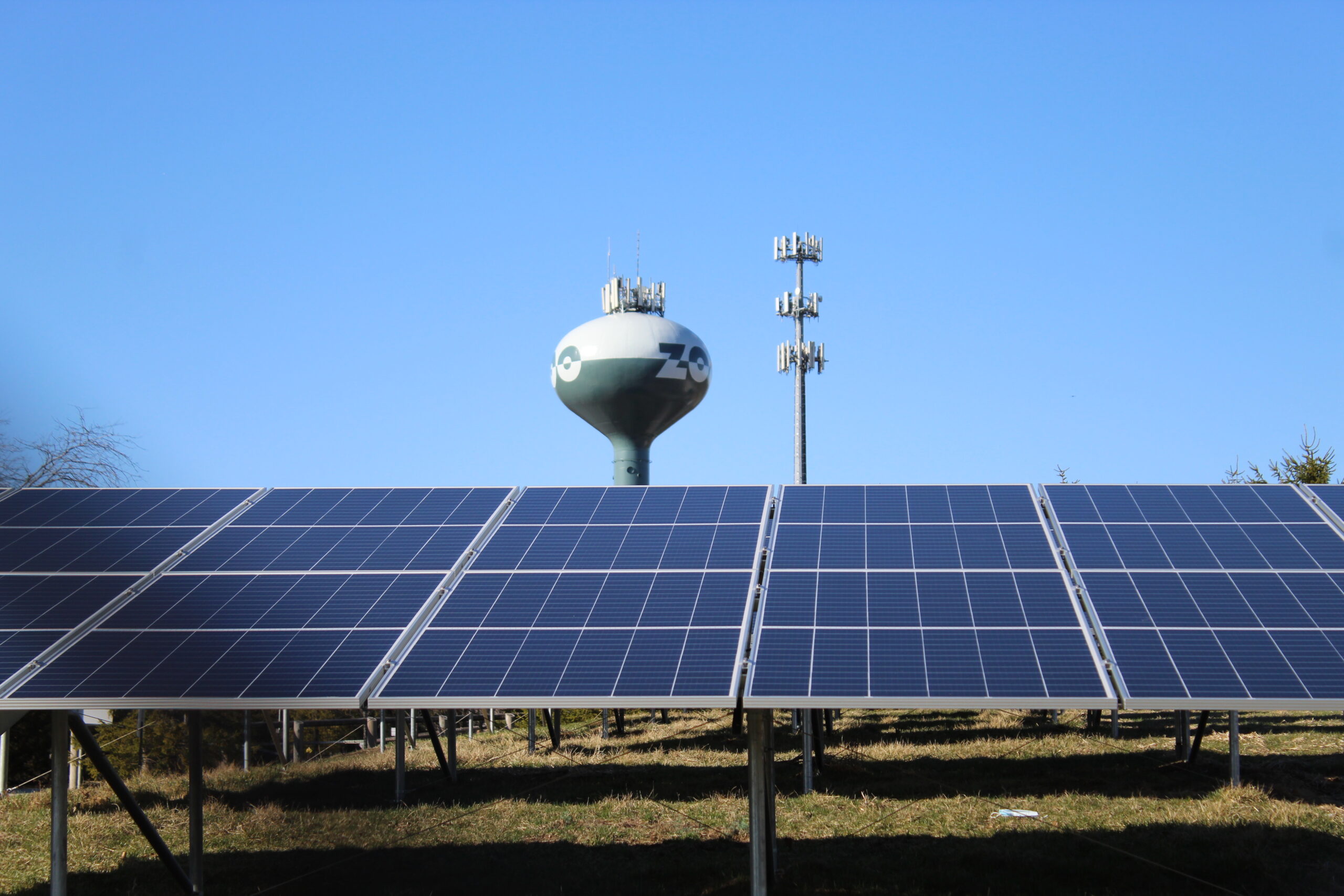
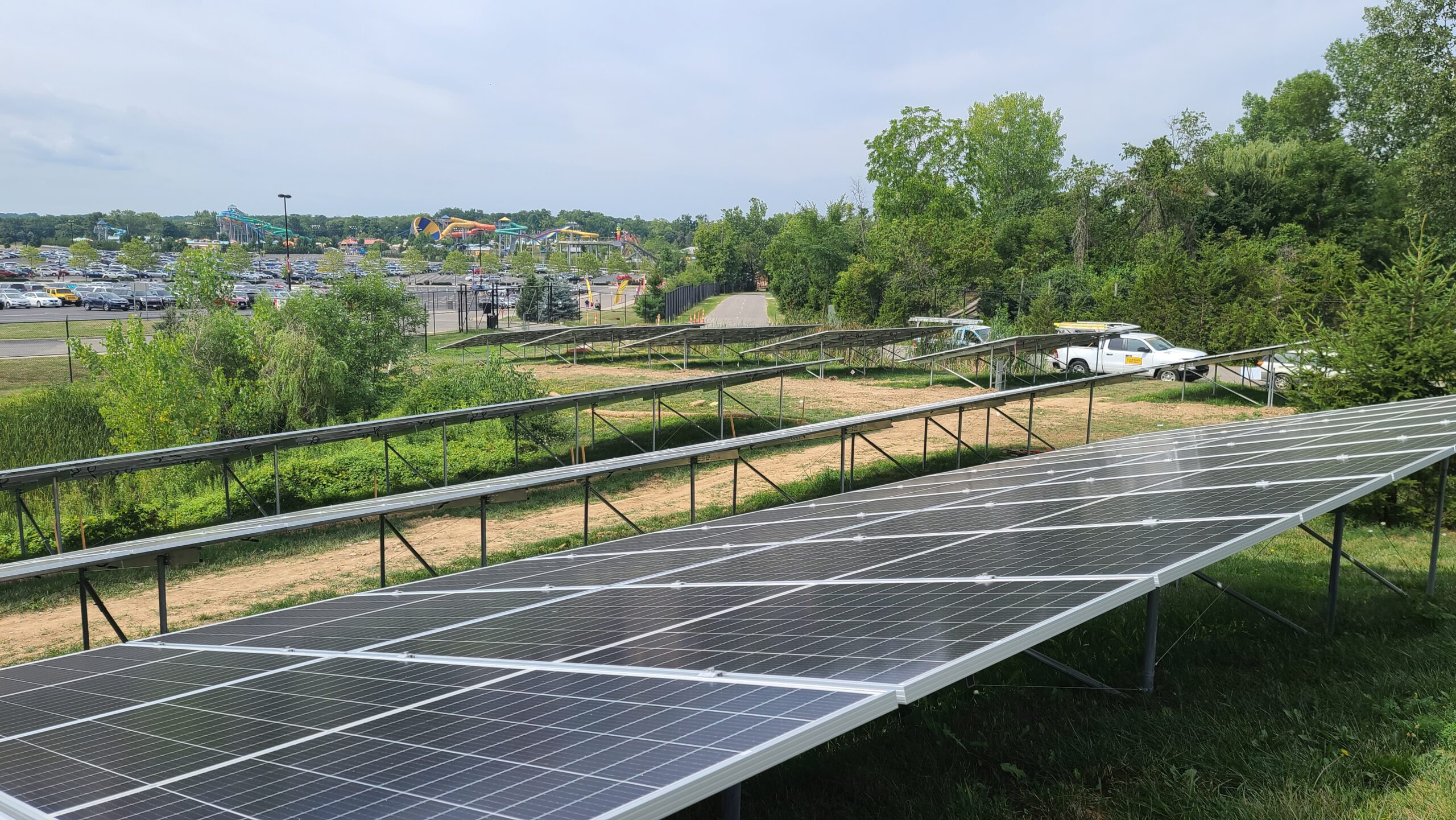
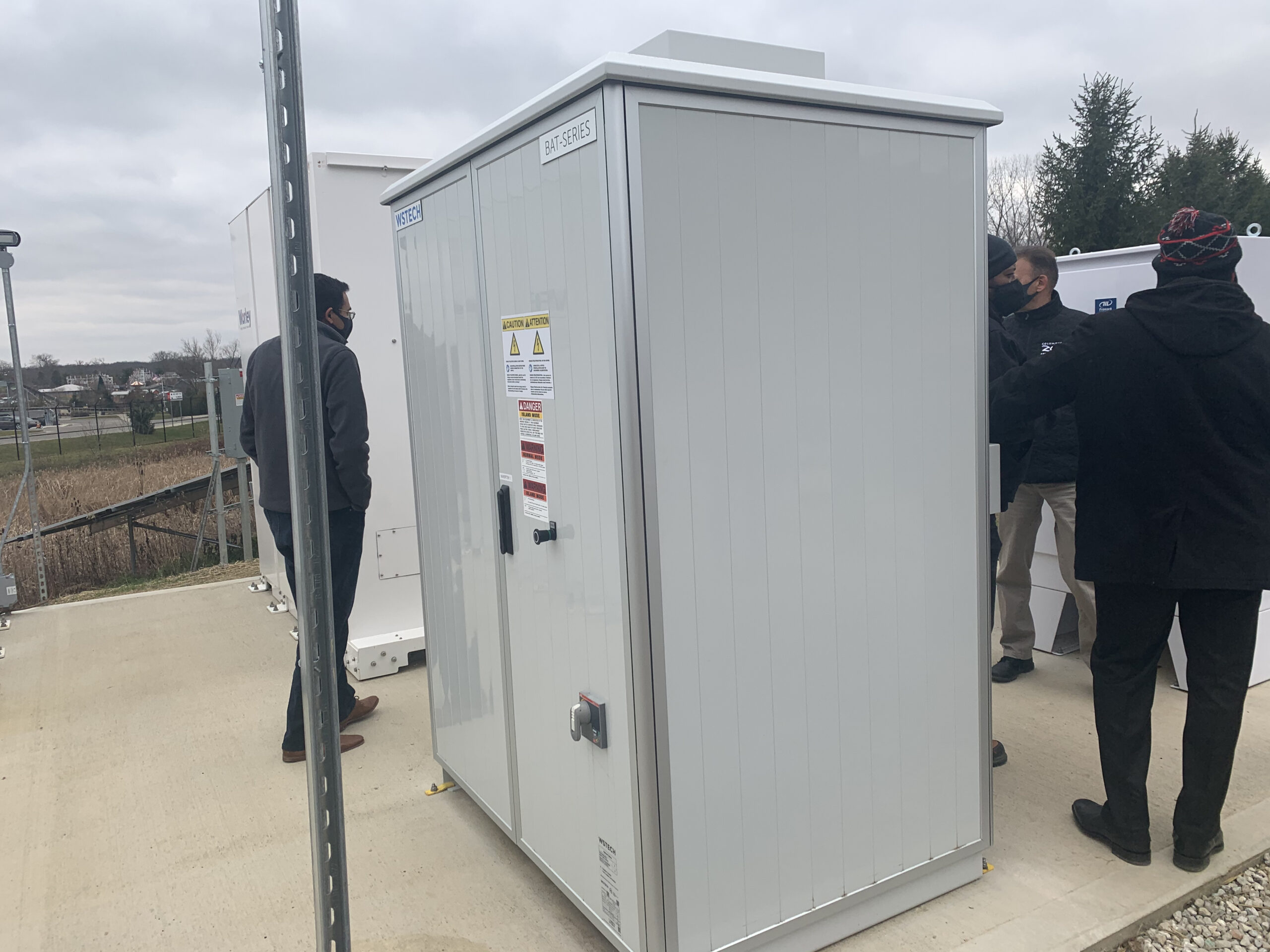
In the fall of 2020, Third Sun Solar installed a ground-mounted solar array as part of a larger microgrid installation at the Columbus Zoo and Aquarium.

From the beginning, Third Sun Solar worked closely with Worley and Claypool Electric to design and present a microgrid solution to the Columbus Zoo and American Electric Power (AEP). After many meetings and presentations, the group was a finalist and ultimately awarded this project through a competitive selection process. A microgrid is a grouping of electrical loads that are normally connected to one grid but can also disconnect to an โ€œisland modeโ€ where it functions independently. When on โ€œisland mode,โ€ the microgrid at the Columbus Zoo and Aquarium will be powered by solar and battery systems. The 134.4 kW ground-mounted solar array, designed and installed by Third Sun Solar, provides power to the microgrid system. Worley contracted Third Sun Solar to construct and design the solar portion of the array. Worley designed and engineered the battery energy storage system, and Third Sun Solar partnered with Claypool Electric to build and install the entire system. The ground-mounted solar array powers an extensive battery system behind the meter of the Polar Frontier complex. The energy from the solar panels is used in the batteries and helps to power a portion of the polar bear exhibit, and the entire system works like a backup generator, providing renewable energy when needed.

A Groundbreaking Project

AEP Ohio is a subsidiary of AEP and commissioned the microgrid project. The microgrid at the Columbus Zoo and Aquarium is the first of its kind for the company. The microgrid is a โ€œdemonstrationโ€ system that will allow AEP Ohio to monitor the applications and functions of a microgrid at this scale. AEP Ohio will learn how independent, customer-sited, behind-the-meter microgrids can help the customer and the utility grid alike. In addition to AEP Ohio, utilities across the country will be eager to understand the value the microgrid provides.
Third Sun Solar is proud to be a partner in this innovative project, in collaboration with Claypool Electric, Worley, and AEP Ohio.

More about Third Sun Solar

Third Sun Solar is Ohioโ€™s leading full-service solar installation company, providing top-quality design and installation since 2000, serving residential and commercial clients in Cleveland, Cincinnati, Columbus, and beyond.

More about Worley

WorleyParsons Limited, branded as Worley after completing Jacobsโ€™ Energy, Chemicals & Resources division, is an engineering company that provides project delivery and consulting services to the resources and energy sectors and complex process industries.

More about Claypool Electric

Claypool Electric, Inc. is the preferred provider of electrical and communications infrastructure projects in Central Ohio. Family-owned since 1954, they have maintained a reputation for excellence in the craft and integrity in dealings.

Solar Tax Credit Sunset

Solar in Ohio

2020 has been quite the unexpected year. And, believe it or not, the end of 2020 is quickly approaching. As we enter the last quarter of the year, we want to remind you that 2020 is the last year to claim the 26% federal tax credit. While the change from the 26% to the 22% in 2021 federal tax credit sure seems like a big drop, the federal tax credit for solar will sunset and drop down to ZERO in 2022. And thatโ€™s a really… big… drop.

There are a few points of confusion that we hear a lot from those curious about solar right now. We truly believe the time to act is now in Ohio if youโ€™re:

  • Considering making an investment in your property by adding solar
  • If youโ€™re planning on expanding your solar array to accommodate increased energy needs in this โ€œnew normalโ€ & weโ€™re all at home a little more.

If you fall into either category, keep reading to find answers to those solar questions.

Solar Investment Tax Credit

  1. The step down – The biggest incentive out there today, the Solar Tax Credit decreased from 30% to 26% in 2020. It will step down just once more to 22% in 2021 before dropping to 0% permanently for residential solar installations.
  2. Getting the timing right โ€“ If the price you are quoted includes the 26% federal tax credit, that means that the system will need to be physically installed this year for you to take that tax credit.
  3. Adding Batteries and/or Expanding โ€“ solar battery storage and expansion solar systems are eligible for the tax credit. The advancements in technology and the availability of batteries in Ohio make adding battery storage enticing to homeowners. Tesla Powerwall batteries are the #1 choice with many of our current customers, though Third Sun offers various battery options.
  4. Auxiliary Costs + Claims โ€“ The current tax code allows for the cost of system expansion, but not the cost of routine maintenance. De-installing and re-installing solar for a re-roofing project are ineligible costs for the Federal Tax Credit. Additionally, the –re-roof itself is also ineligible for this tax credit.

Preparing for Solar in 2021

2021 is the final year of the Solar Investment Tax Credit. In Ohio, we are anticipating a very busy 2021. If you know that this year is too soon for solar, start making plans for next year. Do you know if you’re eligible to take the solar tax credit? If not, find out! Talk with your tax professional to see if there is a way for you to structure your taxes to take the 22% solar tax credit. The Solar Investment Tax Credit is the largest solar incentive weโ€™ve seen in Ohio. And we know lots of Ohioans wonโ€™t want to leave that on the table.

Simple supply and demand tells us that the solar market will be in a frenzy next year. Between equipment availability and installation capacity โ€“ we are planning for a busy year.

If you already have a 2021 solar installation in mind, we recommend reaching out to start your process now. We anticipate a large rush and installation wait times to go up as we move into 2021.

As you make the important decision to go solar, remember to consider the quality, ethics & longevity of your solar partner. Choose an installer you trust.

Which Type of Solar Panel is Most Efficient?

How to choose the most efficient type of solar panels?

Our best solar advice to you: spend time choosing an experienced solar installer who will advise you and guide you toward the best solution for your energy needs, unique site characteristics, and budget. Solar Panels are a complex technology and choosing a partner whose recommendation you can trust is vital.

If youโ€™re interested in knowing a little more about what goes into the recommendation that is made for youโ€ฆ keep reading! And if you’re ready to talk to an expert, reach out and we can link you up.

When you start evaluating different types of solar panels youโ€™ll encounter two main categories: monocrystalline and polycrystalline. You’ll also hear terms like “Solar Panel Efficiency” and “American Made Solar” when discussing solar panel choices. We’ve broken down these key solar panel considerations below.

Monocrystalline

We consider monocrystalline solar panels a premium product. They are the most efficient. Additionally, many customers prefer the sleek, all-black aesthetic.

Monocrystalline panels are made up of solar cells produced with silicon wafers. First, the silicon is formed into bars, and then it is sliced into thin wafers.

At Third Sun Solar we offer varying density monocrystalline modules. We work with you to understand your goals and available space. Though the price tag is higher for the highest density monocrystalline modules, this panel can pack more kilowatts on your roof to give you that much more energy year after year.

Polycrystalline

The efficiency of polycrystalline solar panels is lower than monocrystalline solar panels. The crystal structure within the solar cells makes the efficiency rate of polycrystalline panels lower than monocrystalline panels.

Additionally, the aesthetics are different: the materials in this type of panel make the panel itself blue in color.

For a really deep dive into this technology check out this blogpost by Solar Magazine.

Solar Panel Efficiency

Solar panel efficiency is a rating that tells you the solar panel’s ability to turn solar energy into electricity. The higher the efficiency rating, the more solar energy the panel can convert to electricity. The solar panel with a higher efficiency rating will generate more electricity, even when the panels are the same size or are hit with the same amount of sunlight.

Even though polycrystalline solar panels are cheaper to produce and have improved in efficiency over the yearsโ€“ monocrystalline still wins for cost + panel efficiency rating over time.

Made in America Solar

It is important to point out that providing equipment that comes with a โ€œMade In Americaโ€ label is often more nuanced than it might appear. Per the โ€œU.S. made solar panelsโ€ label, we always urge our customers to consider that statement in light of global manufacturing for virtually all products with multiple parts and pieces. In many cases, for many products, including solar panels, the โ€œMade in the USAโ€ label should have an *asteriskโ€”because only the final assembly of the solar panel is done in America.

Solar Panel for Home Considerations

If youโ€™re the techy-engineer type, you can use the solar panel checklist below as a checklist to choose the best solar panel for you. However, this is the list that we use when evaluating solar panel companies to recommend to our customers. We take our role as a technology expert/advisor very seriously for every project, from the largest to the smallest. Weโ€™re in this industry for the long haul & are determined to be here when less-careful solar installers fall away. Choosing a solar partner with a solid reputation in the industry means that you are choosing an installer whose recommendations you can trust. We do all of the research so you donโ€™t have to.

If youโ€™re looking for an even closer look at these solar panel considerations, check out Third Sun President and co-founder Geoff Greenfield in this Webinar Recording as he takes folks along for a deep dive.

Solar Panel Checklist

  1. Are the panels tier 1, 2, or 3 modules?
  2. Technology (cell type)
  3. Energy output per square foot
  4. Manufacturer history, stability, and reputation
  5. Module warranty terms and details
  6. Brand of back-sheet
  7. Brand of connectors
  8. Weight (glass frame and thickness)

Third Sun Founders Endorse Biden/Harris

At Third Sun Solar we believe that clean energy transcends the boundaries of political parties and belief systems. A wide collection of people love the idea of producing their own power for many different reasons. Our customers reflect that – we install solar for a wide variety of clients a wide variety of reasons. We serve tree huggers, technophiles, and fiscal conservatives. We install solar for folks that are against monopoly utilities, as well as utility executives that see carbon as an existential crisis. Cost reduction, resiliency, stewardship, marketing advantages… solar has a long and diverse a list of benefits and a variety of advocates.
Over the past 20 years, Third Sun Solar has been inclusive in our promotion of solar. As the political landscape evolves, we are pleased that more and more Democratic and Republican policy leaders agree on the opportunities and benefits of clean energy. We believe that although solar is “green” it is not exclusively a “red” or a “blue” issue. It is important to make sure that the power of the clean energy transition is recognized and enjoyed by citizens from all parts of society and all political persuasions. Our employees and industry partners reflect this diversity as well, and we honor our country’s tradition of tolerance, mutual respect and individual political decision making.
In our efforts to be inclusive, we have typically kept our personal politics as owners separate from our business messaging. While our intent is to maintain solar’s broad appeal to customers, employees and citizens of all stripes, it is clear to us that in the Presidential race in 2020 there is one candidate who is clearly a proponent of a future of clean energy and the other is holding on to the polluting energy sources of the past.
In the 2020 presidential election, Michelle and Geoff Greenfield, the founders and owners of Third Sun Solar are actively campaigning for and endorsing The Biden-Harris ticket.

Hear more from Geoff and Michelle Greenfield

Solar Customer – 2014 Installation

Sue Righi is a Solar Customer from back in 2014. She started her solar journey with a tour of the Greenfieldโ€™s home in 2013, an annual event put on by Green Energy Ohio. She was impressed by their commitment to make the changes they did and be willing to share that in such an open way with the public. โ€œI was paying attention for years to ways of minimizing one’s carbon footprint years before I got serious enough to get my array.โ€ Sue says

In late 2013, Sue got the ball rolling on a solar installation of her own. She made the move to get a solar array installed on the roof of her home in rural Vinton County.

Her motivation for going solar?

It was her concern for the planet, all the species on earth, especially her son and his friends.

What specific feature did she like most about her solar purchase?

Sue says: โ€œIt works! Iโ€™m really not a techie so the finer points were immaterial to me.โ€

What has been the best part of having a solar powered home so far?

โ€œNot using coal-based electricity. Also, people who come here โ€“ workers and friends โ€“ ask about them. People who have grown up here and probably do not consider themselves tree-huggers are interested in going solar.โ€

We notice the demographics of solar shoppers changing, too. Like Sue says, itโ€™s not just the tree-huggers who are solar customers anymore. Due to the drop in pricing over the years, the economics and payback on residential solar energy systems have improved. This change makes solar appealing to individuals interested in a good financial investment.

What Obstacles Did Sue Face Installing solar?

Sueโ€™s array was built with string inverters, which means that her production is only as good as the lowest producing panel in the series. So, if one panel is shaded, it brings down the performance of the system. When Third Sun installed Sue’s array, string inverters were the best the market offered.

Now, solar systems are installed with one power optimizer for each panel, which means that panels are optimized individually. When installed today with power optimizers, the production of one panel does not affect the others in the string.

While module level optimizers prevent the old problem of losing the output of an entire string when a module gets shaded, shade is still an important factor in good solar design. While the array should be in full sun during the most powerful 10-4 window, shade after that point by trees or other roof obstructions are not detrimental to the systems performance.

Women for Recovery Goes Solar

We are proud to announce the donation of a ground-mounted solar array to local non-profit, Women for Recovery, of Athens, Ohio.

Third Sun Solar has partnered with Women for Recovery of Athens, Ohio, to provide clean energy to the Serenity Grove Womenโ€™s Recovery House. The addition of a solar array to the Serenity Grove facility will greatly reduce the nonprofitโ€™s utility costs for the next two decades or more.

CEO and co-founder, Michelle Greenfield says:

โ€œAs a company committed to the flourishing of our community, we are proud to support this organization’s critical missionโ€.

Third Sun began the installation of a ground-mounted solar array on September 8th 2020. The 22 panel, 7.4 kW array will provide an estimated 40% of electricity to the Womenโ€™s Recovery House.

Annually, the greenhouse gas emissions avoided by Serenity Grove will be equivalent to:

  • Charging 865,816 cell phones
  • Driving the perimeter of the United States 1.5 times
  • Recycling 289 bags of waste instead of landfilling

The Partnership

As a non-profit struggling to navigate the effects of the pandemic, Women for Recovery can immediately use the monetary savings from their electric bills to help with ongoing operating costs.

In addition, the longer term savings will enable many other options with expanded programming.

โ€œWe believe that partnering with Women for Recovery in this way will not just reduce the overhead costs for this mission-driven non-profit, but will bring needed attention to solar and help us to further accelerate the shift to clean energy that is catching on in the Midwest,โ€ said Greenfield.

In speaking about the launch of the Womenโ€™s Recovery House, Executive Director Betsy Anderson says

โ€œItโ€™s really been a collaboration with individuals and partner organizations. I donโ€™t know if all communities are this way, but Athens has supported us remarkably.โ€ She went on to note that the solar array will help offset operating costs for the nonprofit, but she says, โ€œthe longer term impact is, in addition to our commitment to recovery and helping women rebuild their lives, an ongoing commitment to our community, to our environment and to our planet. To reduce the amount of fossil fuels we use, and demonstrate that to our residents, staff, board and community โ€“ that is invaluable.โ€

Employees at Third Sun Solar are excited about this partnership.

In the past, the company has partnered with national nonprofit Habitat for Humanity. This time, Third Sun Solar is excited to partner with a different local non-profit providing meaningful services women in Athens County.

โ€œPart of our responsibility as a certified B Corp is to actively seek ways to promote social and environmental support of our community,โ€ Greenfield said. โ€œHelping provide affordable and sustainable housing while educating people on how easy it is to attain energy independence is a great fit for our mission-driven company, and our team is really looking forward to it.โ€

[av_gallery ids=’7125,7126′ style=’thumbnails’ preview_size=’portfolio’ crop_big_preview_thumbnail=’avia-gallery-big-crop-thumb’ thumb_size=’portfolio’ columns=’2′ imagelink=’lightbox’ lazyload=’avia_lazyload’ av_uid=’av-2tk256′ admin_preview_bg=”]

About Women for Recovery

Women for Recovery offers residential transitional living in a safe, secure and sober environment to women dedicated to recovery. Founded by women in Athens, Ohio, in 2016 and located just outside the city of Athens, the house can accommodate up to six women in a safe, secure, and sober environment. At Serenity Grove, women can establish healthy community connections, develop a new career, seek reunification with their children, learn personal finance and self-care skills, and be caringly guided in the practice of an individual program of recovery with the eventual goal of transitioning back into independent living free from the use of drugs and alcohol.

Contact: Betsy Anderson, Executive Director, [email protected]

Watch a short clip of the install here:

Invest at Home: How to Maximize Savings with the Solar Tax Credit

Timing is everything when youโ€™re thinking of purchasing a solar system for your home. It may sound like a great marketing pitch but, hey, itโ€™s true. If you want to get the most savings on your solar install… now is the time to start exploring your options. The biggest incentive out there today, the Solar Tax Credit, or Investment Tax Credit decreased from 30% to 26% in 2020. It will step down just once more (to 22% in 2021) before dropping to 0% permanently for residential solar installations (a 10% solar tax credit will remain for commercial solar systems).

Solar Tax Credit – How does it work?

The solar tax credit is applied to your federal income taxes as a credit, and it reduces (or eliminates) what you owe. Itโ€™s not a refund or a deduction. Anyone who purchases a solar installation on their home or business is eligible to claim the tax credit. However, you must have a tax liability to claim the credit. You can claim the credit over more than one year. In doing this you carry any leftover amount forward into the next year.

If you have any questions or need more clarity, our Solar Consultants are ready to chat with you about the solar tax credit. As you likely assumed, we are not tax experts, so we will ask you to reach out to your tax professional for any questions related to your specific tax liability.

Too early? Think again!

To claim the 26% tax credit, you must act quickly as our end of the year queue is filling up! If you purchase a residential solar system in 2020 and it is installed in 2021, you would only be eligible to take that year’s tax credit (22%). So, your system needs to be installed in 2020 to be eligible to claim the full 26%. (Heads up for business owners: the rules are slightly different here for commercial projects).

Ohio Incentives & Additional Offers?

Unfortunately, there are no statewide or local solar incentives available in Ohio. Loan options vary from solar company to company. Various finance partners have different programs and different rates (and different hidden fees baked into the price). Most solar installers in Ohio offer $0 down loans. Like them, we can offer you zero money down with any of our term loans. This is a great option for those that want to go solar but donโ€™t want to tap into home equity or savings.

Choosing a Solar Installer in Cincinnati Ohio

Nathan Scott began the process of choosing a solar installer in Cincinnati Ohio back in 2016. At that time, Nathan and his family had just moved to Montgomery, a suburb of Cincinnati, and began to settle in. Read more to learn about this journey and how he chose a solar installer in Cincinnati, Ohio.

Motivation

This initial investigation was motivated by Nathan’s budding family. He and his wife had two young children and noticed their carbon footprints increasing. They were buying more food, doing more laundry, and driving bigger cars. His family was using more energy overall, and his primary motivation was to go green and tread a little lighter. With his kids in mind, he thought about where the climate would be 40 years down the road. Going solar was a way that he could contribute to the renewable energy solution.

When asked about the financial aspect of his solar purchase, Nathan said that economics played a part in his choice to go solar. He likes knowing that there is a known return on investment. The added value in his home is another financial bonus. If his family ever does sell their home, free electricity is a compelling selling point.

What He Learned

Nathan says that he learned a lot throughout the whole solar journey. Like many shoppers, Nathan got quotes from several solar installation companies. How did he choose a solar installer in Cincinnati, Ohio? He found that the two companies he worked with had different philosophies when designing a solar system. The first company he had out proposed a huge system, maxing out his roof with panels. They posited that if you’re going to go solar, you might as well go huge. The proposed 34-panel system would have made it more expensive, but given the family more solar production. Kokosing Solar proposed Nathan go with a 21-panel design to offset 50 % of his annual consumption. At the time, Nathan felt that the smaller system seemed to be just the right size.

Choosing a Solar Installer in Cincinnati, Ohio

  • The design – Since installation, he realized that the additional 14 panels proposed by the other company would have been largely shaded by trees and other roof obstructions. He understands how our designers laid out the roof array to maximize the areas with the most sun. He has two big trees in his yard, and the roof array was designed to avoid their shading.
  • The guttersโ€”In the years since installing the array, Nathan has noticed that cleaning the gutters is much easier than it would have been with a roof entirely covered in panels up to the very edge.
  • The electric panelโ€”Another expense the family avoided when going solar was upgrading their electrical panel. The inverter’s output was right at the line, so they did not have to upgrade the panel, which was a big saving.
  • The panelsโ€”Nathan liked the last thing about Kokosing Solar’s proposal was the look of the panels themselves. Kokosing Solarโ€™s standard solar panel offering is a black panel with a black frame, which some homeowners prefer over blue panels with silver frames.

Looking at the data, the annual solar projections are 100% spot-on, which Nathan is pleased with. His family has completed some energy-efficient home upgrades like adding energy-efficient lightbulbs and installing a new central air conditioning unit, as well as adding an electric car, the Tesla Model 3. His solar panels are either meeting or exceeding their proposed annual energy offset for his household.

Between our designers knowing exactly where to place the panels and our consultant’s earnest listening to the family’s true solar goals โ€“ Nathan got the solar system that he wanted installed on his family’s home in fall of 2017.

What He Likes Most

  • It more than offsets all of the AC use, Nathan says: โ€œItโ€™s like we have AC that doesnโ€™t cost anything to run. Youโ€™re at your highest solar production when you need the AC and weโ€™re reducing that load on the grid.โ€
  • Monitoring โ€“ With Solar Edge optimizer monitoring Nathan can see each panel and its production. Nathan looks at the monitoring software frequently โ€“ he says he doesnโ€™t need to but it’s fun to track.
  • The system runs itself and doesnโ€™t need anything.
  • Record solar production this year, from July 2019 – July 2020. The past 12 months have been sunny!

Advice to those shopping

His advice to those thinking of going solar? โ€œThe cost is similar to a used car, but this will last 25-40 years. It was a no-brainer for us. I would be glad to spend this money on something that will last this long. If you think about other things you might spend this kind of money on โ€“ this is one of the only ones that will pay you back.โ€

Nathan says that in the summertime a lot of people just come up to his house and ask questions about it. We love to hear that โ€“ it confirms our suspicion that there are so many homeowners out there who are curious about solar. It just takes one neighborhood leader to spark that interest in others.

Lastly, Nathan notes that there was a lag time between contract signing and installation. So, if youโ€™re thinking about going solar (especially in 2020 to get the full 26% federal tax credit!) start now because it will take a while before the date of your solar installation.

Third Sun Solar Featured on 2020 Top Solar Contractors List

Solar Power World magazineโ€™s annual list includes Athens, Ohio based solar installer

Athens, Ohio, July 23, 2020 – Third Sun Solar, Ohioโ€™s leading full service residential and commercial solar installation company has been once again named on the Solar Power World Magazineโ€™s Top Solar Contractors of 2020 list. Every year Solar Power World magazine releases industry information from hundreds of national solar installation companies. Companies are categorized by state, service (EPC contractors, development, construction/installation, electrical work, and/or rooftop specific installations) and market.

Third Sun Solar installed has 21,237 kW of solar for more than 1,000 clients over the past 20 years and is ranked #1 in Ohio and #50 in the nation by the Solar Power World Top Solar Contractors in 2020 for lifetime residential solar total installed kW. The companyโ€™s 2019 total installed kW ranks them at #233 on the national list that includes all companies serving all service types.

โ€œIt is great that the Third Sun Solar team has ranked again among the top solar contractors in the nation,โ€ Said Geoff Greenfield, President and Co-Founder of Third Sun Solar โ€œOhio has tremendous potential to harness solar energy and our ranking is testament to Ohioansโ€™ growing interest and eagerness to invest in clean energy technology.โ€

2019 was one of Third Sun Solarโ€™s busiest years. The company installed 2,352.8 kilowatts of solar across the state of Ohio and in neighboring states and includes a growing number of battery storage projects. In the past 20 years, Third Sun Solar has installed 21,237 kilowatts of clean energy. These solar projects are a mix of applications serving residential, commercial, non-profit, agricultural, industrial, and small business clients.

Solar Installation in 2020

Due to COVID-19, the companyโ€™s 2020 kW installation numbers were impacted when Third Sun elected to pause installations for the safety of staff, customers, and the public. When installations began again in May, Third Sun had completed a robust COVID-19 internal protocol complete with mask-wearing mandates, handwashing stations among other precautions. Persevering through this historic pandemic, Third Sun has found new ways to connect with customers and innovate by adding energy storage solutions to their list of offerings. The company expects to make up for the lost time and finish the year with an even larger number of installed solar than 2019, as they pursue their mission of Accelerating the Shift to Clean Energy.

About Third Sun Solar

Third Sun Solar is Ohio’s leading full-service solar installation company, providing top quality design and installation since 2000. We serve residential and commercial clients in Cleveland, Cincinnati, Columbus, and beyond. We are a fully insured and licensed electrical contractor. Our team is committed to delivering safe high-performance systems and top-notch customer service. Third Sun Solar is a woman-owned business founded by Michelle and Geoff Greenfield almost two decades ago. The business is dedicated to using business as a force for good in the world. Our mission-driven business is a certified B-Corp, existing not just for profit, but for people and the planet as well.

About Solar Power World

Solar Power World is the leading online and print resource for news and information regarding solar installation, development, and technology. Since 2011, SPW has helped U.S. solar contractors โ€” including installers, developers, and EPCs in all markets โ€” grow their businesses and do their jobs better.

Solar Case Study: A Legacy of Environmental Leadership

Bruce and Hylie Voss have been long term environmental advocates. When they moved to Athens three years ago, they had the opportunity to do a solar project on their home. They installed solar in January of 2019 and have been harnessing the sunโ€™s solar energy ever since.

Why Solar?

Hylieโ€™s parents, Mary Anne and Don Flournoy have been longtime Third Sun customers, supporters, and advocates. The Flournoys were in the first wave of Third Sun Solarโ€™s customers and had solar installed on their home in 2006. For Bruce and Hylie, it seemed natural to continue that legacy. When it was time to build their home, they wanted to incorporate solar into the construction process from the ground up.

Why Now?

Three years ago, the Vossโ€™s moved to Athens from Texas. The environmental momentum in Athens is different than Texas. Bruce says: โ€œIt was great to come into a community that was aggressively promoting science and we felt that we needed to do our part.โ€

Additionally, The Vossโ€™s were excited by the sleek technology, which has improved in performance and aesthetics since Third Sunโ€™s early installations. The panels on their home are matte black and more subtle and efficient than the original panels that Hylieโ€™s parents had installed back in 2006.

What did they learn?

As a new build project, they found benefits in starting conversations with Third Sun in the building phase. They were able to ensure they had enough roof space and a plan for where the lines would go. They worked with Athens based Bart Kasler Construction, who was instrumental in helping them to make sure they were building with the panels in mind.

Even with the pre-planning, the solar panels werenโ€™t put on for 6 months. Why? It was a new house so they wanted to carefully consider what their energy use would look like to determine the size of the system. The data gathered during those 6 months proved to be an accurate sample of their annual energy usage. A little over a year later, the system is producing exactly as predicted. Their Solar Consultant, Jamey Jones, has been with Third Sun for 12 years and has lots of experience sizing solar energy systems for existing homes and new build projects.

What has been the best part?

Bruce said: โ€œAnyone who comes to our home often asks about the panels – is the system doing what you want them to do?โ€ They are excited to share information and their journey with others.

What obstacles do others face when considering solar?

Solar is still a long-term payback and there arenโ€™t immediate returns on the investment. If you arenโ€™t going to be a long-term resident in one place, solar may not make as much sense for you. However, if you plan to be living for a long time in one place โ€“ both the financial and environmental payback make going solar an easy choice.

Like Third Sun, the Vossโ€™s feel that the need to transition to a clean energy economy is vital. Any step our community members can take in that direction is important.

Zero Down Solar: The Real Deal

Recently we added one of our customers electric bills featuring a $0.00 balance due on our Facebook page. This isn’t unusual for our customers, certainly during the spring, summer, and fall months. We got quite a lot of confusion regarding cost from our fans. They had some questions about Facebook ads they had been seeing. So, we wanted to take some time to address some of the concerns that weโ€™ve heard.

The Truth About $0 Down Solar

A $0 down solar loan is a real thing, but it doesnโ€™t mean that the solar system is free.

A zero down loan allows homeowners to finance the full cost of the solar system without making a down payment. While there isnโ€™t an initial out of pocket cost, obviously there will be monthly payments on the loan. Just like a car loan, if you choose a $0 down loan, your monthly payments will be higher than if you put some money down upfront. As with any loan, the amount of interest paid goes up based on the amount you borrow and the length of the loan. All of our clients are different, and some are ready to pay for their solar upfront and some choose to finance all or part of the system.

We can help you choose the option that best works for you: cash purchase, conventional financing, or a special solar loan. Conventional financing (typically a home equity line of credit or refinancing your mortgage+ solar together) is the absolute best source of financing. This option often has the lowest rates and the added bonus of tax-deductible interest (consult your tax advisor to make sure this works for your personal circumstances). We also work with specialized solar loan providers such as the Clean Energy Credit Union and Mosaic. These lenders use just the solar equipment as collateral and do not secure the loan with your home equity. They are typically faster and easier to work with.

If youโ€™re interested in learning more about loan offerings, just let us know! Learn more from Solar Consultant David Zelasko. In this video, he explains the different types of solar loans, what makes solar loans different, and various partners we work with.

Three factors determine the rate you get on your solar loan:

  1. Your Credit Score – as with any borrowing, the lender assesses risk based on your credit history.
  2. Loan Term โ€“ the longer your term the lower your monthly payment. Youโ€™ll find this is the same as most loans.
  3. Solar Contractor โ€“ this isnโ€™t because certain solar installers get better rates. Solar installation companies typically โ€œbuy downโ€ the interest rate by paying more to the financing company to be able to offer that rate. That cost comes back on the customer in the form of a higher project cost.

But What about โ€œNo Cost Solarโ€ and โ€œNew Special Programsโ€?

You may have seen some advertisements on Facebook advertising โ€œfree solarโ€ or โ€œNo Cost Solarโ€. Sound too good to be true? Yeah, it is.

Some other solar companies misleadingly use the word “freeโ€ but what theyโ€™re actually referring to is a long-term low-interest loan. Often they offer what appears to be a very low-interest rate, but they secretly add 15 โ€“ 25% to the cost of the system to buy down the rate from their loan partner. Itโ€™s important not to assume that a lower rate is a better deal, as the full turnkey cost of the system is likely to be higher plus the lifetime cost of interest payments. We believe that these advertising tactics are misleading and bad for solar buyers. We promise to work with our clients and provide accurate information so they can choose to harness the clean energy of the sun based on what works for them.

No Statewide Program

Many of these same solar companies and advertisements imply that $0 down solar is a statewide program or some special grant or subsidy. Again, this misleading advertising is purposefully deceptive and not the way we choose to do business. Loan options vary from solar company to solar company. The various finance partners have different programs and different rates (and different hidden fees baked into the price). Most solar installers in Ohio offer $0 down loans. Like them, we can offer you zero money down with any of our term loans โ€“ often a great option for those that want to go solar but donโ€™t want to tap into home equity or savings.

‘Predatory and harmful’: Misleading solar ads touting 100% free panels and fake stimulus programs spread on Facebook as the coronavirus upends door-to-door sales

Check out this article by Business Insider for more specifics on misleading advertisements in the solar industry.

Choose a solar partner with integrity who you can trust. For a checklist of tips we recommend when choosing your solar installation partner, check out this How To Choose a Solar Installer webinar recording.

Our 20 Year Workmanship Warranty

Solar Warranties

Any home improvement such as a roof replacement or a remodel typically has a โ€œworkmanship warrantyโ€ covering the quality of the work done. This promise from the contractor that they will install things correctly is typically 2 years. In the solar installation business, warranties often range from 2-5 Years, sometimes up to 10.
Quality, safety, and performance are the focus of our clients. We understand that. They choose their solar installer carefully as most installations involve both high voltage electrical work that must be done right. Installed correctly, modules must be securely attached to the roof while maintaining a durable 100% water-tight seal.

Third Sun’s 20 Year Workmanship Warranty

Our mission is To Accelerate the Shift to Clean Energy. In order to give our clients the confidence to take control of their energy future by going solar, we are removing any concern about our workmanship with a 20-year workmanship warranty.
We are able to offer this and stand behind it. How? Only because we have already spent 20 years honing our craft. All of us at Third Sun Solar want your solar experience to be easy and worry-free. We have worked hard at selecting the best equipment and then sending the best technicians and licensed electricians to your home to install the best solar system possible.
Now in our twentieth year of business, we are rolling out our 20-year workmanship warranty to give you the confidence and peace of mind to go solar.

Tips for Choosing a Solar Installer

Watch the Webinar Recording here.

Birthday Month – 20 Years in Business

For Third Sun Solar… Itโ€™s birthday month!

How fitting that approaching the Summer Solstice, 20 years ago this week, founders Geoff and Michelle Greenfield took the ultimate plunge. Third Sun Solar, a budding dream of the Greenfields, was incorporated as an LLC in June of 2000. Inspired by long sunny summer days, the need for electricity at their rural off-grid home and neighbors who were interested in going solar themselves- Third Sun Solar was born. It is for that reason that we celebrate this month!

Since 2000, Third Sun has installed over 23 MW of total renewable power, mostly solar, which produces over 26.5 million kilowatt-hours of emission-free power every year. As a result of Third Sun Solarโ€™s work, 39 million pounds of CO2 emissions are avoided as customers switch from using utility power to their own clean power systems.

The company is truly fulfilling its long-time mission to โ€œAccelerate the Shift to Clean Energyโ€.

In addition to clean energy metrics, Third Sun fulfills another dream set out by the founders back in 2000: to use business as a force for good. As a Certified Benefit Corporation, Third Sun Solar is held accountable to people and the planet. Whether purchasing carbon offsets for our vehicle fleets or supporting the non-profits who are doing important work in our communities, we believe that to see the clean energy future of our dreams, businesses must do good in the world. Learn more about our B Corps status here.

Looking Forward: Announcement

To celebrate we are instating a 20-year workmanship warranty at no cost for customers, the longest workmanship warranty for solar in Ohio. Why 20 years? As Ohioโ€™s longest standing solar installer, weโ€™ve proven to the community that weโ€™re in it for the long haul. Weโ€™ve seen a lot of progress in the past 20 years & we will be here until we see the clean energy future that we dream about.

Any home improvement such as a roof replacement or a remodel typically has a โ€œworkmanship warrantyโ€ covering the quality of the work done. This promise from the contractor that they will install things correctly is typically 2 years and in the solar installation business often ranges from 2-5 Years, sometimes up to 10.
We understand that our clients are focused on quality, safety, and performance, and they are choosing their solar installer carefully as most installations involve both high voltage electrical work that must be done right and securely attaching the modules to the roof while maintaining a durable 100% water-tight seal.

Check out our upcoming webinar: How to Choose a Solar Installer to learn additional elements to look out for when choosing an installer in addition to warranties and company longevity!

Looking Back: The History of Solar in Ohio

Since January, CEO Michelle Greenfield has been reflecting on cornerstone projects from the past 20 years. Sheโ€™s woven together blogs, photos, newspaper clippings, and stories. These pieces of history reflect the changes in the solar market that paved the way for solar as we know it today. These items are listed below – check them out!

Our goal in sharing this history is to celebrate how far we have come and recognize how the current solar opportunity is built on a foundation laid in the past.

Timeline:

  • 2000 โ€“ The Founders Leap. Read More >
  • 2000 โ€“ Green Living Magazine- Greenfield home feature. Read More>
  • 2001 – The state of Ohio institutes net metering. Read More>
  • 2002 From 2001 to 2004 Third Sun Solar partnered with the Foundation for Environmental Education to install 35 systems on schools throughout the state. The school featured, Granville Elementary, and had a special ribbon cutting and solar celebration with then-Congressman Pat Tiberi. Read More>
  • 2002 – Michelle Greenfield appointed to Green Energy Ohio (GEO) Board of Directors where she floated the idea of GEO becoming a statewide organizer of the National Solar Tour, which was organized along with the American Solar Energy Society, on the first weekend in October every year. Read More>
  • 2002 โ€“ Third Sun used to install wind! Check out this 10kw Bergey wind generator that was installed on a 120-foot tower at Glacier Ridge Metro Park in Plain City, Ohio. Read More>
  • 2003 – Students participate in a solar installation at New Albany High School, on a path that connects the football stadium with practice fields. Read More>
  • 2003 Ohio Magazine highlights the Ohio Solar Tour, organized in the years prior to 2003 by Michelle Greenfield, and then adopted by Green Energy Ohio as an annual event. Read More>
  • 2003 – In 2003 Third Sun Solar moved to Ohio Universityโ€™s Innovation Center, which provides office space and business assistance to emerging regional technology businesses. Read More >
  • 2005 – Third Sun Solar participated in an all Ohio collaborative effort to install a net-metered solar power system on the coach house of the Governorโ€™s residence in Bexley. Read More>
  • 2006 -Third Sun Solar led a community effort to install 42 solar panels on the Athens Middle School. Read More>
  • 2006 โ€“Third Sun used to install hot water systems. Read More>
  • 2006 โ€“ In 2006 when homeowner and science teacher David Carpenter hired Third Sun to install his 4.8 kW system, he was on the cutting edge for homeowners. The cost of that system would have been $44,200 ($9.20 per watt) Read More>
  • 2007 โ€“ Governor Strickland visits Greenfield Home. Read More>
  • 2008 โ€“ A group of 10 homes in Arbor Village, an affordable housing development in Washington Court House, Ohio, became the โ€œlargest collection of solar homes in the stateโ€. Read More>
  • 2008 โ€“In 2008, Mathews had moved to their new building on Columbus Rd. and decided to install solar to help cut their energy costs as well as add clean energy to their business. The natural partner was Third Sun. โ€œI still have a letter from Russ from 2000, confirming that our business was now insured. We are still with them 20 years later!โ€ — Geoff Greenfield, Co-Founder and TSS President. Read More>
  • 2008 In Akron, Ohio, the METRO Rapid Transit Authority officials wanted to be leaders in both alternative transit and alternative energy. Read More>

Follow us on Facebook as we continue our 20-year look back for the rest of the year!

Get Started

Get Started