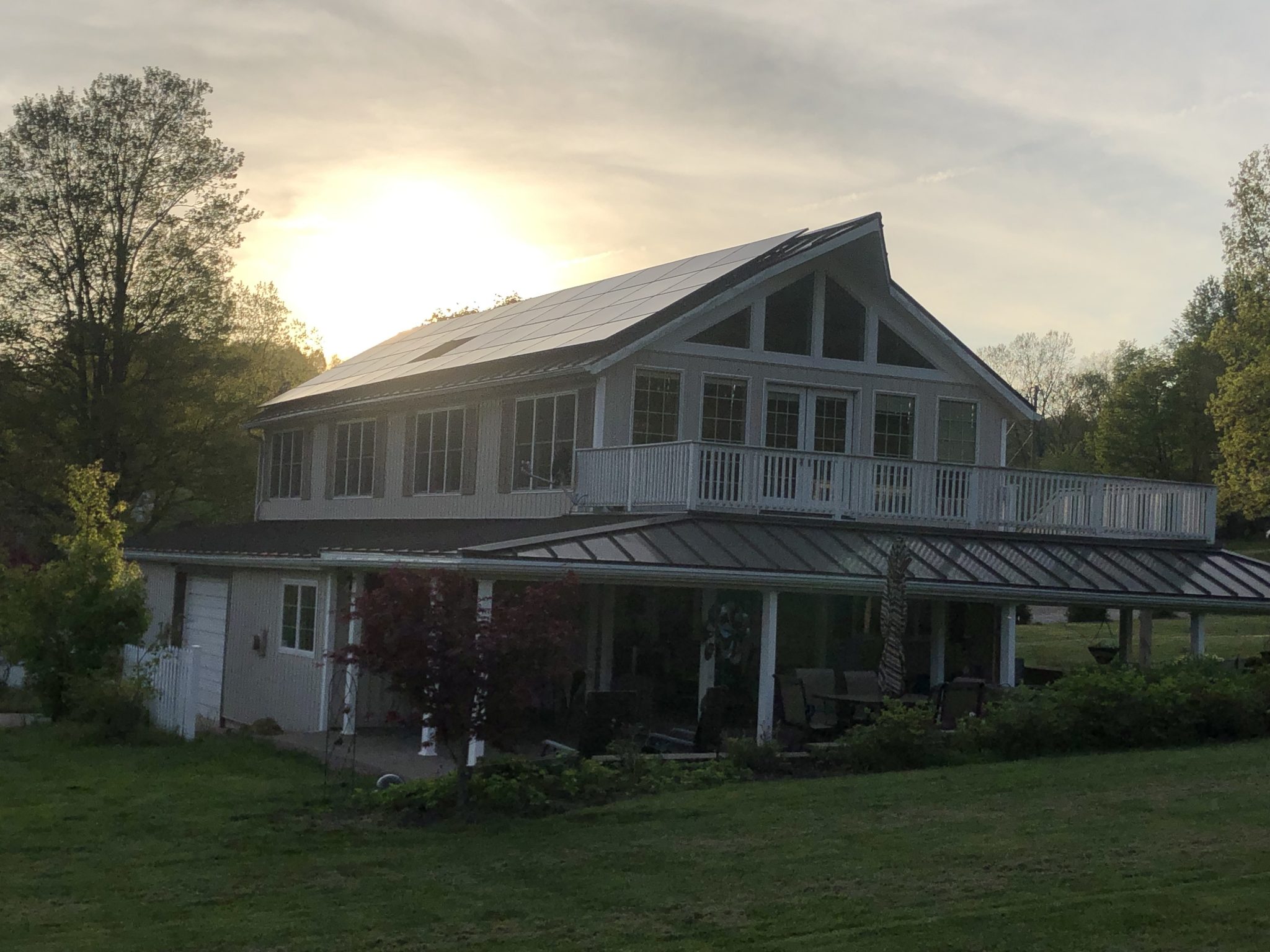
Will solar damage my roof? The short answer is no. In fact, the reverse is true—by shading the roof from the sun’s rays and from the damaging effects of wind, hail and debris, the solar array will actually increase the life of the roof beneath it. And the panels themselves are quite durable—about as hard to break as a car windshield.
As experienced, certified installer, we take great care to ensure no damage is done to the roof during the installation or anytime thereafter. With the exception of large businesses, we generally sell one solar system to each customer, and therefore live and die by our reputation and word-of-mouth marketing. We work very hard to ensure that each and every one of our customers is satisfied with their solar system results.
Prior to the solar installation, a structural engineer evaluates your roof to make sure it can support the solar array. This evaluation considers both the weight of the array and the potential uplift due to wind. We make sure there is no way that solar will damage your roof.
Solar modules are mounted parallel to the roof with a 1-to-3 inch gap between the roof and the modules. In this configuration, the wind forces are not extreme and are easily handled by any roof that was built to code. Nonetheless, on every job we rely on a professional structural engineer to evaluate the specific site and ensure that the roof and the array comply with all the local wind requirements in the building code and will be able to withstand all expected winds.
In addition to the structural evaluation, we take great care to ensure every roof penetration is watertight. Our crews are experienced with all types of roofing; we fully flash every roof penetration using standard roof flashings. We have built over 350 solar systems in our 14 years of operation and we have never caused a roof leak. Not one!
For our solar panel installations, we are very careful to find the very best solar panels based on reliability, performance, and long term value. Trina solar panels, for example, are made by one of the world-renowned leading solar companies; they have been listed at either #1 or #2 in the world for the past several years. We often use Trina panels because they are superior solar panels from a global leader. But we are not wed to them, and sometimes recommend other panels. It just depends on the specific project — each is customized to a great degree.
Many solar experts use the term “bankability” to refer to solar panel manufacturers that have proven to be reliable and stable, both in their product quality and in their overall company financial health. There are about 15 truly “bankable” solar panel manufacturers in the world, including Sunpower in the US. Most of the U.S. solar panel companies are smaller companies, though some meet our requirements and are approaching bankability as discussed above.
In our experience, many “U.S. made” solar panels are not too different from the rest, in that most of the manufacturing is done by the same global supply chain. In some cases, the individual solar cells are made here in the U.S., then shipped overseas for final assembly into solar panels. In other cases, the companies are based here in the U.S., but actually manufacture overseas, where manufacturing costs are lower. This is not only true of solar panels — it is true of many products, especially technology products like computers, tablets, and smart phones.
When “U.S. Made” is a priority for a customer, we present them with options and show the cost differences. U.S. Made typically adds about 25 cents per watt to the customer’s cost. That is a not a huge cost difference, but to an extremely cost-sensitive customer, it may make a difference.
Re-posted excerpt from The Accountancy Journal
By Kenton D. Swift, CPA, Ph.D.
The 30% federal tax credit available to homeowners and businesses to install solar energy systems was recently expanded and extended [in 2010]. A dollar-amount cap was removed from the credit for residential solar water heating systems, and the availability of the credit for all systems was extended through the end of 2016. Many state and local governments also offer incentives. The cost of solar components has been dropping, and electricity prices will likely go up. Taken together, these developments make installing a solar electric or solar water heating system much more appealing than in the past.
RESIDENTIAL SYSTEMS
The residential energy efficient property (REEP) credit in IRC § 25D applies to expenditures for solar water heating and solar electric systems installed in a residence in the U.S. that is used by the taxpayer (not necessarily as a principal residence). Taxpayers who own solar in condominiums or are shareholders in a housing cooperative are eligible for their proportionate share of credits resulting from solar energy installations by the condominium management association or cooperative.
The REEP credit is available in the year in which the use of the solar energy system begins. The credit is nonrefundable, but any unused portion can be carried forward. For tax years beginning after 2009, it can be applied against the alternative minimum tax. Allowable expenditures for purposes of the credit include the costs of the system, piping and wiring to connect the system to the home, plus labor related to preparation, assembly and installation. Expenditures for solar energy systems increase the basis of the taxpayer’s property, but the property’s basis must be decreased by the amount of the credit allowed.
BUSINESS SYSTEMS
Nonresidential installations can qualify for a business energy credit under IRC § 48 as part of the investment tax credit. Qualifying property includes that which uses solar energy to generate electricity, to heat or cool a structure, or to illuminate the inside of a structure using fiber-optic distributed sunlight.
Because of the difficult economic times, Congress was concerned that a nonrefundable credit might not create enough incentive for businesses to install alternative energy systems in the near term. Therefore, Congress in the ARRA authorized grants in lieu of the business energy credit for energy property placed in service in 2009 and 2010, or placed in service after 2010 if construction begins on the project before 2011 and is completed by Dec. 31, 2016. Additional information about this program and applications are available at treasury.gov/recovery.
OTHER INCENTIVES
Some states, local governments and utility companies also offer incentives. Other incentives that may be available include:
Property tax exemptions. Most states provide that the added value of a renewable energy system is excluded from the valuation of the property for taxation purposes. For example, Montana exempts the first $20,000 of investments in residential solar energy from property taxes for 10 years following installation.
State income tax credits and deductions. These may be available for both personal and corporate returns. Arizona, for instance, provides a 10% tax credit on the installation of solar energy systems in nonresidential buildings. The credit is limited to a total of $25,000 for any one building in the same year, and $50,000 of total credits in any year.
State sales and use tax exemptions. For example, New York exempts the sale and installation of residential solar energy systems from the state’s sales and use taxes. The law also permits local governments to grant an exemption from local sales taxes.
Rebates. States, local governments and utilities may offer rebates to promote the installation of renewable energy systems and energy-efficiency measures. The majority of rebate programs that support renewable energy are administered by states, municipal utilities and electric cooperatives. CPS Energy in Texas, for instance, offers a $3-per-watt-produced rebate for installation of solar electric systems. It is important to keep in mind that any rebates received by the taxpayer reduce the cost of the system and, therefore, the size of any federal or state income tax credits.
Low-interest solar financing. Low- or zero-interest loans for energy-efficiency projects are offered by electric utilities and state and local governments, commonly for both residential and business installations. The U.S. Department of Energy’s Database of State Incentives for Renewables & Efficiency (DSIRE) also covers local incentives and provides a comprehensive listing at dsireusa.org.
WILL A SOLAR SYSTEM PAY FOR ITSELF?
To determine return on investment (ROI) of a solar energy system, besides the savings available from incentives, the owner must also know a system’s cost, the length of its useful life and the current and likely future cost of conventional energy the system will replace. Besides generating their own electricity, owners of solar electric systems can in many cases sell their excess power back to the electrical utility, which offsets their cost of having to purchase power when the sun isn’t shining. This is called net metering. The Energy Information Administration (www.eia.doe.gov) provides statistics on the average retail price of electricity around the U.S. For a solar electric system, additional factors include the system’s electrical output and average daily hours of sunlight at its planned location. A spreadsheet incorporating these variables is available for download here. They indicate that for an average-size solar electric system receiving an average of five hours of sunlight a day, the ROI ranges from 1.34% to 6.67%, depending on future increases in the cost of power and the useful life of the system.
For average sunlight in cities across the U.S. and other information, see tinyurl.com/crsghf.
By Kenton D. Swift, CPA, Ph.D., associate professor of accounting at The University of Montana in Missoula.
One of the reasons that people prefer Smart Solar Financing over leasing is that it is simply a better deal. With a lease, several companies AND their investors all need to earn a profit. When YOU own the system, there is only ONE investor – you.
With owning a solar array, all of the financial return goes to YOU, so that even if a solar project in OH doesn’t have enough of a return to please the tax equity investors, venture capitalists, and others that seek to make money through solar leases, it DOES make financial sense when YOU are the investor and you are dealing with a known, reputable institution. We make that happen.
We now offer a Smart Solar Financing option that gives our customers the best options:
low (or no) money down
easy terms with a good, stable financial institution that specializes in renewable energy financing for homeowners
PLUS you own the system and get to reap those financial benefits over time
With solar energy systems having a productive 30+ year life cycle, a purchase decision can pay you and your children the dividends, rather than letting someone else make that money off your rooftop. And with Smart Solar Financing, we make it easy for you to own and profit from your own roof or ground.
Mainstream, reliable solar financing for homeowners: make sense to you? It does to us. Because one of our core company values is, “We’re in this for the long haul.” We want our customers to be happy and profitable – for decades! Because if you are, we will be too.
Re-post of excerpted article in SolarReviews by Chris Meehan
Normally when people think about renewable energy and who supports it, most think it’s primarily championed by liberals and Democrats. But a growing number of conservatives and Republicans—even Tea Party members—are supporting solar. In fact, two of the nation’s largest solar states have Republican Governors.
Take for instance, Georgia, where the conservative-led Public Services Commission (PSC) recently decided the state’s largest utility, Georgia Power, needs to add in 525 megawatts of solar by 2016—and 100 megawatts of that will come through distributed solar. The plan was introduced by Republican Commissioner Lauren “Bubba” McDonald, Jr., but also supported by other Republican Commissioners like Chuck Eaton.
Last year Eaton made wrote an op-ed which appeared on the That’s Just Peachy Roundtable about the conservative case for solar. “Since solar is almost 100 percent capital costs, with relatively small ongoing costs and no fuel requirement, the dramatic drop in solar panel costs will save Georgians millions of dollars over states that implemented solar earlier…” he said.
Ahead of the PSC’s decision, even the Tea Party came to solar’s side—after the Koch brother supported Americans for Prosperity contended that solar would raise rates by 40 percent there. “Apparently, they aren’t looking at the right numbers,” said Debbie Dooley, original co-founder of Tea Party movement. “There are lots of folks who are working in overdrive to support the monopoly’s efforts to quash solar.” She said that some special interests wanted to stop solar from free-market competition.
Solar also has the support of Barry Goldwater Jr. in Arizona, who is Chairman of TUSK (Tell Utilities Solar won’t be Killed), a group that is fighting efforts by the state’s largest utility Arizona Public Service (APS) to kill its rooftop solar net-metering program.
In a statement on TUSK’s site Goldwater said, “As a son of Arizona, I know we have no greater resource than our sun. Republicans want the freedom to make the best choice and the competition to drive down rates.” He added, “That choice may mean they save money, and with solar that is the case. Solar companies have a track record of aggressively reducing costs in Arizona. We can’t let solar energy—and all its advantages and benefits it provides us—be pushed aside by monopolies wanting to limit energy choice. That’s not the conservative way and it’s not the American way.”
Arizona is one of three states with more than 1 gigawatt of solar installed, and its Governor, Janet Brewer (R), is hardly a liberal bastion. Yet during her inauguration speech in 2011 she pointed out the importance of solar. “We’ve been named the country’s solar king, offering the highest solar power potential in the nation, while attracting new companies—and at the same time rededicating ourselves to business retention,” she said. Arizona, “Will be a state with a solar industry that is the envy of the world, one which continues to lead with innovation and cost-effective technologies.” Since taking office most of that solar has been installed, with 273 megawatts coming online in 2011 and 710 megawatts coming online in 2012.
Solar also is taking off in New Jersey, one of the other states with more than 1 gigawatt of solar installed. There Republican Gov. Chris Christie—a potential Presidential candidate for 2016—has repeatedly signed bills to expand solar in the state. When he signed a bill last year that moved forward the state’s renewables requirements, primarily the state’s solar by increasing the number of solar renewable energy credits (SRECs) that the state’s power providers must purchase, he renewed his support for renewables.
“Since my time running for office, I made it clear that my Administration would be unrivaled in our aggressive support for the development of renewable sources of energy in New Jersey,” Christie said in statement. “Renewable energy not only helps meet our goals of increasing sustainability and protecting the environment, but can be an engine for economic growth and the creation of good-paying jobs for the people of our state,” he said.
These are just a few of the conservative voices that are increasingly open about supporting solar, but none of them are on Capitol Hill in Washington, D.C., talking with fellow conservatives in the House and Senate about the need for more solar power and how to enact policies that will lead to more solar throughout the U.S. at lower costs.
[av_one_half min_height=” vertical_alignment=” space=” custom_margin=” margin=’0px’ padding=’0px’ border=” border_color=” radius=’0px’ background_color=” src=” background_position=’top left’ background_repeat=’no-repeat’ animation=”]
[av_textblock size=” font_color=” color=”]
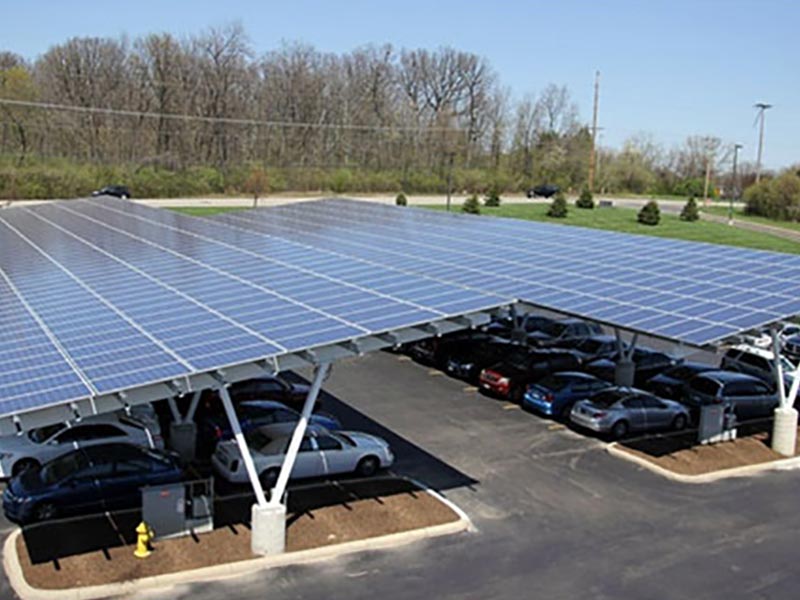
Third Sun Solar completed construction early this year on a new $7 million solar installation to supply clean energy at the office campus of Assurant Specialty Property, one of Springfield Ohio’s largest employers. Crews installed more than 6,200 solar panels on the roof, as well as atop 15 new solar carports in the parking area. The 1.76 megawatt project is expected to produce more than 1.9 million kilowatt hours of solar power each year, making it the Springfield-Dayton area’s largest solar installation.
[/av_textblock]
[/av_one_half]
[av_one_half min_height=” vertical_alignment=” space=” custom_margin=” margin=’0px’ padding=’0px’ border=” border_color=” radius=’0px’ background_color=” src=” background_position=’top left’ background_repeat=’no-repeat’ animation=”]
[av_textblock size=” font_color=” color=”]
Third Sun Solar completed construction early this year on a new $7 million solar installation to supply clean energy at the office campus of Assurant Specialty Property, one of Springfield Ohio’s largest employers. Crews installed more than 6,200 solar panels on the roof, as well as atop 15 new solar carports in the parking area. The 1.76 megawatt project is expected to produce more than 1.9 million kilowatt hours of solar power each year, making it the Springfield-Dayton area’s largest solar installation.
[/av_textblock]
[/av_one_half]
We are starting to build a significant solar library installation at the Athens County Public Libraries, Athens branch. Jenaye, the staff Communications Coordinator for ACPL, will be blogging about the installation as it progresses. You can watch the progress on Jenaye’s blog here, and get a taste of the excitement our customers feel as their clean solar energy systems are being built!
Why Let Someone Else Profit From Your Solar Investment?
Our society is seeing a great surge in people taking steps to be more green in their lives and work. Installing solar panels is one of the most visible and tangible green actions households can take, and with that in mind, many people are taking a fresh look at solar electric for their homes and businesses. A growing, maturing solar industry means lower manufacturing costs and a lower cost of solar energy. In recent years, the falling price of silicon has also contributed to lower prices of solar panels and making solar energy more affordable for everyone. Experienced solar energy companies like Third Sun Solar are now offering easy finance options for home solar panel systems.
Solar Home Ownership Made Easier
In Los Angeles, a booming solar city where thousands of homeowners have acquired residential solar through leasing, many people are now taking a second look at their solar panel lease—with regrets. Selling a house with a solar lease adds complications, and in some cases, they are now realizing they could have done better financially—much better—by buying their system outright.
With solar loan programs becoming more available and popular, people can now make an investment in installed solar panel kits for their home with little or no money down. If your credit score is good, you can get a good rate and easy terms. Our smart financing options allow us to offer easier purchasing options with better long-term returns than leasing.
The benefits of buying residential solar power, in many cases, far outweigh the benefits of leasing. Under our financing program, all of these advantages apply:
Little or no down payment
Customer may be eligible for a federal tax credit
Customer may gain asset value on home
Payments may decrease over time
There are no pre-payment penalties
An Investment That Pays You Over Time
Financing your investment in solar can put purchasing within reach and pay nice dividends—in fact, an investment in solar can outpace many other available investments these days. Using either our smart financing, a traditional refinanced mortgage, or using a home equity line of credit (HELOC) can pay for the system and reap solid downstream savings.
Purchasing a solar power system is a great long-term investment that can increase the value of solar homes more and more as utility rates rise over time. The immediate savings on your electric bill can multiply as rates rise, as they are predicted to do. No one knows how fast or how far utility rates will rise; in states like Ohio, where electric rates are low because utilities burn coal in aging power plants, chances are that rates will rise sharply as utilities are forced to replace those aging plants with newer, cleaner ones. Long-term energy savings with clean solar on your rooftop may be more and more attractive to home buyers as rates rise over time.
Downsides of Solar Leasing
Many people are drawn to solar leasing for the same reasons they are drawn to leasing cars—these leases require little money down on signing, and they can “drive more car for less money.” But that sidesteps the fact that they are creating no ownership equity. Dealers love leasing cars, as they make more money that way. With solar energy systems having a productive 30+ year lifecycle, a purchase decision can pay you the dividends, rather than letting someone else make that money off your rooftop.
Put the Money in Your Own Pocket
The advantages of solar leasing include low or no money down and a reduced electric bill that is consistent month to month. But consider these solar energy facts: if you lease, you do not own your solar panels, someone else does; you cannot take the 30% Federal Tax Credit, as you do not own the system; and the reason lease companies offer leases is that they represent earning opportunities for them. Solar ownership puts that earning opportunity in your pocket.
In states like California, where solar has been growing by leaps and bounds, leasing offers consumers a way to spread the up-front cost of solar over a long period of time, while also saving on their monthly electric bill. But lease payments are passed on to the home buyer in the event of a sale, and that is another drawback for a solar lease—selling the home may be more difficult because purchasers must have high enough credit scores to meet the leasing company requirements.
Choose Smart Solar Financing
Purchasing your solar system from one of the better solar panel companies can make the most financial sense in the long run. Purchasing is easier now thanks to lower costs, the 30% Federal Tax Credit and good financing options. Federal tax incentives are set to expire within the next 3 years, so the best time to go solar is now! Call us for details—877-OWN-SOLAR (877-696-7652).
We are passionate about solar and believe that sourcing only the highest-quality products is best for the health and long-term viability of our company, our customers, and the solar industry. Whenever someone spends their hard-earned money with us, we make sure they get the very best solar power system that money can buy. How do we choose the best solar panels? We take our role as a technology expert/advisor very seriously for every project, from the largest to the smallest. We’re in this industry for the long haul and are determined to be here when less-careful solar installers fall away.
In evaluating solar panels and related equipment, we employ three main filters:
Quality of the solar technology platform
Specific solar performance indicators coupled with industry reputation
Financial stability of the solar manufacturer
Some products perform, while others fall short. This is true in solar as well as all other technologies. We choose only the top performers to build our reputation upon. Our network of national peer companies amplifies our internal ability to vet and process the best available solar products. We are well-connected by virtue of our 20 years of industry leadership as well as our president’s positions on the NABCEP and SolarTECH boards of directors. We have interviewed executives and key science and operations officers at all of the solar manufacturers that we recommend and we monitor the real-world performance of their equipment at multiple test sites around the world.
We do not recommend a product lightly. As a case in point, we are proud to have warned against using Solyndra, due to its unproven technology as well as the instability of its parent company. We had many customers asking for Solyndra panels when they were the “hot new thing.” We’re proud to have held those customers off by advising them, “that technology is not yet proven in the real world—we’re not using them. If and when they prove to be everything they claim, we’ll consider using them.” They never did, and despite government backing, Solyndra went under—and gave the entire industry a black eye.
In addition to quality, performance, and long-term warranty assurance that apply to every job, for those customers who are concerned about where the products are manufactured, we can apply geographic filters as well. Whenever appropriate, we are pleased to provide equipment made in America, or made even more locally, such as in the Midwest.
On this note, it is important to point out that providing equipment that comes with a “Made In America” label is often more nuanced than it might appear. Per the “U.S. made solar panels” label, we always urge our customers to consider that statement in light of the global manufacturing basis for virtually all products. The Toyota Corolla is a Japanese car—made in California. BMW builds some of its “German” cars here in the U.S. Suniva designs and manufactures its solar cells here in the U.S., then ships them to Taiwan for final assembly of the solar panels. In many cases, for many products, the “Made in USA” label should have an *asterisk—because the final assembly is completed overseas.
Today, there are nearly 80 solar panel manufacturers offering approximately 600 different models of solar modules. There are also hundreds of inverter models and myriad solar racking manufacturers. Every solar system includes each of these three main components. The main components are generally not “mix-and-match” and they are not plug-in interchangeable. While each of the respective technologies has matured and we have highly-reliable options for panels, inverters and racking, there are as yet no industry standards for evaluating the performance of the completed system as a whole. We are pushing hard for those standards to be established—for the good of consumers AND the good of the reputable firms in the solar industry.
Our best solar advice to you: spend time choosing an experienced solar installer who will advise you and guide you toward the best solution for your energy needs, unique site characteristics, and budget.
In the changing landscape of medical practice and insurance, there are some common issues facing many doctors and practice managers.
Patient churn/lack of loyalty
Need for new patients
Need to increase patient referrals
Need for more self-pay, affluent, well-insured patients
Along with these issues come related challenges:
Managing operating costs amid a changing landscape
Retaining good staff
Easing administrative burdens
Desire for autonomy—independence—and value growth
Solar energy for medical practices offers positive effects for all of these issues. Solar offers documented payback in its ability to help businesses of all kinds to:
Manage for energy efficiency and sustainability
Gain positive press & community goodwill
Enhance public image & reputation
Recruit top talent & retain best employees
Sustain high staff morale
Enter new markets & attract new clientele
Increase property’s value
If you are a medical practitioner—a member of the caring profession—does an investment in solar make sense for you? As you look after your patients’ best interests, solar can help protect the environment we all share while communicating that your practice uses the latest technology and offers top-quality care.
Sharpen your appeal and earn more loyalty with educated healthcare consumers.
Earn more referrals among green-leaning consumers (LOHAS*) who see solar as a sign of technological advancement, caring, competence, and intelligence.
*Lifestyles of Health and Sustainability—a fast-growing consumer market segment
Here are the bottom-line benefits of going solar:
Solar can pencil out to a 2-year pay-back and double-digit IRR. Not many investments can make that claim these days.
Solar can make operating costs more predictable and lower over time, and protect you from energy rate inflation.
Solar is a strategic way to manage costs and build the long-term value of your practice.
Solar increases the value of your clinical property.
On Wednesday, June 5 Geoff Greenfield participated in a segment of the Diane Rehm Show (national NPR, WOUB in Athens, Ohio). The segment topic was “America’s Energy Future Beyond Oil and Gas” and the participants included Christine Todd Whitman of the CASEnergy Coalition, former governor of New Jersey and former administrator of the EPA; Rhone Resch of the Solar Energy Industries Association (SEIA); Robert Gramlich of American Wind Energy Association; and Coral Davenport of National Journal. The full transcript is available here.
REHM
All right. To Athens, Ohio. Good morning, Geoff.
GEOFF
Hi. Good morning, Diane.
REHM
Hi there. Go ahead, please.
GEOFF
Thanks, Diane. First off, I’m a big fan, and thanks a lot for focusing your show on this important subject.
REHM
Indeed. You’re welcome.
GEOFF
So 14 years ago, we started Third Sun Solar. We’re a solar company here in Ohio. We’re what you’d call an installation business. We work on residential rooftops and commercial buildings across the Midwest. Right now, it’s a beautiful sunny day here, and our crews are out on the job today building clean power plants and earning a great living. So these are the jobs that really can’t be shifted overseas.
The part of the solar value chain that has to be local is on the rooftop and out in the solar, you know, field. So I’m wondering why we don’t hear as much about this incredible opportunity for economic development and job creation that solar and wind power present.
REHM
Rhone.
RESCH
Well, there’s over 120,000 people employed in the [solar industry in the] United States today. And the great thing about solar, you create more jobs per megawatt than any other energy technology out there. So you really have a confluence of both energy policy, environmental policy and economic policy when you’re growing the solar industry. And as Geoff points out, these are small businesses, right?
These are the backbone of our economy. These are roofers, electricians, plumbers. But those were let go by the housing industry starting a new business. You know, Third Sun Solar is a great example of somebody coming out of the housing and electricity industry and creating a solar business that’s thriving in creating jobs.
REHM
And you’re listening to “The Diane Rehm Show.” Gov. Whitman, you wanted to say something.
We get many kinds of questions from prospective customers—some who are merely curious about solar energy, others who are more serious about going solar. Often we are asked about our track record as a solar installer, and we’re asked to compare ourselves to our competitors. While national standards are sorely lacking, we have always ranked among the best solar installers in Ohio and the region; we have had experienced utility officials tell us we’re the best Ohio solar installer and the best Ohio solar company. But we don’t hang our hat on heresay—our project experience speaks for itself, and the compliments that mean the most to us come from our customers (see our home page for some of those). Here are the bare facts:
We have been in business since 2000.
We have completed over 350 successful renewable energy projects.
Our founder, Geoff Greenfield, has been building solar projects since 1997.
Geoff now sits on the Board of Directors for NABCEP, the “gold standard” certification body for solar installers.
Geoff also sits on the board of SolarTech, an initiative of the Silicon Valley Leadership Group—working to establish quality standards for the solar industry.
We offer a strong workmanship warranty on all of our solar projects.
Our reputation is worth more to us than money.
We are in it for the long haul. We build top-quality solar energy systems that are designed to produce clean electricity for 30+ years. We’ll be here to make sure they do.
Regarding the New York Times article of May 29, 2013 by Todd Woody entitled Solar Industry Anxious Over Defective Panels, our response at Third Sun Solar was a mix of frustration and ‘we told you so.’ Since 2000 we’ve been cautioning our customers and prospects—individually and in public forums—that solar is a young industry with newcomers jumping in every week. Newcomers as in new installers, new manufacturers, and new customers. We have pushed for standards and best practices. And we’ve cautioned our customers against seeking out lowest-price solutions—because, as in that age-old wisdom, you get what you pay for. In the case of PV solar, you are putting an electrical generating plant on your roof or grounds—one that should produce expected levels of clean energy for 30 years. That is not the place to be penny-wise and pound-foolish.
We have advocated for strong solar industry standards and adherence to best practices. We’ve seen ourselves under-bid and undercut by impossibly low prices, and wondered: how can so-and-so build a quality solar installation that cheaply? Well, again and again we’ve found, they can’t. At least, not if the word quality means anything.
Here is a rough outline of what we have been advocating for the emerging solar energy industry since our founding in 2000. In light of The New York Times article on solar panel quality, we renew our call for the solar industry to grow up and adopt strict standards and best practices:
We have always had a policy against beta testing on our customer’s dime. Case in point, we steadfastly avoided using Solyndra panels even when they were “the next new thing” and many of our customers were asking for them. We said no—they are unproven, and the company making them is too new and likewise unproven. The failure of Solyndra gave solar opponents some great talking points and the industry a black eye.
Whether it be micro-inverters, the latest shade tolerant inverter, thin film laminates, or locally manufactured racking, whenever any new product comes out we have advised our clients to try to see beyond the marketing claims and search out truly independent, objective test results. Unfortunately, in this rapidly growing industry these are often hard to come by.
We have long advocated for strong industry standards and institutionalized best practices.
We have encouraged our employees to become NABCEP certified. NABCEP certification involves an incredibly rigorous regimen of training and testing. NABCEP certificates are the “gold standard” of expertise in the solar industry.
Our founder, Geoff Greenfield, was a member of the very first NABCEP graduating class. Geoff now sits on the NABCEP board of directors.
We have always been honest with our customers in pointing out the fact that no industry standards yet exist for making energy performance projections. We deliver very conservative projections for the systems we design and install.
We have always been honest with our customers in pointing out that no industry standards exist for assessing, quantifying and publishing the long-term viability of major components. A 25-year warranty requires 25 years to be proven out. That said, we conduct our own research and carefully select major components that we feel will serve our customers best, and thereby serve our company best in the long run. We studiously avoid low-cost “solutions” because, in our view, they guarantee downstream problems.
We employ trained, experienced installers and enforce a high degree of oversight.
We partner closely with other industry veterans to ensure we learn from their mistakes.
We sought out and achieved certification as a SunPower dealer. SunPower manufactures the most high-efficiency solar modules in the world and their products consistently rank among the best for quality and durability. What’s more, SunPower inspects our installations after completion to ensure we consistently meet their standards for quality design and construction.
We have repeatedly advised our customers not to use lowest-cost equipment. When initial price is the sole deciding factor in who builds a project, we often lose. Those are projects we do not want to build.
And we provide a ten-year warranty on our installations to cover the possibility that, after all of our care and due diligence, we too could make a mistake.
We understand the risks inherent in any rapidly-growing industry. Customers need to minimize risk in moving toward clean energy, and the best way to do that is to find a trusted design/install firm with a long, positive track record of successful installations. Making purchase decisions on a 30-year product based on lowest initial cost is not necessarily the best way to go. The Times article illustrates just how important such considerations can be for a young, emerging industry.
Third Sun Solar has not used components from a single one of the companies implicated in the article—and, we agree fully with the final words of the piece: “It’s time to start naming names.”
Does solar work in a blackout? If you’re thinking about installing a solar system to have power in a blackout, here are some facts to consider. There are many advantages to installing a grid-connected solar energy system. But, having full power to your home or business during a blackout is not one of them. You will need to take special steps for solar to work for you in a blackout.
In the event of a power outage, basic habits like charging a cell phone become essential. Most homeowners have no source of backup power when the grid goes down. Even homes with solar may lose power in the event of a grid outage if their system does not include some form of energy storage.
Solar rules and regulations vary widely from state to state. Are you located outside of Ohio? If so, check out a local installer near you to get more localized information. Find a reputable solar installer near you here.
Does solar work when the power is out?
There are two reasons that ordinary grid-tied solar will not work during a grid failure. The first is a technical reason and the second is a safety and regulatory issue.
First and foremost is the technical reason.
The electronics that control a solar system constantly adjust voltage and current to keep the panels operating efficiently as the sunlight changes. To do this, the system produces quantities of power that aren’t dependent on how much your house is actually using in a given moment. In a grid-connected system, any excess power is put back onto the grid for others to use, and your utility credits you on your bill for that power.
Solar power output varies directly with sunlight levels. So, even if you disregard the need for efficiency, connecting this variable resource directly to your home’s electrical system would cause your lights to blink, damage your refrigerator, and wreak havoc on your computers and television.
The second reason that solar shuts down during a blackout is safety.
During a blackout, the power utility sends out repair crews to find and fix the points of failure. Linemen and women will be jeopardized if there is a local power generator (like a solar array) leaking power onto the grid lines. Therefore, utility rules mandate that in the event of a power outage, solar arrays must automatically shut down. Solar systems have detectors that sense whether power is coming across the grid, and whenever grid power is down, they automatically shut down too, to protect utility workers.
Battery Backup
There are arguments for and against battery storage for PV solar systems. The biggest “for” argument is that battery backup will power your home or business during a blackout. The biggest “against” of battery storage is the cost, which can double the cost of your clean energy system. Batteries also compromise the “clean energy” aspect of solar—they are toxic and very costly to discard when no longer useful. Batteries have a relatively short life, compared to other solar system components; they are also very heavy and bulky, and require a lot of maintenance to perform at their best.
You are a good candidate for a backup battery system if you:
Want to know that you will have seamless energy when the grid is down
Experience frequent power outages
Experience extreme weather conditions
Have critical appliances at your home
Tesla Powerwall: Home Battery Storage
Powerwall is a home battery system that turns your home’s solar panels into an all-day resource. Daily it increases your self-consumption of solar. In the event of an outage, it offers reliable home backup power. With Powerwall, more of your home’s electricity use will come from solar, which enhances solar functionality, reduces energy costs and provides peace of mind to homeowners.
Powerwall allows you to store 14 kWh of energy and use that energy to run your home with solar during the night and back up your home in the event of a power outage.
The technology withing Powerwall is able to detect a grid outage, disconnect from the grid, and bring power back to your home in a fraction of a second. That is over 100x faster than typical standby generators, and fast enough to keep your appliances running without interruption. You will not have to reset your clocks or your alarm. Powerwall can provide backup to your entire home. However, depending on the type of appliances at your home, we may recommend an essential load backup instead of a whole home backup. Read more about Tesla here.
Right-Sizing Your Backup System:
Whole-Home Backup
If you’re interested in whole-home backup, our Solar Designers can analyze your home’s electric use patterns and the recommended number of Powerwall’s needed to keep all loads running. In some cases, an upgrade to your electrical panel may be needed and we will advise you if this is the case. You can add more Powerwall’s to keep your house operational longer during an outage.
Essential Load Backup
If your electrical situation doesn’t require whole home backup, we can backup select essential loads. Since lights and outlets require less energy, a single Powerwall will typically be enough.
New inverters offer some solar power in a blackout
We have been using SMA inverters for a long time—they are great products with high reliability.
Now, new technology developed for SMA’s Sunny Boy 3000TL-US/4000TL-US/5000TL-US models offers a partial solution to the grid power failure problem. These new inverters feature a secure power supply (SPS) that can connect to an external socket outlet. They provide up to 1,500W of daytime power when the sun is shining and the array is generating sufficient power in the event of a grid outage. This gives customers confidence that a small supply of electricity will be available, even when the grid is out and other solar PV systems are down. The bottom line is, with new technology, grid-connected solar can deliver a limited amount of electricity to your home or business during a power outage. This is a new development.
These new inverters address both of the technical and safety issues by creating a small, independent circuit entirely disconnected from the grid. The inverter controls the solar panel electrical output as an alternative to sending out variable power levels.
SMA inverters represent a compromise between solar owner’s desires for backup power and reluctance to make the upfront investment in a battery backup solution.
Is solar worth the money?
The ability to generate clean solar power during a blackout is an advantage of going solar.
In the long run, solar power is economical. Solar panels and installation involve high initial expenses, but this cost is soon offset by savings on energy bills.
Solar can increase the value of your home.
With a grid connection and net-metering rules, your solar power system shares clean energy with the grid.
Solar energy systems are safe, reliable, and durable—the panels are warranted for 25 years.
Your fuel is free once your initial investment in solar is paid off. With fossil fuel costs & utility rates predicted to rise, solar is good way to lock in long-term savings now.
There are three important characteristics to look for in solar panels—
panel efficiency
panel warranty
weather resistance
Panel efficiency means how well a panel performs over time. Solar panels lose some ability to generate electricity as time passes—the question is, how much do they lose & how fast.
High-quality panel manufacturers offer a Power Production Warranty that guarantees no more than X% efficiency loss over X years. Inferior panels tend to have a greater immediate drop-off in efficiency and a sharper production decline over the life of the system (20-30 years).
A good panel warranty should guarantee against manufacturing defects and assure efficient performance over the duration of the warranty. Superior panels offer typical 25-year warranties.
Weather resistance is a solar panel’s ability to withstand wear and tear from the elements. People often ask about hail damage, and our standard answer is, hail big enough to break car windshields will probably break a solar panel. But that’s pretty rare, and in any event, would be covered by your homeowner’s insurance. In coastal areas, salt is a big concern. Well-built panels are crafted from high-grade aluminum (6000 series marine grade, for example) and include a salt mist certification for use near the coast.
In short, you’re well advised to go with solar panels that guarantee higher efficiency over a longer warranty period.
Our completed project at Assurant in Springfield, Ohio
But here’s the best advice: with the growth of the solar industry, most panels are now commodity items (except the high-efficiency panels from companies like SunPower). It is far better to spend your time choosing a good solar installer, who will recommend the best panels, than spending time weighing fine specification differences between panels. An experienced installer will know what to recommend—and will protect you (and his company’s reputation) by making good, safe recommendations and offering a strong workmanship warranty.
Solar for your home is a classic long-term investment strategy. It costs money up front, then pays long-term dividends. Those dividends include:
daily clean energy for your home
monthly savings on your electric bill
yearly income from selling your Solar Renewable Energy Credits
decades of reliable, home-made clean energy
a lifetime of greater equity and value in your home
for our country, better energy security and independence
for our planet, less CO2 released into the atmosphere
Looking long-term, solar electric is better than most investments—especially now, with low interest rates available from banks and uncertain returns available from other investments. Many now agree: Solar is looking smarter every day.
What is it about magic numbers? Seems like every once in a while, a number keeps popping up. Today’s number is 450, and it relates to the state of PV solar today compared to some notable 20th-century growth technologies:
In 1916, the U.S. car ownership rate was 1 in 450 (one out of every 450 households).
In 1949, the U.S. television ownership rate was also 1 in 450.
Today – the U.S. PV solar ownership rate is, you guessed it, 1 in 450. One out of every 450 U.S. homes now has PV solar on the roof or in the yard.
(By contrast, the PV solar ownership rate in Germany is 1 in 33.)
Here is a comment about Third Sun Solar made by another solar installation company. Not a competitor–they operate in another part of the country–their observation is based on their knowledge of our company and our Third Sun Solar reputation as one of the region’s best solar installers:
Third Sun Solar offers–
Critical knowledge of solar tax and utility incentives
An impressive job portfolio
Best solar installation methods using their own crews
Best solar equipment options, from the most efficient to the most affordable
Naturally, we were delighted to see ourselves described in that way. We’re working hard to build on our reputation, both inside the industry and with our customers.
Get Started
Complete the form below to begin your free solar evaluation.
"*" indicates required fields
Get Started
Complete the form below to begin your free solar evaluation.