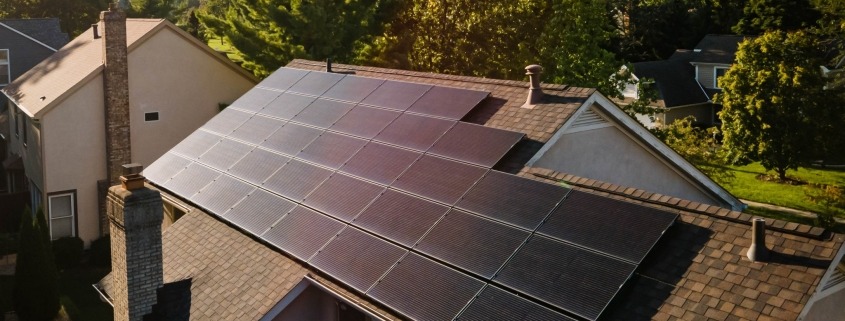
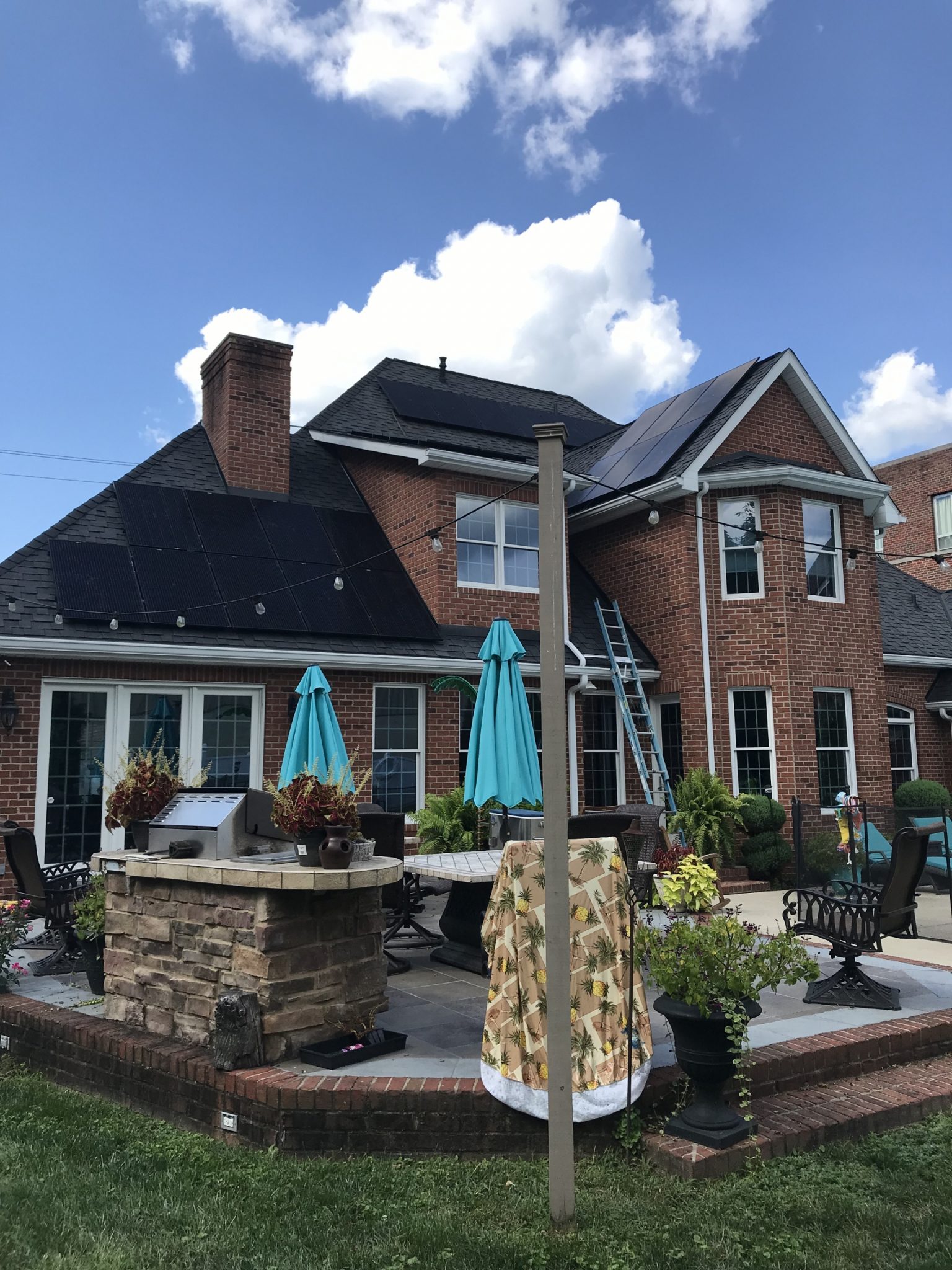
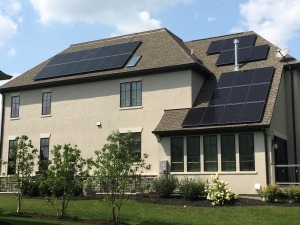
Offer Your Family the Gift of Solar Power

Have you ever searched for the perfect gift? Something meaningful that will have an ongoing impact on the life of your loved one for many years ahead. It’s hard to find a gift with lasting value.   

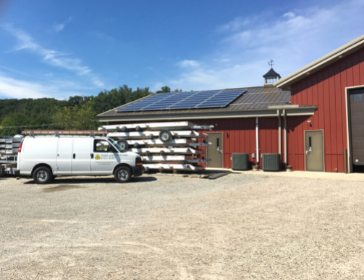
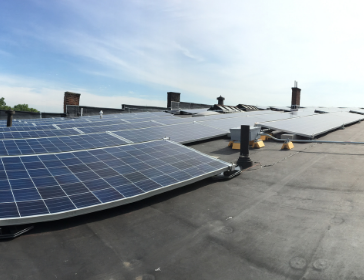
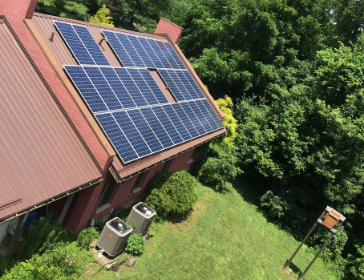
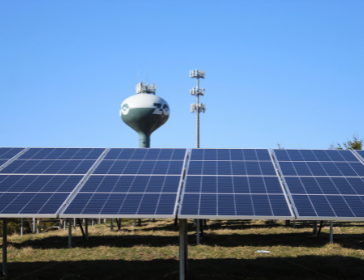
This holiday season, consider giving the gift of solar. Here’s why.   

  • The value of solar is significant over time – the recipient of the gift avoids electricity expenses (coupled with avoided inflation of electricity rates) over 30+ years.    
  • Solar increases the home value
  • Solar sets an example for future generations – Naturally, children are curious about solar panels when they’re installed and become inclined to learn about clean energy, their energy footprint, and all the ways their generation will grow to help protect the planet  
  • Solar creates goodwill in communities  
  • Solar supports a healthy lifestyle     

If you’re looking for a unique, impactful gift for someone special this holiday season, consider giving the gift of solar to a loved one.

There is no doubt that it will have a lasting impact.  

Are Solar Prices Going Up or Down?

by Geoff Greenfield, CEO

Are Solar Prices Going Up or Down?

As discussions about inflation become commonplace, many people are asking us if the price of going solar will be affected as well.

If prices ARE going up, this would certainly be a reversal of historic trends. Many that follow the industry have gotten used to a general expectation of falling prices.

Solar installers around the country have celebrated the significant price drops that accompanied widespread adoption and increased efficiency of the technology. According to the Office of Energy Efficiency and Renewable Energy, “Since 2014, the average cost of solar PV panels has dropped nearly 70%.”

Due to various factors, this trend has reversed, and solar costs are rising for the first time in recent memory.


What is Behind the Inflation in Solar Prices?

Several factors are driving this new upward cost curve.

You’re surely aware of the rising commodity prices and surging freight costs across the country. These factors have impacted everything from vehicles to kitchen ovens. Like all markets in the U.S., the solar industry is beginning to see the effects of inflation as we turn the corner into the new year.

The building blocks of a solar system include copper, aluminum, steel, and electrical components. Copper is needed for solar inverters and electric cabling. Aluminum and steel make up the solar panel racking and panel frames. As the global economy comes back from Covid-19, and economies are “stimulated” with low interest rates, demand is booming while supplies are struggling to keep up.

The economists predict that these materials will continue to rise in price in 2022 and perhaps beyond.

The other major ingredient in a solar system is the people needed to do everything from the engineering work to bolting the modules to the rooftops. Just as the wait at your favorite restaurant is longer due to staffing shortages, the solar industry has their help wanted signs up as they seek to hire and train the workforce needed to meet the growing demand for clean energy.

Wages are rising to attract quality team members and compete with the other booming sectors of the economy. Across the board, positions are harder to fill.


What Does This Mean for People Planning to Go Solar?

Many solar installers have begun raising their prices, and others are planning to as they sell older inventory and are faced with buying more expensive material.

Facing a more competitive labor pool, installers are raising prices to keep up with higher payrolls.

These cost increases have driven up prices. Solar panel prices have jumped 16%, and total prices have risen 12%, according to a press release by Rastad Energy. The forecast is for more of the same throughout 2022.

Could it Get Worse?

While the modest inflation impacting solar is undoubtedly a change in direction from steadily declining prices, several variables could make this inflation more dramatic.

In a significant development in the global marketplace, U.S. Customs and Border Protection (CBP) is beginning to enforce “Withhold Release Orders” on imported solar modules containing silicon from China’s Shaanxi Provence over concerns about the use of forced labor.

While many solar modules are made from material from other regions, systems to track and prove this do not yet exist, and industry experts are worried that even “ethical” solar module shipments may be held at the border.

Another area that could further raise prices is the efforts of several manufacturers to increase tariffs on imported modules – not just from China but from a host of Asian nations.

Finally, while we have discussed costs, rising demand is the other market signal leading to higher prices. The recently passed infrastructure bill is predicted to further drive up commodity and construction labor prices. The pending “Build Back Better” bill promises to incentivize further solar development, driving up demand in an already hot market.


What Can We Do?

As prices increase due to all these factors, deciding when or if to go solar is more important than ever.

We recommend our customers carefully evaluate their circumstances – no two households or businesses are the same.

One of the important variables is “the cost of waiting”: each month of buying costly dirty utility power is a month that could be filled with the savings of clean energy. We predict that despite the slight rise in costs, the demand for solar will continue to rise, and the limited schedule for established quality solar installers will fill quickly, especially as hiring to meet growing demand is a challenge.

If you have an older solar quote, it is possible that the current rise in prices is partially or completely offset by the historic reduction in costs that the industry has benefitted from over the past several years.

Even if your costs are going up, securing your space in the install schedule is likely to pay off as deferred savings are a lost opportunity.

Our guidance for you: gather updated information, evaluate your own personal situation, and make the right decision for you.

How To Compare Solar Quotes

Each solar company has its unique solar quote.

Several critical pieces of information should be consistent when you compare solar quotes.

We know comparing apples to oranges can be difficult, so we’ve created a checklist of items you need to watch out for when you’re considering which solar company to hire.

The information we’ve chosen to highlight is based on what we’ve seen in other proposals shown to us by our customers.


1. Solar Module Manufacturer

It’s essential to know the specifics of what equipment your installer will be supplying you. Although it can be difficult to trace exactly where a panel is made, make sure the manufacturer and model name are identified in your solar quote so you can verify that the panel manufacturer is reputable.

Keep in mind, the industry standard for a panel warranty is around 25 years. You will need to establish the likelihood that the manufacturer will honor your warranty during that time.

2. Warranties

Solar Panels

Solar panels degrade gradually over time with exposure to sunlight, wind, and weather. Panels are typically warranted 25–30 years and have a design lifespan of over 30 years. Energy production is expected to degrade by about one-half of one percent per year.

Inverters

Inverters are warranted for 10–15 years and have an expected lifespan of 15–20 years. You may need to replace an inverter once in the system’s lifetime, and we figure that cost into our financial predictions.

Workmanship

Any home improvement typically has a “workmanship warranty” covering the quality of the work done. This promise from the contractor that they will install things correctly generally is two years. In the solar installation business, warranties often range from 2-5 Years, sometimes up to 10.

We rolled out our 20-year workmanship warranty in our twentieth year of business to give our customers peace of mind when they go solar.

3. Production Factors

Watch out for fluff! Production factors should be based on:

  • Azimuth
  • Tilt
  • Shade
  • Climate Data
  • Inverter efficiencies

Some companies will add in some “fluff” to the numbers to make their quote look better. We have enough confidence to guarantee our customer’s production because we always confirm our solar production estimates with a physical in-person site assessment to take accurate orientation, tilt, and shading measurements!


4. Solar Production Guarantee

Your most considerable risk in solar is that the system doesn’t perform as you were told it would.

We believe that the homeowner should not be liable for that risk.

As a solar installer, we back our production estimates with a performance guarantee.


5. How are they estimating the increase in energy prices in the future?

Your solar company must know your current energy rate to project your system’s lifetime solar savings potential. If this number is wrong, the accuracy of their estimate of the financial benefit of the system will be off from the beginning.

We have seen some installers grossly overestimate how the cost of energy will rise in the future to make the solar system look like it has a greater return on investment or quicker payback. Make sure the current electricity price and price escalation rate are presented clearly on any solar quote you consider! The rate used dramatically affects the economics and the system value.


6. Bundling energy efficiency upgrades

Watch out for:

  • Unverified energy audits
  • Estimated utility savings from efficiency upgrades built into the projected solar system savings

Energy-efficient homes indeed help a homeowner maximize their solar purchase. We know of a few solar companies that bundle energy efficiency upgrades with their solar installation.

While this is great, watch out for these red flags:

For starters, there is no way to model the actual energy saving these upgrades have, so there is no way to do economic modeling for the estimated cost savings of the upgrades.

Second, some solar installers roll the projected energy savings into the solar system payback analysis. When installers add energy efficiency upgrades to the solar system payback analysis, they mislead customers about the actual capabilities of the system’s performance.

8. Installer Accreditation

Looking at reviews can make a world of difference when evaluating your solar partner. Beyond the Better Business Bureau, Google Reviews, and other review sites, there are a few accreditations that you’ll want to keep in mind.

  • Does the installer hold an electrical license? Find out here.
  • NABCEP Certification is the most respected, well-established, and widely recognized certification organization for professionals in renewable energy. A company that employs NABCEP certified individuals shows a commitment to the industry standards and practices.
  • Dun & Bradstreet – is the solar installation company you’re working with in good financial standing? Remember: your solar installation is a long-term investment. You’ll want to work with a company that demonstrates that they’ll be around for the long haul to assist you if any warranty claims arise or if your system needs maintenance down the line.

Takeaways

A solar energy system is a big investment and comparing solar quotes is one of the first steps in the journey. Our biggest takeaway is to choose a solar installer you trust.


Solar Case Study Cleveland Heights Ohio

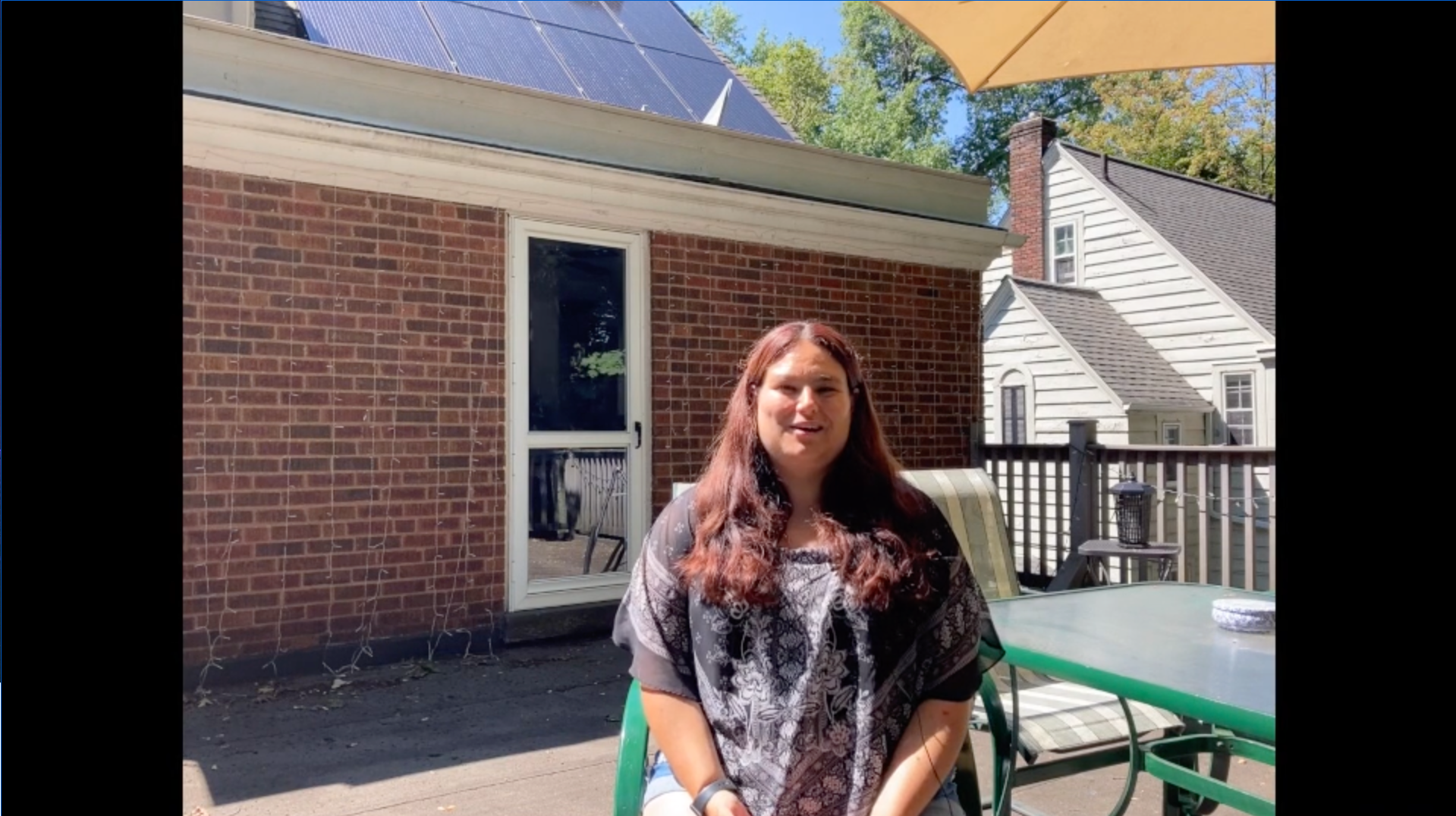
Natalie Lucas went solar in 2019. Funny enough Natalie works remotely for a solar installer herself, StraightUp Solar in Illinois and Missouri.  

Natalie is a true believer in renewable energy and doing the right thing by the plant – which is one reason she chose to go with Third Sun Solar.  

She loves watching trends in her solar production. We enjoyed talking with Natalie a few years after her installation to hear her perspective!   

Learn more about installing solar in Ohio here!   

“Pretty much everything I do tries to reduce my carbon footprint. I have chickens to try to reduce any animal products we do use. I have a compost bin. I have an Electric Car that’s now being powered by renewable energy. I just want to do everything I can to make an impact....”
Natalie Lucas
Solar Homeowner

Solar Company Columbus Ohio

Our solar company has been working in Columbus Ohio for a long time. Many of our employees and customers live and work in Columbus, Ohio. Our capital state is home to Ohio State University and has a diverse economy – from the government to education, insurance, banking, and healthcare. The greater Columbus area is vast and sprawling and, in recent years, has been listed among the fastest-growing cities in the United States.

As we work in Ohio, we are excited to see more Columbus neighbors reach out, interested to begin their solar journey.

Visit our Columbus page to learn about all things solar in your city!

Where we Work in the Columbus Area

We work across the greater Columbus region- extending well beyond Columbus too. Here are just a few areas where we offer our full turnkey solar installation service experience:

  • Clintonville
  • Franklinton  
  • Downtown  
  • Near East Side  
  • Short North  
  • Upper Arlington  
  • German Village  
  • Hilliard   
  • Gahanna  
  • Bexley  
  • Grove City  
  • New Albany  
  • Dublin  
  • Pickerington  
  • Powell  
  • Blacklick   
  • Canal Winchester  
  • Reynoldsburg 

Working with your Utility in Columbus Ohio  

Most homes in Ohio are services by American Electric Power (AEP). AEP, like all other investor-owned utilities in the state of Ohio, is required to offer their customers net metering.     

What is net-metering?   

Net-metering allows you to store the energy you produce in the electric grid in the form of credits.   

When you produce more energy than you need, excess electricity travels back into the power grid. Energy sent back into the grid goes to power your neighbors’ homes. These credits appear on your monthly electric bill to help you keep track.    

During sunny summer months, when your solar system produces more than the energy you are using, you bank up credits. Your home uses more power than your solar system makes during the winter months, and you use up the credits you’ve earned.       

There are other rules that AEP is required to follow, being that they are an investor-owned utility. Your Columbus-based solar consultant works with homeowners in your area every day and will be able to answer any questions you have that may be specific to your location in Columbus.   


Solar Power Incentives and Tax Credits, Columbus Ohio  

Unfortunately, the city of Columbus, Ohio, or any city in Ohio for that matter, has specific solar incentives available to their residents.   

But, anyone who qualifies can take advantage of the 26% Investment Tax Credit.   

Otherwise known as the solar investment tax credit, federal investment tax credit, or ITC for short, this tax credit gives the solar system owner the ability to deduct 26% of the system cost from taxes owed.    

Get up to speed on the solar investment tax credit here.  


Choosing a Solar Company in Columbus Ohio   

Our top questions list for any of our customers looking to hire a full turnkey solar installer:  

  • How long have they been in business?   
  • How many projects have they done?   
  • Do they provide references? When you call those references, what do they say?   
  • Does your installer have a fully trained & licensed electrician on staff?    
  • Do their customers tend to stick with them?   
  • Does the installer have NABCEP certificate holders on staff?   
  • Are they BBB certified?   
  • How long is the workmanship warranty?     
  • Will they tell you if solar will not work well for you (due to roof condition, shading, or other factors)?  


Are you interested in a pre-prepared solar quote checklist? Download one here.   


Top Solar Company in Columbus Ohio

Solar power in Ohio has been dramatically changing and increasing in the past few years.

Third Sun Solar is Ohio’s longest-standing solar installer. We’ve been pleasing customers since 2000.

With over 1,250 projects completed in those years, we have plenty of references, reviews, and testimonials available. Third Sun always has licensed electricians and NABCEP certified professionals on staff.

Third Sun works closely with homeowners to explore all options to go solar at their homes. For some homes, solar simply doesn’t make sense… Third Sun tells homeowners when this is the case.

We love working collaboratively and in consultation with our neighbors in Ohio to help them make the best decision for their clean energy future.

Are you interested in getting a quote for your Columbus, Ohio, area home from Third Sun Solar?

Please fill out the form below to learn even more regional information from our experts & become a part of Columbus, Ohio’s growing clean energy movement!

Installing Solar In Ohio? 7 Things You Should Know

Twenty years ago, when people first found out we installed solar in Ohio, they said: “you must have guts!”

At that time, quite a few things were different. Prices were much higher, the technology wasn’t as advanced, and the number of Ohioans willing to invest was simply less than it is today.

These days in Ohio, we see solar booming across the state- from municipal solar going up on government buildings in Cuyahoga County to libraries in rural Ohio to food pantries in Central Ohio and residential solar sprinkled in neighborhoods across the state.

The market is bustling, and we’re so glad to see clean energy becoming commonplace in Ohio.

Each state has different rules, regulations, incentives, and markets for solar energy. So, if you’re considering solar and doing research online: make sure what you’re reading is Ohio-specific.

If you’re starting your research and wondering what you need to know when considering solar in Ohio, we’ve covered the essential bases in this article.

1. Net-Metering rules in Ohio

Your utility company is required to compensate you for the extra energy you produce in Ohio.

The policy that requires compensation for excess solar generation is called net-metering. Net-metering increases the economic benefit of solar power by crediting you for the extra power your solar energy system produces.

So, when you crank out 200% of what you use during sunny July, you bank credits that you’ll use to purchase utility power during the months where you don’t produce 100% of what you use.

The amount of energy you produce and use will vary over the course of the year. Net metering helps you account for this difference by crediting you for the excess electricity your panels produce so you can use it later.

2. Net Excess Generation

Ohio’s energy market is de-regulated.

So, the rate you’re credited for the power you return to the grid varies between different utility providers. Electric companies credit you at a net excess generation rate. The State of Ohio’s net metering policy does not require utilities to credit energy you produce at the full retail rate.

Additionally, using credits for fixed charges on your bill (distribution charges, other fees) varies between electric suppliers.

An experienced solar installer will help you understand your utility’s net excess generation rate is and how your utility handles fixed charges.

3. Understanding the Advertisements

We’ve seen a lot of wonky advertising over the years. And it’s getting weirder- maybe you’ve noticed. You’re not alone; we’ve scratched our heads about those ads on Facebook, too.

Some claim that you’ll get cash back when you go solar. The truth is: there is no “special program” or event a government-issued solar stimulus program. To receive money back when you purchase your system, you’re simply borrowing more money than your solar system costs and getting some of it back.

Some solar companies misleadingly use the word “free” in their ads. Actually, what they’re referring to is a zero money down, long-term, low-interest loan. Often, they offer what appears to be a very low interest rate, but they secretly add 15 – 25% to the cost of the system to buy down the rate from their loan partner.

4. Solar in the Wintertime

Can my solar panels produce energy if they are covered in snow? No, a solid covering of snow all but shuts off production. The good news is that overall production loss from the snow is minimal when looking at performance on an annual basis. Losing a day of production in January is a fraction of a day in July.

Unless covered in snow, solar panels are more efficient in cold conditions. Like most electronics, solar panels function better at colder temperatures than under intense heat.

Here at Third Sun Solar, our team takes winter’s shorter days, snowfall, and the orientation of sunlight into account when estimating the output of your system.


5. Rural Cooperatives

If your utility supplier in Ohio is a rural cooperative: pay attention to this.

Because rural co-ops are member-owned and not required to follow regulations set out by the Public Utilities Commission of Ohio (PUCO), they can set their own net metering rules.

Rural electric co-ops in Ohio are not required to offer net metering like investor-owned utility companies are. Most of them do, however, not all.

Because there isn’t one standard for the 24 rural electric co-ops, solar installers need to be familiar with the local rules, rates, and regulations.

And if you know that your rural co-op has policies that disincentivize solar production – become an advocate! If you’re part of a co-op- use your vote, attend public meetings, and make your voice heard! Here is one example of our customers who had to advocate at the local level to get solar.

6. Ohio State and Local Incentives

The truth is, there aren’t any local or state incentives for solar in Ohio. That’s the way it’s been for a while now.

Recent legislation has aimed at making solar even more inaccessible. While this legislation didn’t affect the economics for residential solar, it’s an indication of the priorities of our state government.

Until 2023, the Federal Tax Credit for solar remains available to homeowners and stands as the most considerable cost savings. We hope – but we aren’t sure if there will be state or federal incentives on the horizon after that.

Otherwise known as the solar investment tax credit, federal investment tax credit, or ITC for short, this tax credit gives the solar system owner the ability to deduct 26% of the system cost from taxes owed.

For a long time, the tax credit allowed you to recoup 30% of solar system costs.

The step-down schedule began in 2020 when the tax credit dropped from 30% to 26%. The stepdown was paused for two years when the federal government signed the 2020 Covid relief bill. So, homeowners have until the end of 2022 to claim the 26% tax credit benefit. In 2023 the tax credit will drop to 22%, then down to 0% for homeowners in 2024 (a 10% tax credit will remain in place for commercial solar projects).

7. Solar Energy Storage

There are a few different reasons choose to install battery backup with their solar energy systems.

Number one: We’ve seen utility rates escalate at about 3% per year for the past ten years. We know rates will increase as the grid faces necessary upgrades, and many utilities consider a time-of-use rate structure, where electricity will cost more during peak demand hours.

Solar energy storage allows you to consume more of the solar energy you generate, maximizing your solar investment, increasing independence, and lowering your carbon footprint.

Number two: power during an outage. In some places in Ohio, blackouts are common. We see an uptick in interest in solar battery backup anytime a significant weather event disrupts the grid and causes blackout. Solar batteries assure you have power in the event of a grid outage.

Third Sun Solar to donate solar array to local nonprofit, Baileys Trail System, of Athens, Ohio

September 2021, Athens, Ohio — Ohio’s Third Sun Solar is proud to announce the donation of a roof-mounted solar array to the Baileys Trail System project this winter.

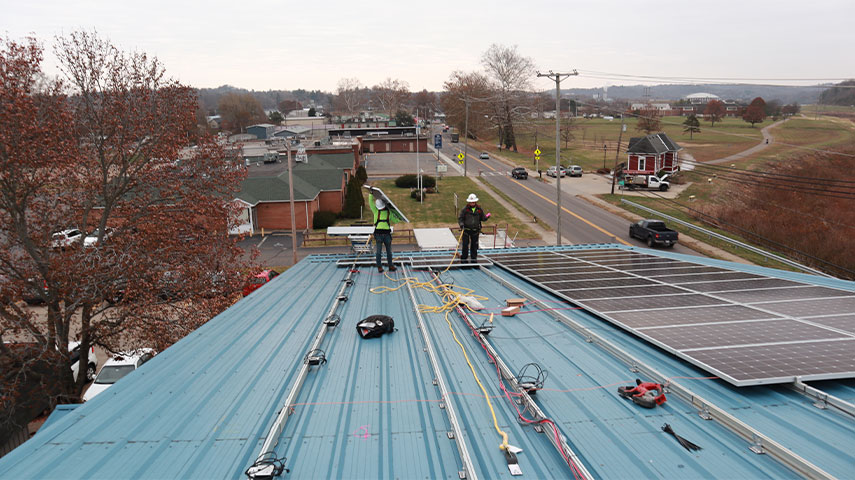
Third Sun Solar has partnered with the Village of Chauncey and the Baileys Trail System to provide clean energy at the Chauncey-Dover Community Park trailhead. Third Sun Solar will install the solar system on the rooftop of the restroom facility. The solar energy installation will begin in January of 2022. The addition of a solar array to the restroom facility will reduce the Village’s utility costs for the next two decades or more.

CEO and co-founder, Geoff Greenfield says: “As a company committed to the flourishing of our community, we are proud to support this groundbreaking trail project. We believe that partnering with the Baileys Trail System in this way will not just reduce the overhead costs for the Village of Chauncey but will help the Baileys Trail System advance their mission of bringing sustainable economic development to the Southeast Ohio Region,” said Greenfield.

“We are incredibly grateful for the donation of the solar array by Third Sun Solar to the Chauncey-Dover Community Park that was once the site of the Chauncey mines. It’s important to us while repurposing the land for recreational use that it be done in a sustainable and responsible manner including adopting a zero waste event policy, so the implementation of solar energy is a great addition to our vision.” Mayor Amy Renner, The Village of Chauncey

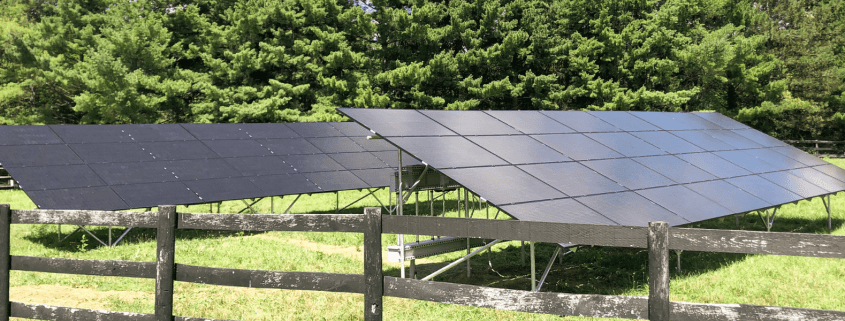
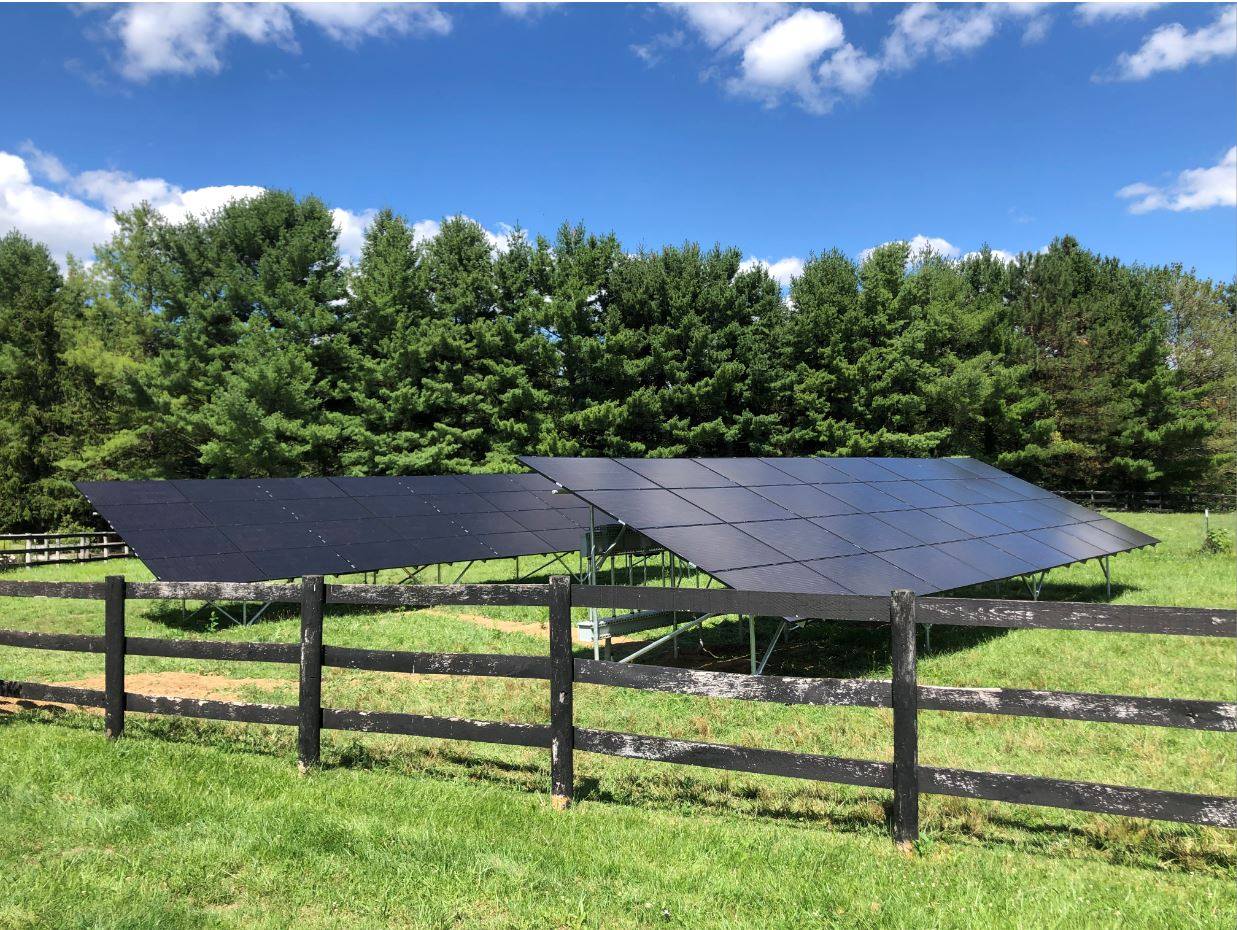
Third Sun Solar is excited about this partnership, a continuation of our tradition of supporting organizations that we believe in. Last year, the company partnered with local nonprofit Women for Recovery, installing a 22 panel, 7.4kW ground-mounted solar array at the Serenity Grove home in Athens, Ohio. Third Sun Solar is excited to support the work that Baileys Trail System is doing in our community, and to reduce the ongoing operating costs for the Village of Chauncey.

“Part of our responsibility as a certified B Corp is to actively seek ways to provide social and environmental support to our community,” Greenfield said. “Providing education about the untapped resources our region has to offer (the sun!) to visitors from across the Midwest and beyond is a great fit for our mission-driven company, and our team is looking forward to it.”


Photo Credit: Joel Prince | Athens County Convention & Visitors Bureau

Installing a Solar Farm in Ohio

Over the past decade, solar in Ohio has boomed across the state. Increasingly, projects producing multiple megawatts (MW) of power are the norm. Before 2018, most solar projects in Ohio were residential, agricultural, or commercial and powered homes and facilities onsite. Today – solar farms and utility-scale solar is on the rise.

What are Solar Farms?

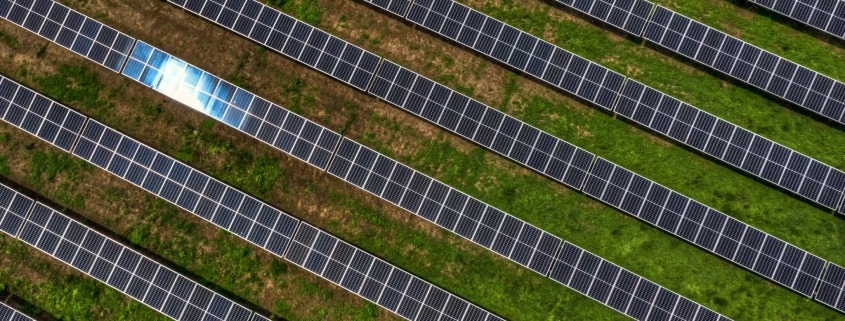
A solar farm is a large installation of solar PV panels that absorb energy from the sun, convert it into electricity, and send that electricity to the power grid for distribution and consumption by customers like you.

Rural areas with sizeable amounts of available land are ideal for installing many solar panels that produce multiple megawatts of electricity. This electricity usually powers the local community or contributes to the larger national grid.

Usually, utility companies or local governments finance these solar installation projects due to the sheer volume and high initial investment needed for a project of this scale.

According to the Ohio State University Extension’s Farmland Owners Guide to Solar Leasing:

“Two primary differences between commercial and residential solar projects and utility-scale solar projects are that utility-scale solar projects are typically greater than 5 MW, and the electricity generated is interconnected to the electric distribution or transmission grid. Under a utility-scale solar model, either an electrical utility owns the project or an independent project owner enters into a power purchase agreement to sell electricity to wholesale utility buyers.”

Interested in Learning More About Utility-Scale Solar for your Property?

We are excited by your commitment to accelerating the shift to clean energy in our state.

The development of solar farms is not in our wheelhouse here at Kokosing Solar. However, we have some resources to share with you to get you started.

We believe this is the best place to start if you’re interested in developing a solar farm in Ohio: Ohio State University Extension, Utility-Scale Solar Development, Solar Leasing Resources.

Our specialty

At Kokosing, we specialize in full turnkey, grid-interactive solar system design, quoting, permitting, procurement, and installation for residential and commercial projects. If you’re interested in a solar installation to power your home or business, complete the form below!

Home Solar Energy Production Guarantee

So, what is a home solar energy production guarantee?

When you purchase a solar system, you will have many questions: how can I be sure that this technology will perform the way I was told it would?

Building trust with your installer, reading reviews, checking references are all wonderful places to start.

But, for added peace of mind and security, a built-in Energy Production Guarantee does not hurt!

Third Sun Solar offers Omnidian Energy Production Guarantee

When you invest in a solar system, you are investing in a long term solution. You count on your solar system to produce a certain amount of electricity each month, offsetting the electricity you take from the grid and lowering your electricity bills.

One way we make clients more comfortable making this investment is by offering an energy production guarantee.

This cashback energy production guarantee is provided through Omnidian. Read on to understand the benefits of a home solar energy production guarantee as well as the additional benefits you will receive through the program.

How does it work?

When you sign up for a solar evaluation at your home, your installer makes predictions about the amount of energy your solar system will make each year. They will use local weather data, the pitch of your roof, the footprint of where the solar system will go, and the panels you choose, among a few other factors.

All of these calculations go into a prediction that Third Sun backs up with an energy production guarantee.

In the chance that our predictions are off, and your solar system produces 95% or less energy annually than we told you it would: you are reimbursed in cash for the difference.

Be aware when comparing solar installers: not all companies guarantee that the solar system will produce as much power as they say it will.

The energy production guarantee comes with professional around-the-clock monitoring.

With this service, you’re notified of solar system underperformance, often before you notice.

If there is a maintenance issue, the Omnidian team will notify you, and our service team will come out to resolve the issue.

What’s the difference between the energy production guarantee and the Third Sun Solar workmanship warranty?

To give our clients the confidence to take control of their energy future by going solar, we offer a 20-year workmanship warranty, which we back up with our 20 years in business.

The workmanship warranty works alongside the energy production guarantee. It guarantees our workmanship for 20 years. If any problems with your system are determined to result from faulty workmanship, any parts or labor costs are covered by the 20-year workmanship warranty.

And, the energy production guarantee + monitoring will let us know if any issues need addressing.

If there are, it is in our best interest to fix them ASAP.

Why do I need a production guarantee if my panels have a Manufacturer Warranty?

The first thing to consider is that a Solar Panel Manufacturer warranty covers the part itself – not the labor to de and re-install the panel. The energy production guarantee covers that gap.

Second, the manufacturer warranty guarantees that a panel will produce a certain amount of power on its own. The manufacturer warranty doesn’t warranty things like weather variations that could decrease solar system performance. Again, the energy production guarantee covers that gap.

Program Highlights – Omnidian Energy Production Guarantee

  • 95% Energy Guarantee
  • 100% Covered Maintenance (including wiring and inverters)
  • 100% Peace of Mind
  • 24/7 Professional Monitoring
  • Proactive Service Dispatch
  • Live Support and Diagnostics
  • The plan is pre-paid for five years with new solar systems

Ready for a free solar evaluation of your home?

How Exactly Does Solar Work with My Utility?

How Does Solar Work with My Utility?

One of the common misconceptions we hear is that there isn’t enough sunlight in Ohio to make solar worth the investment. We get that logic: our state gets way less sunlight per year than many geographic areas in the United States. And, in the winter, the days are indeed much shorter.

But consider the summer and fall. There are long hours of sunlight during these months. We find that most days of the year are long and sunny enough to provide more than a household’s daily energy needs.

If only there were a way to capture that extra sunlight from the summer for use in the winter… Guess what? There is!

Your utility company is required to compensate you for the extra energy you produce in Ohio. This system is called Net-Metering, and it’s what makes solar economical for homeowners in Ohio.

Understanding how my solar system works with my utility

Imagine it’s the sunniest of summer days. Your solar system is producing way more than your home is using that day. This energy doesn’t go to waste. It goes right to your neighbor’s homes to power their electricity use. And, the utility company is required to credit you for that energy that you put into the utility grid.

When you get your utility bill, you’ll see how much solar energy you consumed that month and how much solar energy you sent back into the utility grid. It will also show how many credits you have received for that energy you sent back.

After a long sunny summer, you will have banked up TONS of credits from those days where your solar system produced more energy than you consumed.

Come to the wintertime, and you will begin to use more energy than your solar system can produce. So, you’ll be using power from your utility company instead of your solar system. But you have those credits saved from the summertime. When it’s billing time, your utility will start subtracting those credits before charging you for the utility power you consume.

If designed with a 100% energy offset, your solar system will produce enough credits during the summertime to completely offset the energy you use during the wintertime. So, your bill with the utility at $0.00 throughout the entire year.

What you’ll learn when you sign up for a free solar evaluation

  • Which clean energy technologies will best meet your energy goals
  • What size solar array will fit on your available space and expected output for that system
  • Ways to finance solar and other improvements – such as our zero money down loan or upfront purchase option
  • How solar will improve the value of your home

It’s our job to do complicated math. We do it every day, and our Solar Consultants are pros. They’re open and transparent about their calculations, so if you’re curious, they’ll explain the math to you until you understand yourself! That’s all part of our consultative process.

When we draw up a solar evaluation for your home, we consider your annual energy production, the tilt and orientation of your roof, and so on. These factors add up to your solar sweet spot – where your system will produce just enough excess energy during the summer to pay for your energy needs during the winter.

Want to get the most savings from your solar investment?

Sign up soon to take advantage of the full solar tax credit. Sign up today to see how Third Sun Solar can help you lock in your utility rate for the next 30 years!

How Exactly Does Solar Work with My Utility?

How Does Solar Work with My Utility?

One of the common misconceptions we hear is that there isn’t enough sunlight in Ohio to make solar worth the investment. We get that logic: our state gets way less sunlight per year than many geographic areas in the United States. And, in the winter, the days are indeed much shorter.

But consider the summer and fall. There are long hours of sunlight during these months. We find that most days of the year are long and sunny enough to provide more than a household’s daily energy needs.

If only there were a way to capture that extra sunlight from the summer for use in the winter… Guess what? There is!

Your utility company is required to compensate you for the extra energy you produce in Ohio. This system is called Net-Metering, and it’s what makes solar economical for homeowners in Ohio.

Understanding how my solar system works with my utility

Imagine it’s the sunniest of summer days. Your solar system is producing way more than your home is using that day. This energy doesn’t go to waste. It goes right to your neighbor’s homes to power their electricity use. And, the utility company is required to credit you for that energy that you put into the utility grid.

When you get your utility bill, you’ll see how much solar energy you consumed that month and how much solar energy you sent back into the utility grid. It will also show how many credits you have received for that energy you sent back.

After a long sunny summer, you will have banked up TONS of credits from those days where your solar system produced more energy than you consumed.

Come to the wintertime, and you will begin to use more energy than your solar system can produce. So, you’ll be using power from your utility company instead of your solar system. But you have those credits saved from the summertime. When it’s billing time, your utility will start subtracting those credits before charging you for the utility power you consume.

If designed with a 100% energy offset, your solar system will produce enough credits during the summertime to completely offset the energy you use during the wintertime. So, your bill with the utility at $0.00 throughout the entire year.

What you’ll learn when you sign up for a free solar evaluation

  • Which clean energy technologies will best meet your energy goals
  • What size solar array will fit on your available space and expected output for that system
  • Ways to finance solar and other improvements – such as our zero money down loan or upfront purchase option
  • How solar will improve the value of your home

It’s our job to do complicated math. We do it every day, and our Solar Consultants are pros. They’re open and transparent about their calculations, so if you’re curious, they’ll explain the math to you until you understand yourself! That’s all part of our consultative process.

When we draw up a solar evaluation for your home, we consider your annual energy production, the tilt and orientation of your roof, and so on. These factors add up to your solar sweet spot – where your system will produce just enough excess energy during the summer to pay for your energy needs during the winter.


Want to get the most savings from your solar investment?

Sign up soon to take advantage of the full solar tax credit. Sign up today to see how Third Sun Solar can help you lock in your utility rate for the next 30 years!

2025: An Up to Date Guide to The Solar Investment Tax Credit

Updated: August 22, 2025

The Federal Tax Credit for residential solar has been eliminated in 2026, for the most current information, visit our going solar in 2026 and beyond page here. 

One of the greatest benefits of a solar energy investment is the tax benefits.

Homeowners who go solar not only eliminate their electric bill, but they also can get 30% of the system cost back through the Solar Investment Tax Credit. 

This is bright news for homeowners who have experienced escalating energy costs. 

We’ve compiled an up-to-date guide detailing the tax credit: how it works when it will expire and who qualifies.

is the solar investment tax credit still in place? 

As President Trump returns to office in January and political control shifts in congress, many of our clients are curious about what this election means for the solar industry and, more specifically, the potential impact that changes in federal policy might have on the solar installations they are considering.  

While it is never possible to predict the future, an evaluation of past shifts along with consideration of the mechanics of government can help inform a look ahead.   

Most solar policy experts are predicting significant changes under the new administration, but that these changes will take time to implement. 

Furthermore, there is an established precedent of implementing tax and policy changes in a way that protects individuals and businesses that have made decisions and investments under the current rules.   

Sometimes referred to as “grandfathering” or “safe harbor rules” most of these policy changes include mechanisms to avoid retroactive “takings” and allow businesses and markets to function even as change looms on the horizon.  

Read more about possible outcomes here. 

What Is the Solar Tax Credit?

Otherwise known as the solar investment tax credit, federal investment tax credit, or ITC for short, this tax credit gives a solar system owner the ability to deduct 30% of the system cost from taxes owed. Solar Energy Storage counts towards the tax credit too. 

For a long time, the tax credit allowed you to recoup 30% of solar system costs.

A step-down schedule began in 2020 when the tax credit dropped from 30% to 26%. The stepdown was put on pause for two years when the federal government signed the 2020 COVID relief bill. 

In August of 2022 through the Inflation Reduction Act, the Solar Investment Tax Credit was increased back to the original 30% and extended for a decade. A new stepdown schedule will begin in 2032. 

What does the Solar Tax Credit Look Like? 

If you get a solar system installed in 2025 for $25,000, you will recoup 30%, so $7,500 through the solar tax credit. 

Do I Qualify for the Solar Tax Credit?

What are the requirements to take the solar tax credit?

Only one!  You must have a tax liability. In other words, you must owe taxes to take advantage of this tax credit.

One of the biggest misconceptions about the solar tax credit is that you get money back when you go solar. The federal government does not give money out in the form of grants or direct payments. The federal solar tax credit offsets taxes that you owe. Here at Kokosing Solar, we’re solar experts and not tax experts! We can tell you about the current incentive, however, please speak with your tax accountant about your specific tax situation. 

Solar Tax Credit FAQ’s

Can I carry it forward?

The law requires the credit to be used in full the year your system is installed if you have enough tax liability.

If you do not have enough tax liability, you can carry the tax credit forward into the following years. The rules start to change here for commercial and residential entities.

Commercial entities can carry forward the tax credit for up to 20 years to recoup taxes.

For residential solar system owners, the tax liability can be carried forward for up to five years, until the full amount is used up.

Is there a cap?

No, there is no limit or cap on the solar tax credit. No matter how much you spend on your solar installation you’ll be able to claim the tax credit in full for the year the system was installed.

What expenses can I claim with this tax credit?

  • The full turnkey solar installation can be claimed on the solar tax credit.
  • As long as they’re powered by solar, solar batteries can be claimed.
  • Batteries retrofits are also eligible if installed within one year of the solar installation.  
  • Roof repair and replacement are not covered by the solar tax credit.

Solar Power and Rural Electric Co-Ops in Ohio

Solar Power and Rural Electric Co-Ops

Rural electric co-ops and solar power have a long history here in Ohio. In the 1930s, Ohio established rural electric cooperatives. At the time, investor-owned utilities refused to service rural areas because it did not make economic sense. The structure of rural electric cooperatives provided a means to get electricity to rural America.

These cooperatives still stand today and are member-owned, like the title “cooperative” would suggest. You get one vote towards the board of directors if you’re a participant in the cooperative. Rural electric cooperatives are nonprofit entities, unlike more prominent investor-owned utilities.

Because these locally owned, nonprofit entities are much smaller than national energy companies – you might think it would be easier to go solar when plugged into one. But there are a few nuances to be aware of when choosing to go solar if your electric provider is a rural co-op.

Rural Ohio Net Metering Differences

Rural electric co-ops in Ohio are not required to offer net metering like investor-owned utility companies are. Most of them do, however, not all.

Additionally, because rural co-ops are member-owned and not required to follow regulations set out by the Public Utilities Commission of Ohio (PUCO), they can set their own net metering rules. For example, when you produce more energy than you consume, you send that excess back to the grid. The rate you’re paid for that energy production varies from rural co-op to co-op.

Rules and regulations around fixed-rate amounts on your monthly bills vary. And the amount of electricity that you can send back to the grid annually also varies.

Because there isn’t one standard for the 24 rural electric co-ops, solar installers need to be familiar with the local rules, rates, and regulations.

Why Solar Power and Rural Electric Co-Ops Matters

Why is all of this important to know? If a rural electric co-op services your home and you’re thinking about going solar, you should be paying attention.

Your solar installer must understand your cooperative’s rules and rates to provide an accurate economic analysis of your solar installation project (that goes for investor-owned utilities, too!) We encourage you to ask them:

  • When I send electricity back to the grid – what rate will I get for that production?
  • Will there be fixed charges on my monthly electric bill that can’t be paid with my excess generation?

Kokosing Solar works very closely with the Distributed Generation Coordinators employed by each utility, including rural co-ops. We do this because it’s part of our job as a full turnkey solar installation partner. We know our customers trust us to stay up to date on the net-metering rules and fixed-rate fee structure.

*Keep in mind – there is certain information rural electric cooperatives will only give to their customers and not us! When this happens, we will ask you to communicate directly with your provider to retrieve this information.

Lastly, if your utility has policies that disincentivize solar production – become an advocate! If you’re part of a co-op- use your vote, attend public meetings and make your voice heard! Here is just one example of one of our customers who could go solar after advocating at the local level.

If you have any questions about going solar – reach out! We would love to help answer your questions.

Introducing Solar For All, A New Podcast From Third Sun Solar

By Geoff Greenfield

I am very excited to announce the launch of a new podcast: “Solar for All”

This podcast will be available on the various pod streaming sites as well as through a new website: www.solarforall.show.

In this new project, I speak with various guests about the intersection of race, class, diversity, inclusion, equity, and justice with the solar industry.

As the title of the podcast suggests, our mission is to achieve solar for all.

We envision a truly inclusive solar society that captures solar’s potential to impact climate change AND improve our social and economic systems. Systems, which we believe have been historically oppressive and exploitative.

Our vision is to build this podcast to serve as a platform that uplifts and amplifies a diverse group of contemporary stories and initiatives in the solar industry, increasing their impact and reach and (hopefully) accelerating their spread and influence. While the podcast is launching today, we have been building up a backlog of interviews with some amazing guests, and this experience has been powerful. During these conversations, I have been both inspired and challenged as I confront my own racism and biases and come to grips with my tremendous privilege.

Our guests

Some of my guests have been doing this work for decades, while others are just beginning this journey, being vulnerable and hopefully encouraging others in powerful positions to reconsider priorities and assumptions. The stories shared by our diverse guests all have value, and we are honored and humbled to bring them to what we hope will be a large audience. Our ultimate goal is not just to talk about these subjects but also to be agents of change and progress in the solar industry and beyond. The conversations we engage in will contain both criticism and inspiration. We intend to shine a bright light on the challenges and issues that are part of the daily lived experience of some while remaining hidden to others. We also will be calling out and celebrating the progress being made on many fronts, from rooftops to boardrooms. In all these conversations, we strive to be constructive and humble, curious rather than judgmental… as a friend of mine often reminds me, we are striving for progress, not perfection.

Join us!

While the noble goals of justice and truth are inherently worthwhile and stand on their own in a moral sense, these issues are a practical matter. We believe that for solar to rise to its greatest potential and have its fullest impact, it MUST become more inclusive and diverse quickly, leveraging the energy and contributions of the full spectrum of humanity. That is easier said than done, but that is what we are setting out to do, and we invite you to come along with us and become accomplices and co-conspirators. Tell us how we are doing and how we can be better. Reach out to be on the show or suggest someone that would add to the conversation. Share the show with your colleagues and network.

Find us at www.solarforall.show


Our Beliefs:

  • We believe the most effective way to tackle issues of systemic bias in our industry is to name them, talk about them, and take responsibility to change them
  • We believe that doing nothing to address inequality in the clean energy space supports inequality in the clean energy space. our work exists to dismantle that
  • We believe that it is not the job of the people being targeted by prejudice and discrimination to start the dialogue
  • We believe we must recognize that systemic inequity in our workspace
  • We believe that everyone deserves brave and safe spaces to be vulnerable about their experiences; therefore, we work to create safe spaces for individuals as we work to promote social justice

Will Solar Power Offset My High Summertime Electric Bills?

You want to be comfortable in the summertime. You want to keep the AC at a suitable temperature to keep you and your family cool. If you have a pool, you need to keep your pumps running. But, come the end of the month, you keep getting hit with pricey utility bills.

And, with a consistent 3% rise in utility bills over the past decade, you are left wondering how to keep your bills predictable and economically keep your homes cool in the summertime.

It makes sense that if your bills are exceptionally high in the summertime, and the sun is hot and shining most of the season, that solar panels might be a solution to high summertime electric bills.

But is it true that solar panels will offset high summertime electric bills? Read on to learn more.

How Do Solar Panels Work?

Solar panels on your roof produce DC energy. This DC energy travels to an inverter. The inverter converts the energy into AC energy which is usable in your home.

When your home consumes energy while your panels are producing, the solar energy you produce powers the loads in your home (air conditioner, pool pumps, refrigerator, TV, water heater).

Any energy produced over what your home consumes is sent back to the utility grid and routed to power the loads in your neighbors’ homes.

Through a process called net metering, you get credit for that energy. These credits will be applied to your future electricity use when you pull energy from the grid when your solar panels are not producing power for your home (at night and in the wintertime).

The Key to Summertime Solar Energy

Luckily, solar panels have become an affordable option for homeowners.

Your solar system will produce the most solar energy in the summertime on long, sunny days. Once you have your solar system installed, you can expect low to no utility bills in the summer.

What else? Summertime solar production helps you prepare for the wintertime as you bank up credits with your utility for your excess solar production.

Tax Credits for Solar Power

In Ohio, our main incentive for installing solar energy is the federal investment solar tax credit.

The solar investment tax credit (ITC), which was scheduled to drop from 26% to 22% in 2021, will stay at 26% for two more years (2021 and 2022). This means that solar projects that reach completion in 2021 and 2022 will still receive a tax credit of 26%. All markets will drop to a 22% tax credit in 2023, and the residential market will drop to 0%, while the commercial markets will sit at a permanent 10% credit beginning in 2024.

Third Sun Solar’s Energy Production Guarantee

Third Sun Solar offers new customers a 5-year cash back energy production guarantee with 24/7 monitoring and 100% covered maintenance.

Key benefits:

  • Our 24/7 remote monitoring systems are responsible for protecting hundreds of thousands of customers. We will know if your system is underperforming, often before you do.
  • 100% covered system maintenance for all system parts and components- including wiring and inverters.
  • Every year – if your system generates less than 95% of forecasted energy, we pay you for annual energy loss even if you experienced a bout of harsh weather!

Ohio’s Leading Solar Installer

It takes a lot to succeed in the Solar Industry for 20 years.

We are proud of the reputation we have built. We are a certified benefit corporation, Ohio’s longest-standing solar installation company, and women-owned and operated.

When you’re ready to go solar, remember to choose a quality installer that you can trust for many years to come. If you’re ready to reach us now, give us a call at 877-OWN-SOLAR or fill out the form below to start the process.

"*" indicates required fields

This field is for validation purposes and should be left unchanged.
Name*
Address*

Introducing Enphase Battery Storage

[av_video src=’https://youtu.be/SiHb2m165Eo’ mobile_image=” attachment=” attachment_size=” format=’16-9′ width=’16’ height=’9′ conditional_play=” av_uid=’av-2tgvgj’]

Links mentioned:

Enphase Storage: Your Energy. Your Choice.

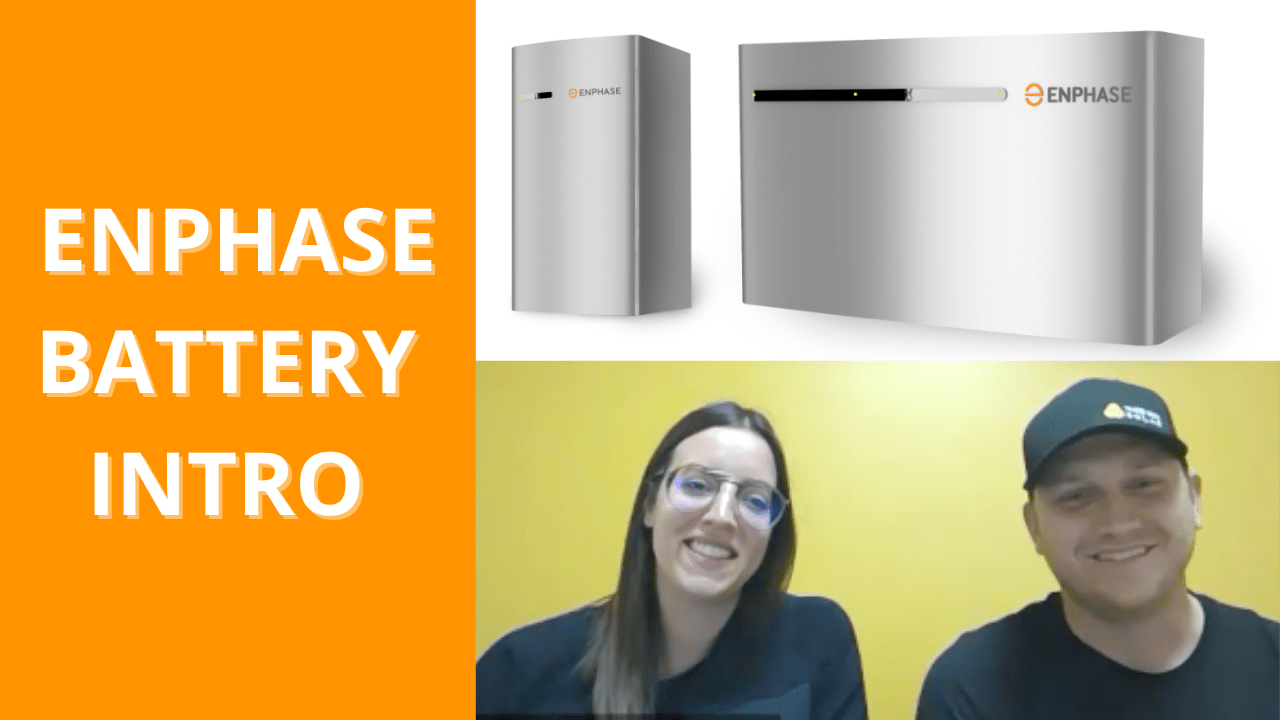
Introducing Enphase Storage: an all-in-one AC-coupled advanced battery energy storage system that allows you to easily store the energy generated by your solar installation. Enphase Storage technology teams up with advanced home monitoring and control software to ensure that your home enjoys continuous power, even when the grid is down.

Modular Solar Energy Storage

  • Start simple with partial home backup – backup just the essentials, like lights, internet and a refrigerator in partial backup configuration
  • Grow over time, add power incrementally – easily add Encharge 3 or 10 storage or more solar to handle additional loads
  • Or just go big with complete home backup – backup an entire home by installing multiple Encharge 10 storage systems

One App, All in the Power of Your Hand

  • Generate – you’ll have full visibility over the energy production and health of your solar PV system, as well as status of your battery
  • Store – energy consumption monitoring will help you maximize your time off grid during utility outages
  • Control – You can easily change modes to priority backup power or maximize energy savings

The Enlighten mobile app also comes with a special Storm Guard™ feature that monitors weather conditions in your area. If a storm or major disaster is on the horizon, Storm Guard will automatically put your Enphase Storage in Full Backup Mode to prepare you for weather-related outages. All the above comes with real-time reporting and home energy monitoring so that you can closely track your solar installation’s performance – no matter where you are.

All from a single Manufacturer

With Enpahse storage, all components are made by a single manufacturer and are designed to work perfectly together. This improves system reliability and resilience.

Enphase Storage solves the most common problem with solar – generating power even with the grid is disconnected or there is a power outage – by weaving redundancies, backups, and monitoring into a single unified ecosystem.

Get a customized Solar Energy Storage proposal for your home

Being An Ally, Happy Pride Month

In June we celebrate pride month to commemorate the anniversary of the Stonewall riots. Third Sun Solar stands with the LGBTQIA+ community during June for Pride Month, as well as year-round.

To celebrate Pride Month, Third Sun Solar is making donations to Ohio-based organizations supporting the LGBTQIA+ community. We look forward to sharing these stories with you over the course of the month.

JEDI Work

We’re eager to share the work our member-owned purchasing cooperative, Amicus Solar Cooperative has been working on over the past year, through the Justice, Equity, Diversity, and Inclusion group (JEDI). Third Sun Solar’s Chief Operating Officer, Roberta Washburn has been heading up the Human Resources and Policy Committee.

When asked what the group has been up to over the past year, Roberta says: “We are reviewing language, and policies to create an inclusive and welcoming environment to retain and attack team members.

We look at policies, job descriptions, handbook language, position postings, and all things HR to ensure they are using inclusive language and include policies to make sure employees of all backgrounds feel welcome and supported.

We are creating shared documentation, for building a more inclusive workforce.”

Here are some fundamental principles that Amicus Cooperative members share, statements developed from the work for the JEDI HR Committee.

We welcome any organizations, business leaders, or HR professionals to incorporate this language into their own policies and use the text as building blocks for action at your organization and in your community.

  • We believe that business is about so much more than numbers and that we can have a positive impact on the people in our orbit, from our customers to our community to our employees.
  • We believe that business should be a force for good: for the environment, for our communities, for our customers, and for the people who work here. In order to positively influence each of those stakeholders, we must carefully consider how our actions ripple out into the world.
  • We seek to improve team members’ lives through fair pay and human-centered policies that care for the whole person and not just for our business interests.
  • We dedicate time and resources to ensure that all races, all genders, and all personal identities know that they are integral to our company.
  • When we think about our company, we recognize that our culture is the sum of our people – and each new team member adds to the richness of our company. We don’t expect you to fit a mold; we hope that you will add something new, even as we all pursue a common mission.
  • We enjoy learning from each other’s perspectives – it would be awfully boring if we all agreed on everything.
  • Welcome home; we all have a purpose here
  • To achieve a sustainable future, climate justice, and social justice must go hand in hand
  • When people feel respected and included, they are empowered to be more creative, innovative, and successful.

“We celebrate Pride because we are committed to a more diverse and inclusive future — for our business, our community, the solar industry, and our world.” – Geoff Greenfield, CEO

Our core value of growth demonstrates that we are always striving to be better

We know that we can always be better accomplices, friends, and allies to marginalized groups, including the LGBTQI+ community.

We will continue sharing our stories as we celebrate and grow. We hope you will join us.

Do I Need Solar Batteries When I Go Solar?

Solar Batteries are a hot topic! More often than not, when people go solar, they assume that they’ll need solar storage too. In reality, this isn’t the case. In fact, many homeowners decide to go solar without adding battery backup.

So, why may someone choose to install solar batteries? And why might their neighbor decide not to?

We’ve broken down the considerations below to help you make the brightest choice for yourself and your family.

Goals

Goals are one of the first steppingstones our solar customers encounter on their solar journey.

It’s essential to understand your goals early on so your solar installer can design the solar installation project of your dreams. And to meet all your needs.

Here are a few of the most common goals our customers may have:

  • Save money on your electric bill
  • Choose a greener, cleaner, renewable energy source to power your home
  • Have control over future utility rate escalation at your home
  • Stop “renting” power from the utility and “own” your power
  • Ensure you have power in the case of grid failure
  • Ensure you have power for critical appliances (medical, refrigeration)

Did any of the above goals resonate with you?

Solar In A Blackout

Here’s something important to understand: Your Solar PV will not operate during a power outage without a battery. We know this comes as a surprise to many. The feature ensures that electricity doesn’t leak onto power lines as utility workers find the electricity disruption. Read more here.

In recent years, there has been a noticeable increase in power outages for several reasons. These include the prevention of wildfires and the increased frequency and intensity of storms.

So, if having power during an outage is one of your goals for going solar, you’re going to want to explore battery options with your solar consultant.

Cost of Solar and Solar Batteries

Batteries add substantially to the cost of a solar system.

For some of our customers, their goals align with solar storage, making the added cost worth it. Can you put a price on having power to necessary medical equipment in your home when you need it most?

And, for some of our customers whose primary focus is on solar system payback, return on investment, and do not experience frequent power outages – they opt for no solar storage with their solar system.

But, keep in mind – solar energy storage is an approved expense for the Federal Solar Investment Tax Credit!

Going Green

If you opt for a solar system without storage, any excess power generated from solar goes back into the grid and helps your neighbors reduce their carbon footprints.

You treat the grid-like a big battery, storing excess energy you produce and send off in the form of credits. At night or in the wintertime, you take power from the grid but pay for that use with the credits you received for sending your excess energy to your neighbors.

Adding battery backup does allow you the option to self-consume more of the solar energy you produce at your own home.

Which option sounds more environmentally friendly to you? Does one setup align more with your green energy goals than the other?

Take Your Power Back from the Utility with Solar Batteries

With a grid modernization coming, many of our customers have experienced increased electricity rates over the years. And they know those rates will continue to rise.

In addition to this, regulatory concerns can be a motivating factor for homeowners to explore solar energy storage options.

Many utilities have shifted away from tiered rate structures to time of use rate structures designed to encourage energy conservation during peak energy use times (5- 8 p.m.).

This rate structure hurts solar PV system owners.

The amount of credit you receive for the solar energy you produce becomes lower during the day when the solar PV system is producing the most. And, the cost of energy use jumps up in the evenings when their solar PV system isn’t producing much power.

Pairing solar energy storage with solar allows the homeowner to store the excess solar energy they generate during peach energy use times instead of paying expensive rates to the utility.

The Next Step In Your Discovery

To take a deeper dive into Solar Energy Storage Options, check out this video series which answers most of the battery questions we hear on the regular.

If you’re ready to speak to a professional and get some answers right from the source, we would be happy to set you up with a no-obligation free solar and storage evaluation for your home.

"*" indicates required fields

This field is for validation purposes and should be left unchanged.
Name*
Address*

Top Locations for Electric Vehicles in Ohio

Where are Ohio’s top locations for Electric Vehicles?

In the U.S., the most significant source of greenhouse gas emissions comes from cars and trucks. Transportation accounted for 29% of greenhouse gas emissions in 2019. According to the EPA, “Over 90 percent of the fuel used for transportation is petroleum-based, which includes primarily gasoline and diesel.”

Stats like these are motivating Ohioans to consider going electric with their next car purchase. Electric Cars are better for the environment, require less maintenance, and electricity is cheaper than gasoline (especially if you have solar).

So, What are the Top Locations for Electric Vehicles in Ohio

Top Alternative Fuel Vehicles by County in Ohio 2018 – current

  1. Franklin County (Columbus) – 4,154
  2. Cuyahoga County (Cleveland) – 2,771
  3. Hamilton County (Cincinnati) – 2,563
  4. Summit County (Akron) – 1,249
  5. Delaware County (Central Ohio) – 1,144
  6. Montgomery County (Dayton) – 1,071
  7. Lucas County (Toledo) – 672
  8. Lorain County (Northeast Ohio) – 561

Columbus, Ohio, seems to be the top location for electric vehicles in Ohio. It’s also the most populated city in the state. Following Columbus are our two key metropolitan Cities: Cincinnati and Cleveland.

Top Electric Vehicle Models in Ohio

Top 10 Alternative Fuel Vehicles in Ohio – From 2018– now

  1. TESLA Model 3 – 5,438
  2. Chevrolet Volt – 2,717
  3. Tesla Model S – 2,437
  4. Tesla Model Y – 1,395
  5. Nissan Leaf – 1,331
  6. Tesla Model X – 1,155
  7. Chevrolet Bolt EV – 891
  8. Ford Fusion – 889
  9. Ford C-max – 710
  10. Toyota Prius Prime – 701

The U.S. has seen a slow adoption of electric vehicles compared to other countries. In 2020 E.V. registrations reached a new record by taking up 1.8% of overall U.S. light vehicles registered.

Some of the barriers to Electric Vehicle Adoption in the U.S. include:

  • High costs for Electric Vehicles
  • Few options for models
  • Challenges recharging vehicles

Building Infrastructure in Ohio

With an awareness of these barriers, private and public entities are making processes to make Electric Vehicles accessible to more drivers.

According to Clean Fuels Ohio, last month, The Ohio EPA awarded $3.25 million in grants to support the installation of E.V. infrastructure. The grants fund more than 500 publicly accessible Level 2 electric vehicle charging ports at more than 170 locations in 22 counties.

Lordstown, Ohio

In 2020 ground broke on an electric vehicle battery manufacturing facility in Lordstown, Ohio.

The facility will produce Ultium batteries for a new Cadillac electric car, a new electric Hummer sport utility vehicle. The project is a $2.3 billion joint venture between G.M. and South Korea’s L.G. Chem.

Bringing the production of Electric Vehicle batteries to the United States tackles some of the barriers listed above.

“Sales of E.V.s are set to exceed a 3.5% overall market share in 2021 and climb to a more than 10% share in 2025, due to broader product offerings, according to IHS Markit. More than 100 new E.V. options are expected to launch between 2021 and 2025.”

Spotlight on Solar and Electric Vehicles in Columbus, Ohio

As with solar power, building out the infrastructure for Electric Vehicles will require coordination. Public and private partnerships have been the golden standard for widespread solar adoption. And we can see the same happening with electric vehicles.

In 2016 Columbus, Ohio, was awarded a $10 million grant through the U.S. Department of Transportation’s Smart City Challenge.

In 2015, only 0.38% of new cars purchased in the seven-county region were E.V.s. We set a goal to increase E.V. ownership by 500% to 1.8% by 2020.

Fortunately, we’re on pace to meet or surpass that goal, with E.V. sales exceeding 2% of vehicles sold at the end of 2018.

How did they do it?

  • Engaging employers
  • Building out workplace charging
  • Hosting events
  • Working with dealers
  • Building a playbook

Read more about SMART Columbus here.

Solar, Electric Vehicles, and You

Third Sun Solar proudly offers Electric Vehicle charger installation as a service to homeowners interested in going green all the way. More and more, we see homeowners who go solar install Electric Vehicle chargers before buying the Electric Vehicle itself.

When you go solar, you have the opportunity to set yourself up for an entirely green lifestyle.

With Solar plus an Electric Vehicle, homeowners can charge their cars and, in most cases, drive more economically than they would by charging from the grid or public charging stations.

If you’re interested in learning more from our team about how we can make your clean energy dreams a reality, reach out today.

Climate Action Film Festival

The Climate Action Film Festival brings together activists, filmmakers, and communities to witness and celebrate stories of climate action. CAFF’s mission is to amplify voices and inspire further action in addressing the climate crisis, locally and beyond.

[av_button label=’Get Tickets ‘ link=’manually,https://www.eventbrite.com/e/climate-action-film-festival-tickets-152899435327′ link_target=” size=’large’ position=’center’ label_display=” icon_select=’no’ icon=’ue800′ font=’entypo-fontello’ color=’theme-color’ custom_bg=’#444444′ custom_font=’#ffffff’ av_uid=’av-4doen8′ admin_preview_bg=”]

Schedule of Events

  • We’ll send a link out on Monday, June 21st at 5 PM for you to access the film festival and watch on your own time.
  • On Thursday, June 24th from 7-8 PM we’ll gather on zoom for a panel discussion with our non-profit partners to learn about what they’re doing to fight the climate crisis across Ohio.
  • If you sign up after Monday, June 22nd, you’ll receive the link right after you register.

About the films:

When selecting films for CAFF, we look for variety while remaining true to our mission: to amplify voices and inspire further action. Climate action can be so many things, from civil disobedience to estuary research to regenerative agriculture and more, and our selected films portray just a fraction of the climate action stories happening around the world every day.

Win A Prize – Raffle Basket

On the night of our panel discussion, we’ll host a raffle for all those who attend the panel.
The contents of our CAFF Raffle Basket were sourced from companies who use their businesses as a force for good. That means they may be local, powered by renewables, a Certified B Corp, sustainably-sourced, or all of the above!

Each ticket gets you one entry into the raffle.

About our Partners & Sponsors

Rural Action – Partner

Rural Action is a regional community development organization with a 32-county footprint working with members and community leaders on a range of quality of life, environmental, and economic projects across rural Appalachian Ohio. Its mission is to build a more just economy by developing the region’s assets in environmentally, socially, and economically sustainable ways. Learn more about Rural Action at www.ruralaction.org

Green Energy Ohio – Partner

Green Energy Ohio (GEO) is a statewide nonprofit organization dedicated to promoting sustainable energy policies, technologies, and practices. Read more: www.greenenergyohio.org

The Ohio Environmental Council – Partner

The OEC works for pragmatic solutions to keep Ohio clean and beautiful, and our communities safe. We fight for clean air and water, clean energy, and protected public lands. We hold polluters accountable in court while working with communities and companies that want to invest in a clean, more sustainable direction. Learn more about the OEC: www.theoec.org

SunCommon- Sponsor

SunCommon created and hosted the Climate Action Film Festival with a mission of amplifying voices and inspiring action in addressing the climate crisis, locally and beyond. After the 6-day festival in March 2021, SunCommon is sharing a curated package of climate action films from the festival, along with original filmmaker and activist interviews. The Climate Action Film Festival (CAFF) Encore Series package was created for individuals, community leaders, and organizations to host their own events to inspire action locally and beyond. Find SunCommon at: www.suncommon.com

Harness Cycle – Sponsor

harness cycle is a beat-driven indoor cycling studio based in Cleveland, Ohio. they are a small business with a mission to create connection + community through movement and act as an economic driver supporting fellow small businesses in their neighborhood. harness cycle is a newly certified b corporation striving to create positive change through local partnerships focusing on land restoration, community development, and equitable employment opportunities. Learn more: www.harnesscycle.com

[av_countdown date=’06 / 21 / 2021′ hour=’16’ minute=’0′ timezone=’America/New_York’ min=’1′ max=’5′ align=’av-align-center’ size=” style=’av-default-style’ av-medium-font-size-title=” av-small-font-size-title=” av-mini-font-size-title=” av-medium-font-size=” av-small-font-size=” av-mini-font-size=” av_uid=’av-2vf6ac’ admin_preview_bg=”]

Get Started

Get Started