
Home Solar Installation: Step-by-Step Guide

Thinking about a home solar installation but want to know exactly what happens from start to finish? You are not alone. Clear steps build confidence, and our team at Kokosing Solar brings Ohio’s longest-standing full-service solar installer experience to every project. With 25+ years of solar energy expertise, 74 years of construction know-how, and NABCEP-certified installers, we design, build, and service systems that deliver reliable, long-term value.

Step 1: Your Free Assessment and Energy Usage Review

The first step is simple and educational. We look at your energy usage and electric bill to understand how much electricity you use throughout the year. We discuss your goals around clean energy, energy independence, and environmental benefits. You receive a preliminary system design that aims to offset your electricity bills with solar power, along with an introduction to solar incentives and financing options.

What we review:

  • 12 months of energy consumption and amount of energy needed
  • Roof condition and available space for rooftop panels or a flat roof
  • Shade analysis to find maximum sunlight throughout the day
  • Your preferred approach: cash purchase, solar loan, or solar lease

Step 2: Site Visit, Roof Evaluation, and System Design

A detailed site visit confirms measurements and structure. We inspect attic access, electrical panel location, and any areas that may need electrical work. We verify structural integrity and plan safety measures that protect your home. From there, we refine system size, component selection, and placement for maximum sunlight exposure.

Key design considerations:

  • System size based on energy production goals
  • Solar panel selection, power output, and solar inverter pairing
  • Electrical wiring pathways and conduit routes for a clean, professional finish
  • Optional solar battery readiness for backup and added resilience

Step 3: Proposal, Financing Options, and Solar Incentives

Your custom proposal lays out equipment, scope of work, and the total initial investment. We explain upfront costs and the potential federal tax credit. Many homeowners use a solar loan with predictable monthly payments. We also review local incentives and solar renewable energy certificates where available. The result is a transparent comparison of options.

What you can expect to see:

  • Cash purchase, solar loan, or solar lease scenarios
  • Tax credit details, including the federal solar tax credit
  • Guidance on solar tax credit eligibility and timing
  • Estimated payback period based on energy bill savings and energy production

Step 4: Permits, Interconnection, and Net Metering

Kokosing Solar manages the paperwork and coordination so your installation process stays on track. We submit permits, schedule inspections, and work with your local utility on interconnection. We also help you understand net metering policies, which determine how excess solar power is credited on your electric bill.

Good to know:

  • Net metering policies vary by location
  • Requirements come from your local utility and authorities
  • Industry resources from the Solar Energy Industries Association are helpful for policy basics

Step 5: Solar Panel Installation, Electrical Work, and Safety Measures

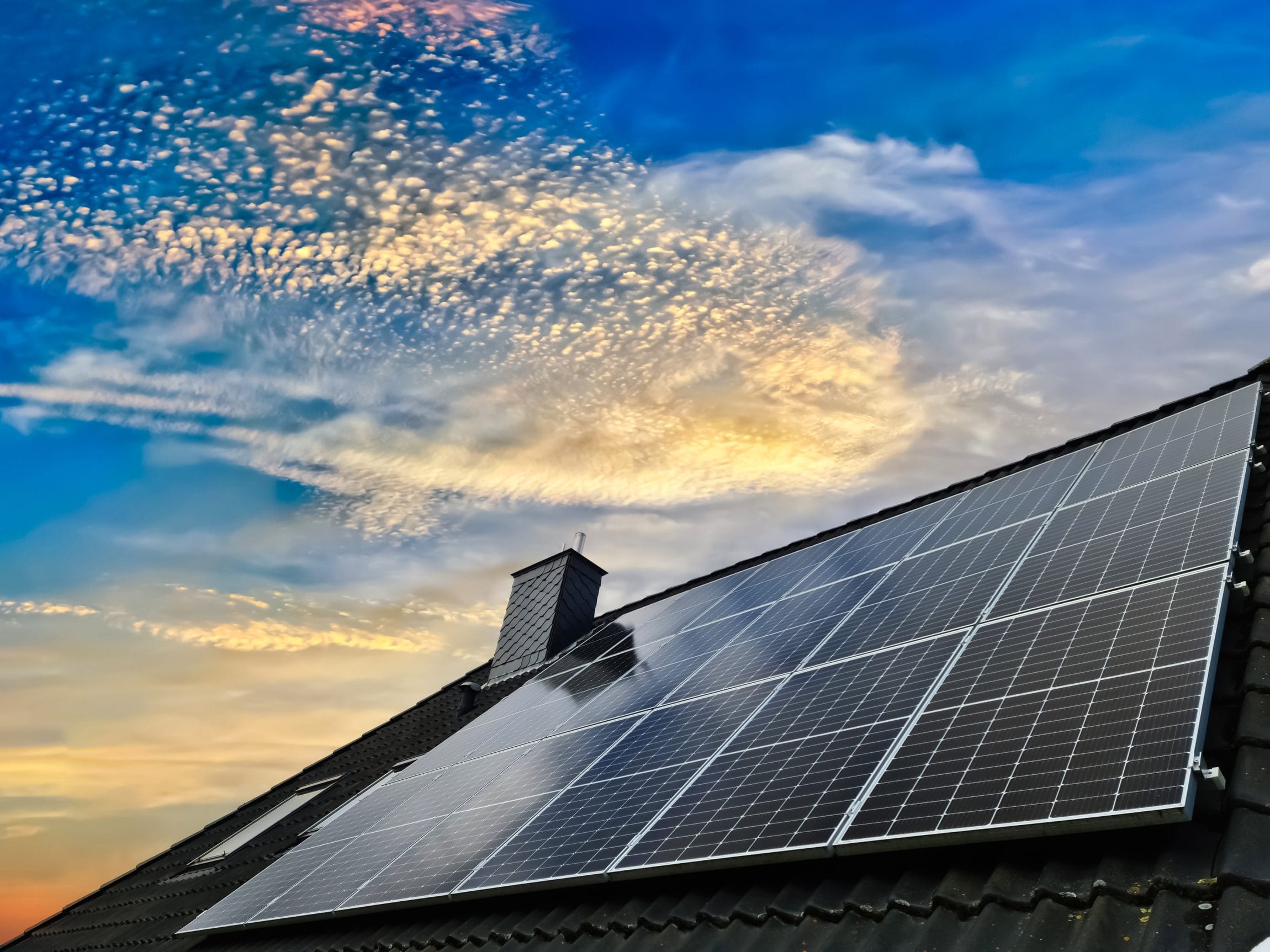
On your home solar installation day, our in-house crews arrive with all equipment ready for a clean, efficient solar panel installation. We mount the solar panel system, set the solar inverter, and complete professional electrical wiring. Panels produce direct current, and the inverter converts it to usable AC for your solar energy system. If you choose a solar battery, we integrate storage with clear labeling and homeowner training.

Typical install flow:

  • Roof layout and attachment points for panels or a flat roof array
  • Electrical work at the main panel and the inverter location
  • Commissioning tests to verify the system’s performance and safety measures
  • Final cleanup with a walkthrough of system technology and monitoring

Step 6: Inspection, Activation, and Monitoring

After installation, inspections verify code compliance. Your local utility grants permission to operate once interconnection is approved. We activate your system and confirm data reporting so you can view how much power the system produces. You will see energy production and power output in your monitoring app, plus tools that help you track energy used and saved.

What you receive:

  • Monitoring access for live and historical system performance
  • Tips to align energy usage with solar production for maximum savings
  • Guidance on optimizing your solar technology over time

How Long Does the Home Solar Installation Process Take?

Timelines depend on system size, roof complexity, and the pace of local approvals. Kokosing Solar keeps you informed at every step, from permits to inspections. The installation itself is typically a short on-site window, followed by the utility permission to operate and your final system activation.

Storage, EV Charging, and Energy Independence

Many solar customers pair storage with their solar energy to power essential circuits during an outage. A solar battery can also shift solar power for evening use, which improves self-consumption. If EV charging is part of your plan, we size your solar system to support driving on renewable energy. These upgrades increase resilience and move you closer to energy independence.

Why Choose Kokosing Solar as Your Solar Installer

Experience matters in the solar industry. Kokosing Solar combines internal design, field-tested solar projects, and long-term support. We stand behind our work and serve our communities as a trusted partner. As a member of the Amicus Solar Cooperative, we match small-business service with national buying power. We are Ohio’s longest-standing full-service solar installer, and we welcome the chance to build your own solar system with care and clarity.

Simple Math: Estimating Savings and Payback Period

Solar changes the math completely. Here is a simple way to visualize potential savings.

Example framework:

  1. Look at your average monthly energy bill and electric bill trends.
  2. Estimate annual energy production from the proposed system size.
  3. Multiply expected kilowatt-hour output by your current rate to estimate savings.
  4. Subtract monthly payments if you choose financing.
  5. Apply the federal solar tax credit or other solar incentives where eligible.

This basic approach shows how a solar investment can reduce the amount of money you send to the utility over time. Every year you go solar, those dollars stay in your pocket. Households that align energy consumption with daytime production often capture more value. Cleaner energy also lowers your carbon footprint and supports renewable energy growth across the United States.

Long-Term Service & Maintenance for Solar Homes

We design for durability and train homeowners on simple care that keeps systems running smoothly. Kokosing Solar offers Service and Maintenance for ongoing support. If a component requires attention, our team can inspect, troubleshoot, and restore system performance. We help you evaluate performance data and confirm your system continues to deliver clean energy for decades.

What ongoing support looks like:

  • Proactive checkups if monitoring flags a drop in production
  • Guidance on keeping rooftop panels clear to capture sunlight
  • Warranty support and best practices that optimize long-term returns
  • Clear communication if you plan home upgrades that affect your solar installation


Ready to save money and power your home with clean, renewable solar power? 

Schedule a free assessment with Kokosing Solar. We will answer questions, run the numbers, and map a clear path from proposal to permission to operate. Choose Ohio’s experienced partner for your home solar installation and enjoy reliable performance for years to come.
The Future of Solar Energy: Practical Trends to Watch

Energy costs keep rising while reliability matters more than ever. Solar changes the math completely. Kokosing Solar brings 25+ years of solar expertise and 74 years of construction experience to help homeowners and businesses plan with confidence. Here’s how the solar industry is evolving and what that means for your project.

What Does the Future of Solar Energy Mean for Your Home or Business?

It means control over energy consumption, more resilient solar systems, and better long-term value. Expect smarter storage solutions, higher efficiency solar panels, and designs tailored to your roof or site. Kokosing Solar guides you through options that turn clean energy into usable electricity with predictable costs.

Latest Trends in Solar Power and Storage

Energy storage and battery storage are moving into the mainstream. Storage technologies help stabilize solar power during evenings and outages, and they also assist in managing demand charges for commercial buildings.

Virtual power plants coordinate many small solar systems and storage systems to support local power generation.

Policy support in the United States encourages development of renewable energy, strengthening the renewable energy sector and the broader renewable energy industry.

Solar projects pair solar photovoltaics with energy efficiency upgrades to lower the amount of energy a building needs.

Solar capacity additions have seen rapid expansion in recent years as PV installations scale across communities and solar farms.

The result is practical resilience. Onsite solar energy plus storage solutions provide dependable clean energy during peak periods when power plants and grids face high temperatures or heavy loads.

Technology Advances Improving Performance

Solar panel technology builds on decades of innovation in solar cells and photovoltaic technology. Researchers work with new materials to raise power output and reach higher efficiency at lower installation costs. Key areas to watch include:

  • Perovskite solar cells and tandem cells that stack layers to capture more of the available energy from sunlight
  • Transparent solar panels for specialty surfaces and windows in commercial buildings
  • Ongoing work by leaders such as the National Renewable Energy Laboratory and the U.S. Department of Energy’s Solar Energy Technologies Office that share the latest advancements in solar energy technologies

Some of these new technologies are available today, while others remain in the early stages of testing and certification. The goal is simple: turn more sunlight into usable electricity across a wider range of conditions and surfaces.

Smart System Designs for Real Sites

Every property is unique. Kokosing Solar uses in-house design to right-size PV installations for your roof, ground mount, or parking canopy. Careful system designs maximize energy resources by accounting for:

  • Amount of sunlight across the year
  • Surface area and layout for solar panels
  • Local temperatures, including high temperatures in summer
  • Target power output and desired storage capacity
  • Interconnection requirements and policy changes

For larger sites, solar farms and multi-building solar projects can deliver significant power generation with consistent solar PV performance. For a single facility, optimized solar panel placement and battery storage can help you capture the energy you need during peak hours.

What Drives Solar Economics in the United States?

Long-term value comes from predictable energy costs and reduced exposure to fossil fuels volatility. A few drivers to consider:

  • Installation costs and manufacturing costs continue to evolve as supply chains mature
  • The average cost of electricity can rise with grid investments and fuel prices
  • The cost of PV hardware varies by project scope, site, and incentives
  • Policy changes and policy support influence timelines across the renewable energy sources landscape
  • Reducing carbon dioxide emissions remains a priority for many organizations

When you invest in a sustainable energy source, you set a ceiling on a portion of your energy costs. Every year you wait, the utility bill gets higher. Every year you go solar, those dollars stay in your pocket.

How Kokosing Solar Helps You Plan Ahead

Kokosing Solar is Ohio’s longest-standing full-service solar installer. We design, build, and service residential and commercial solar systems with NABCEP-certified installers and a commitment to long-term operations and maintenance. Our membership in the Amicus Solar Cooperative combines local service with national-level buying power.

For Homeowners

  • Solar for Your Home with high-quality solar panels and smart energy storage
  • EV charging integration to support electric vehicles
  • Solar Service and Maintenance that keeps your system performing

For Organizations

  • Solar for Your Business, Government, Education, Non-Profit, Houses of Worship, and Agriculture
  • Project Developers support and Operations and Maintenance Services for reliable performance over time
  • Custom system designs that fit commercial buildings and multi-site portfolios

We focus on clarity. You get straight answers about available technologies, timelines, and financing options. We stand behind our work.

Where Are Costs Headed for Solar Energy?

Today’s market reflects steady technology advances, competitive supply chains, and consistent demand. The latest trends point to improved solar panel technology that delivers more power output per square foot. That helps projects use less surface area for the same generation target, which can reduce balance-of-system costs.

The renewable energy sector also benefits from design standardization. Repeatable approaches trim soft costs and support faster scheduling. Together with Amicus Solar Cooperative purchasing strength, Kokosing Solar brings reliable value and proven equipment to your site.

Emerging Innovations to Watch Next

Innovation will keep moving the industry forward. Research and pilot projects highlight:

  • Oxford PV and other leaders exploring tandem cells that blend silicon with perovskite solar cells for higher efficiency
  • Transparent solar panels for specialty facades and skylights
  • Software that coordinates solar energy with battery storage to form virtual power plants
  • Field-proven strategies that maintain energy efficiency and power output during high temperatures

These advancements will inform the next generation of solar energy technologies and system designs.

How Do You Turn Industry Trends Into a Plan?

Start with a clear site assessment and an energy profile. Kokosing Solar reviews your energy consumption, roof or land space, and goals. We propose a design that targets your usable electricity needs, aligns with your budget, and prepares you for future storage technologies as they mature.

The Bottom Line on the Future of Solar Energy

The future of solar energy favors owners who act with a plan. Onsite solar power delivers clean energy, reduces exposure to fossil fuels, and supports the energy transition in your community. With the right solar systems, you position your home or facility to benefit from the development of renewable energy over decades.

Kokosing Solar brings internal design expertise, careful installations, and long-term service to every project. We help you navigate policy support, evaluate average cost impacts, and design for the amount of sunlight you receive. Solar changes the math completely, and the opportunity is available today.

Ready to save money and power your home or business with clean, renewable solar energy? Schedule a free solar evaluation with Kokosing Solar. We will run the numbers together and build a reliable plan that fits your goals.

WHAT THE NEW ADMINISTRATION MEANS FOR SOLAR

NAVIGATING CHANGE: WHAT THE NEW ADMINISTRATION MEANS FOR SOLAR

Kokosing has been a part of the changing power landscape for most of the company’s 70+ year history.

As the technology and markets have evolved over time we have continued to adapt our offerings and capabilities to these changing demands, with successful projects ranging from air-quality upgrades at conventional power stations, to ground up construction of utility-scale combined cycle natural gas plants, to the present day where our solar, energy storage and energy infrastructure projects are reshaping the ever-changing energy systems that powers our homes, buildings and factories.  

As a leading solar installer with 24 years of experience in helping our clients evaluate and deploy this technology, our knowledge of policy is as important as our technical expertise. 

As President Trump prepares to return to office in January and political control shifts in congress, many of our clients are curious about what this election means for the solar industry and, more specifically, the potential impact that changes in federal policy might have on the solar installations they are considering.   

Policy change is just part of the constantly evolving world of energy, and Kokosing has been in business for 14 presidential administrations. 

As we look ahead to the next shift in Washington, our team will continue to provide expert guidance to our clients as they navigate changing energy, tax and economic policy and the opportunities and benefits of solar and storage. 

WHAT ARE THE CURRENT FEDERAL TAX BENEFITS FOR SOLAR?

First let’s start with a review of the current policy landscape.  Listed below are some of the most popular current federal benefits directly tied to solar energy:  

Residential Federal Solar Tax Credit:

  • 30% of the cost of the system (available through 2032, and then tapering down to zero in 2035) 

Commercial Federal Solar Tax Credits:

  • 30% of the cost of the system (available through 2032, and then tapering down to zero in 2035) 
  • 10% Bonus Credit for:  
    • Using domestic content (encourages domestic manufacturing)  
    • Projects located in an energy community (helps communities that may be impacted by a loss of jobs in traditional energy) 

Commercial Federal Grants: 

LOOKING AHEAD: GOING SOLAR IN 2025

While it is never possible to predict the future, an evaluation of past shifts along with consideration of the mechanics of government can help inform a look ahead.   

Most solar policy experts are predicting significant changes under the new administration, but that these changes will take time to implement. 

Furthermore, there is an established precedent of implementing tax and policy changes in a way that protects individuals and businesses that have made decisions and investments under the current rules.   

Sometimes referred to as “grandfathering” or “safe harbor rules” most of these policy changes include mechanisms to avoid retroactive “takings” and allow businesses and markets to function even as change looms on the horizon. 

Here is what we expect for 2025:   

  • Tax Credits We expect that they will remain as is for projects started in 2025, but will likely be adjusted after that 
  • Bonus Depreciation Commercial clients currently benefit from accelerated depreciation for solar projects.  President Trump’s proposed economic policy included the return of 100% bonus depreciation which would significantly enhance the value of this component of solar tax incentives 
  • Grant Incentives The USDA REAP Grant is funded through September 2027, however unspent or unallocated funds could be subject to an early phase out or significant adjustment 
  • Tariffs President Trump’s proposed economic policy includes a significant increase in the use of tariffs on imported goods. While it is possible that this happens quickly, most expect that there will be time required to implement these changes with the impact on project economics delayed until 2026.  It is possible however that as details of planned tariffs emerge an increase in demand for solar equipment could raise prices and/or impact project schedules 
  • Installation timeline We don’t foresee any impact for our existing customers currently scheduled for installation.  As the year progresses and the details of policy changes are revealed, a sharp increase in demand could impact our installation timeline as household and business clients sign up to go solar before speculated -or announced- changes would impact their projects 

Current Kokosing Solar Schedule Backlog 

Presently, we have a typical backlog of projects as homeowners and businesses have signed contracts to take advantage of the many benefits of solar and storage.  

  • Current residential installation timeline: installations scheduled through early 2025 
  • Current rooftop commercial installation timeline: installations scheduled through mid 2025 
  • Current utility scale installation timeline: installations scheduled through 2025 and into 2026 

FUTURE OUTLOOK FOR 2026 AND BEYOND 

As we look ahead to a new administration, there are many reasons to be optimistic about the role solar plays in America’s energy strategy.  

Businesses that adopt solar lock in a portion of their operational costs, helping them stay competitive in an evolving market.

Homeowners who invest in solar will enjoy energy security and financial savings for decades to come. The core advantage of solar technology is that its “fuel” (sunshine) is free and reliable.  Billions of dollars are being invested in manufacturing plants across the country as the solar industry seeks to manufacture solar equipment in America for Americans.  

The costs, reliability and efficiencies of today’s existing solar technology are proven and accepted by the marketplace. 

Electricity demand has been rising across the economy and the accelerating demands of AI computing and data centers are forecasted to put increasing demands on the utility grid.  Distributed generation resources like solar and the load balancing services of storage can be located close to the point of use, an important advantage as the utility grid is reshaped to serve the next 100 years of energy demand.  

We believe that American innovation, resilience, and adaptability will continue to drive the growth of solar energy, no matter what policy changes may impact the speed of its growth. 

Though we certainly don’t know exactly what the future holds beyond 2025, here are the top considerations we’re watching for:  

  • Tax Credits Tax credits are a policy tool popular with Republicans for decades, with today’s solar investment tax credit originally signed into law by President George W. Bush in 2005.  Most policy experts expect that the solar tax credits will be adjusted downward over time, likely through shortening the time before they begin to sunset downward. It is rumored that they may require domestic content in the future as well. 
  • Grants The USDA REAP program, while popular with rural states, may be reduced to fund other economic priorities.  We could see an early phase out, a decrease in the amount of awards or elimination of the program entirely. 
  • Tariffs While little is known about what the final tariffs may look like, as currently proposed the 20% across the board tariffs would increase the costs of many of the components that make up a solar project. 
  • Installation timing Any of the expected changes could drive up short term demand for solar and storage projects.  Even as our team expands to serve customer demand it is possible that customers will see longer waits  
  • Interest rates Monetary policy has a big impact on household and business decisions and could increase or decrease project economics and the wait for projects. 
  • Domestic content requirements – we could see an increase or decrease in the current requirement for building new solar projects with domestic content (currently there is a 10% tax credit adder for commercial projects only).  Building the manufacturing infrastructure to meet rising demand takes time, so it is hoped that a change in this area would be phased in over time. 
  •  Procurement of materials – the wait for transformers and commercial switchgear is sometimes one year or more.  This period could grow longer if policy changes shoot up demand in the near term as customers seek to lock in favorable policies.  

GROUPS TO FOLLOW  

The Kokosing Solar team follows local, state and national solar policy closely. Here is a list of the groups we’re getting our information from:  

  • United States Senate  
  • House of Representatives 
  • International Trade Commission 

Please stay in touch with us – on social media and through our email newsletter – as we communicate any updates with our followers.  

Our thousands of clients over the past 20 years understand that the simple economics of electricity generation with no ongoing fuel cost are a financial gamechanger for family and business outcomes. 

As the future of solar unfolds, our team is excited to look back at where we were in 2024 and how we guided our clients on their solar journeys during the election transition.  Kokosing Solar and the solar industry have navigated decades worth of changing policy and will continue to meet the growing energy demands of the American people. 

If you’ve been considering solar for your home or business, there’s no better time to act. By securing your solar installation now, you’ll maximize the financial benefits of the current tax credit and position yourself to enjoy long-term savings. 

Contact us today to schedule a consultation and learn how solar can empower your home or business to take control of energy costs in 2025 and beyond. 

Get Started

"*" indicates required fields

This field is for validation purposes and should be left unchanged.
Name*
Address
This field is hidden when viewing the form

Get Started

"*" indicates required fields

Name*
Address*