Is Your Solar System Performing as It Should? Signs It May Need Professional Service

July brings long days, abundant sunlight, and some of the best energy production of the year. Itโ€™s a practical time to check your solar system and confirm youโ€™re seeing the energy output you expected. When performance dips during peak season, the cause is often easier to spot, and the fix can protect long-term energy savings.

Solar changes the math completely, but only when your system operates in good condition. Like any investment, a solar panel system benefits from routine attention. A little upkeep now can help you avoid costly repairs later, preserve your panel warranty, and keep your home or business moving toward clean energy independence.

What โ€œnormalโ€ energy production looks like in the summer months

In summer, solar panel output often trends higher because the sun is up longer. However, performance can still vary based on environmental conditions, weather, and system design. Smoke, haze, heavy humidity, and temperature shifts can all affect day-to-day energy output, even when skies look bright.

A good baseline starts with your monitoring app or portal. If you have access to daily or monthly totals, look for patterns rather than single-day changes. Once you know what โ€œtypicalโ€ looks like for your site, a sudden drop stands out quickly.

Solar panel maintenance: why performance problems show up when the sun is strong

Solar panel maintenance becomes especially valuable in high-production months because the gap between expected and actual solar power can be significant. If a system underperforms in July, you may lose more potential generation than in a cloudier season, translating to lower energy savings and a longer payback timeline.

Regular maintenance also supports long-term reliability. Solar systems are built to last, but they face daily exposure to the elements. Dust, debris, and electrical issues can build quietly over time, so a proactive check is a good idea for anyone seeking optimal performance.

Are you seeing a sudden drop in energy output?

If your monitoring shows a sudden drop, start by confirming itโ€™s not a data issue. Compare today to the same time last week, or compare month-to-date totals year over year if you have that history. Then look for simple site changes like new shade, a dirty array, or a tripped breaker.

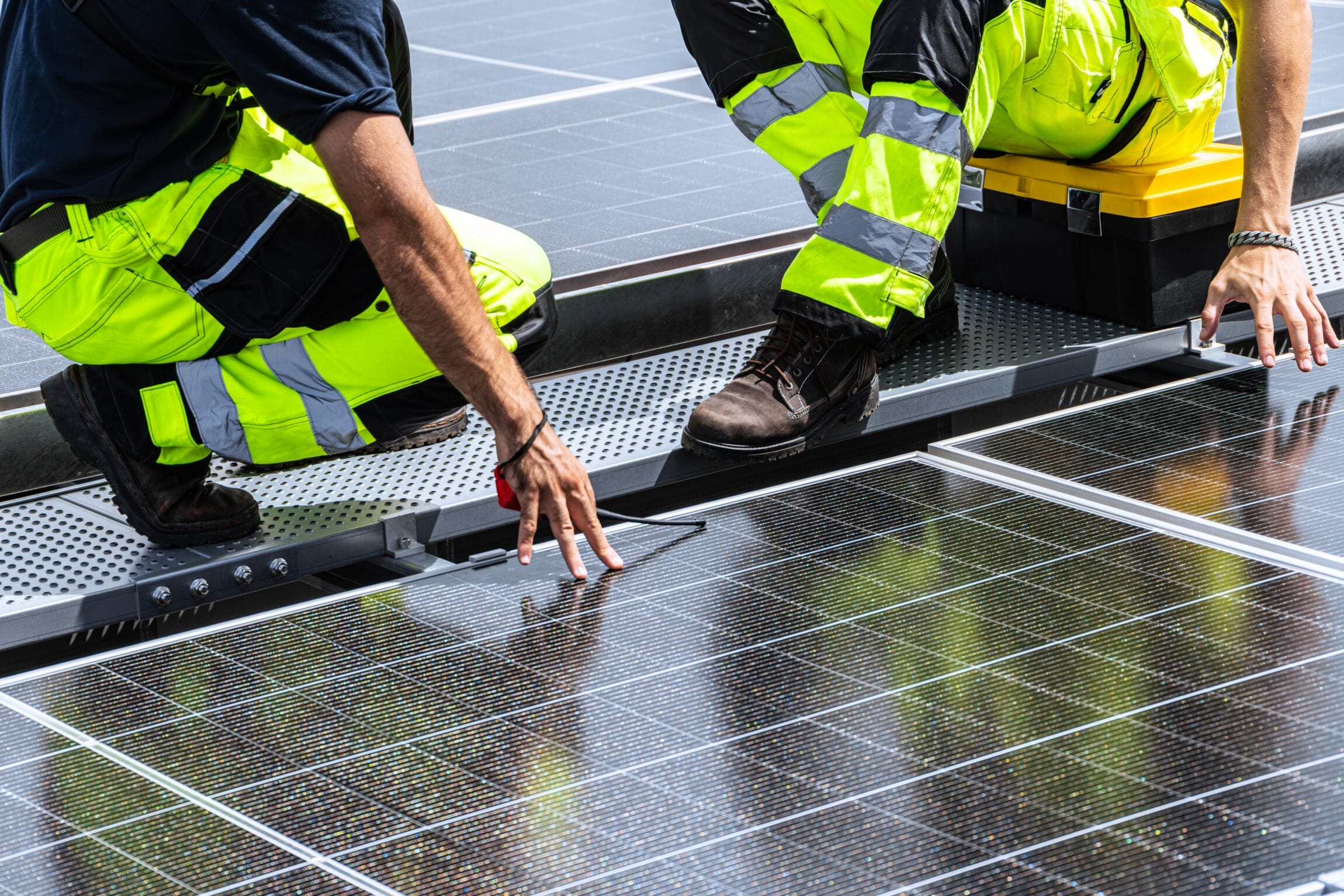
If the numbers still donโ€™t make sense, professional inspections can pinpoint potential issues that are hard to see from the ground. A trained solar company can evaluate production data, check solar inverters, and confirm the system is operating as it should.

Inverter display alerts, error messages, or communication problems

Your inverter converts DC power from your solar panel array into usable AC power for your home or business. Many inverters include a display with status lights, error codes, or alerts. If you see warnings, frequent resets, or a system that stops producing, thatโ€™s a clear service signal.

Communication faults matter too. If your monitoring drops offline, you may not notice performance losses until the utility bill arrives. Kokosing Solarโ€™s service team can help with error messages, monitoring access, and inverter resets for systems they install, keeping you informed and in control.

Monitoring shows zero production (or missing days)

A monitoring graph that goes flat can point to several causes, including inverter shutdown, electrical issues, or a communication gateway problem. Sometimes the system is producing, but the data isnโ€™t reporting correctly. Other times, the system truly is offline.

Treat โ€œmissing productionโ€ as a time-sensitive issue in peak season. Each day you wait is a day of lost solar energy and avoidable utility costs. Getting it checked early helps preserve peak efficiency and supports long-term savings.

Dirt, bird droppings, and debris: when solar panel cleaning helps

Some properties rarely need panel cleaning, but others benefit from regular cleaning, especially in dusty areas, near farm fields, or where pollen and debris collect. Bird droppings can block light and create localized hot spots that may contribute to damage over time. Leaves and windblown grit can also reduce clean panels from doing their job.

If youโ€™re considering solar panel cleaning, protect the surface of the panels. Avoid abrasive materials and harsh chemicals. A soft brush and plenty of water are generally safer, and many manufacturers have specific guidelines in their product warranty. Professional cleaning service can be a smart choice when access is difficult or when you want good cleaning without risking the surface of your panels.

Physical damage after severe weather

Hail, high winds, and flying debris can damage racking, wiring, or the solar panel itself. Even if the glass looks intact, hidden issues can show up as reduced output or intermittent inverter faults. After severe weather, a visual check from the ground is a good first step, followed by a professional inspection if anything looks off.

For safety reasons, avoid climbing onto a steep roof to investigate. A licensed electrician or qualified solar installer can inspect connections, ensure the system is safe, and document any issues that may relate to a product warranty claim.

Vegetation growth and new shading

Solar power depends on consistent sunlight. Trees and fast-growing vegetation can shift your shade profile year to year, especially mid-summer when foliage is at its fullest. Even partial shade on one section of an array can pull down production.

If your system once produced well and now trends lower each summer, shading is worth evaluating. A service visit can help confirm whether trimming, array-level troubleshooting, or simple site adjustments can restore optimal performance.

Loose wiring, conduit issues, and other electrical concerns

Electrical issues arenโ€™t always visible, but they can be serious. Signs include repeated inverter errors, flickering production, or monitoring that drops in and out. Outdoor wiring and conduit can also be affected by heat cycles, weather conditions, and critters.

If you suspect loose wiring, donโ€™t attempt DIY repairs. Solar equipment carries electrical risk, and safe troubleshooting is best handled by an experienced team. Kokosing Solarโ€™s in-house technicians perform troubleshooting and repairs for systems they install, backed by decades of solar expertise.

Battery storage warning signs (if you have energy storage)

Battery storage adds resilience and flexibility, but it also adds another component to monitor. Watch for alerts in the battery portal, unusual state-of-charge behavior, or a system that doesnโ€™t operate as expected during outages. Because storage interacts with your inverter and your homeโ€™s electrical panel, proper diagnosis matters.

If you see recurring notifications, schedule service sooner rather than later. A clear explanation of what the system is doing helps you get the most from your solar energy system and supports long-term clean energy goals.

What professional solar panel maintenance typically includes

A strong service plan focuses on safety, performance, and documentation. For homeowners, Kokosing Solar offers Solar Service and Maintenance that can include:

  • Troubleshooting and repairs by in-house technicians
  • Inverter and communication checks
  • Warranty support, including help managing manufacturer claims and understanding out-of-pocket labor costs

For commercial sites, Kokosing Solar provides Operations and Maintenance Services designed to protect performance and reduce long-term maintenance costs. Commercial clients can receive project-specific documentation and support such as an Operations and Maintenance manual, warranty management guidance, and performance baseline support.

When should you call a solar company for service?

If you see repeated alerts, a clear drop in output, or physical damage, calling a good solar company early is usually the lowest-stress path. Service also makes sense when access is difficult, such as a steep roof, or when your site sees high dust and frequent debris. Many issues are easier and less expensive to address before they cascade into bigger downtime.

It also helps to understand service availability. Kokosing Solar currently cannot service projects or systems that werenโ€™t installed by Third Sun Solar or Kokosing Solar due to high volume. If Kokosing Solar was your original installer, your service request stays with the team that knows your system best.

Protecting your ROI: simple math that makes maintenance a good idea

Solar is a long-term investment. When production is lower than it should be, the โ€œhidden cost of doing nothingโ€ shows up as energy you could have produced but didnโ€™t. If a system is offline or underperforming during high-production months, the lost solar energy can add up quickly.

Think of it this way: your system has a limited number of prime sunny hours each year. Professional maintenance helps you capture more of those hours, sustain peak efficiency, and maintain peace of mind that your equipment is working as designed.

Ready to confirm your system is delivering optimal performance?

If your monitoring looks wrong, your inverter display is showing alerts, or you suspect dirt, damage, or electrical issues, itโ€™s worth getting a professional opinion. Kokosing Solar brings 25+ years of solar experience and 74 years of construction experience, with NABCEP-certified installers and licensed electricians on an in-house team. We stand behind our work with a 20-year workmanship warranty on systems we install, and we support manufacturer warranty processes when equipment issues arise.

Schedule a service assessment with Kokosing Solar and run the numbers with a team that prioritizes clarity, safety, and long-term performance.
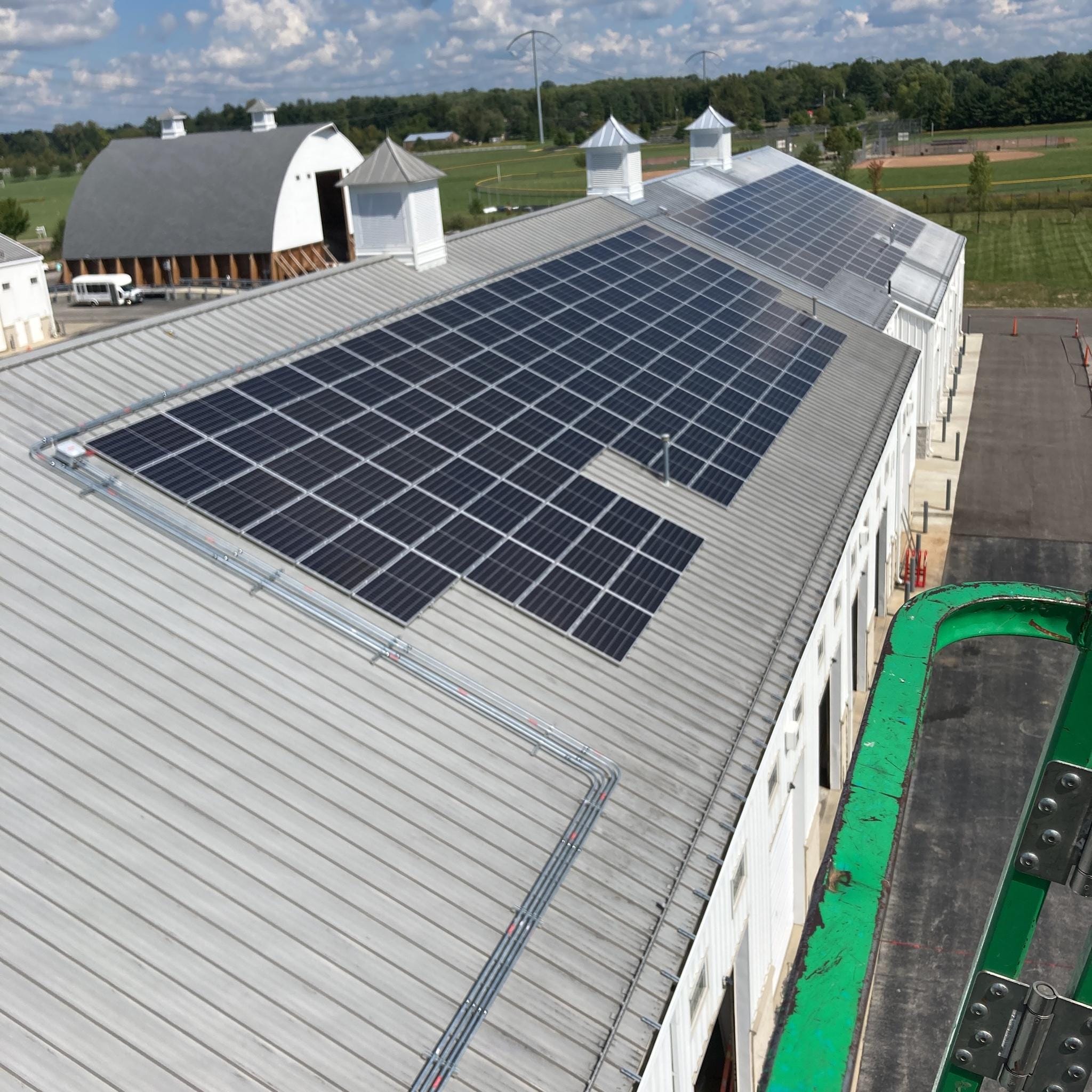
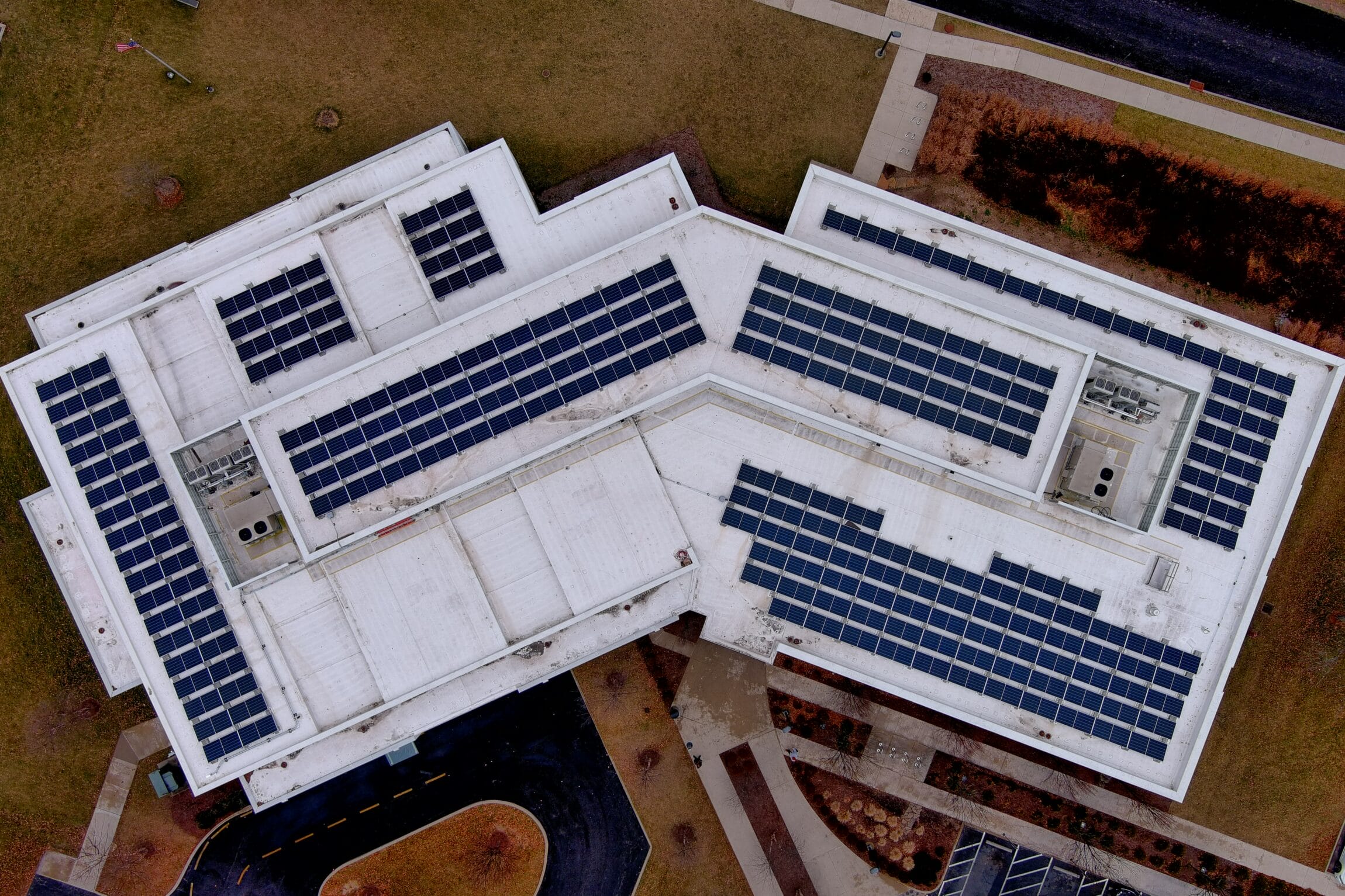
New Albany Service Garage

Project Overview

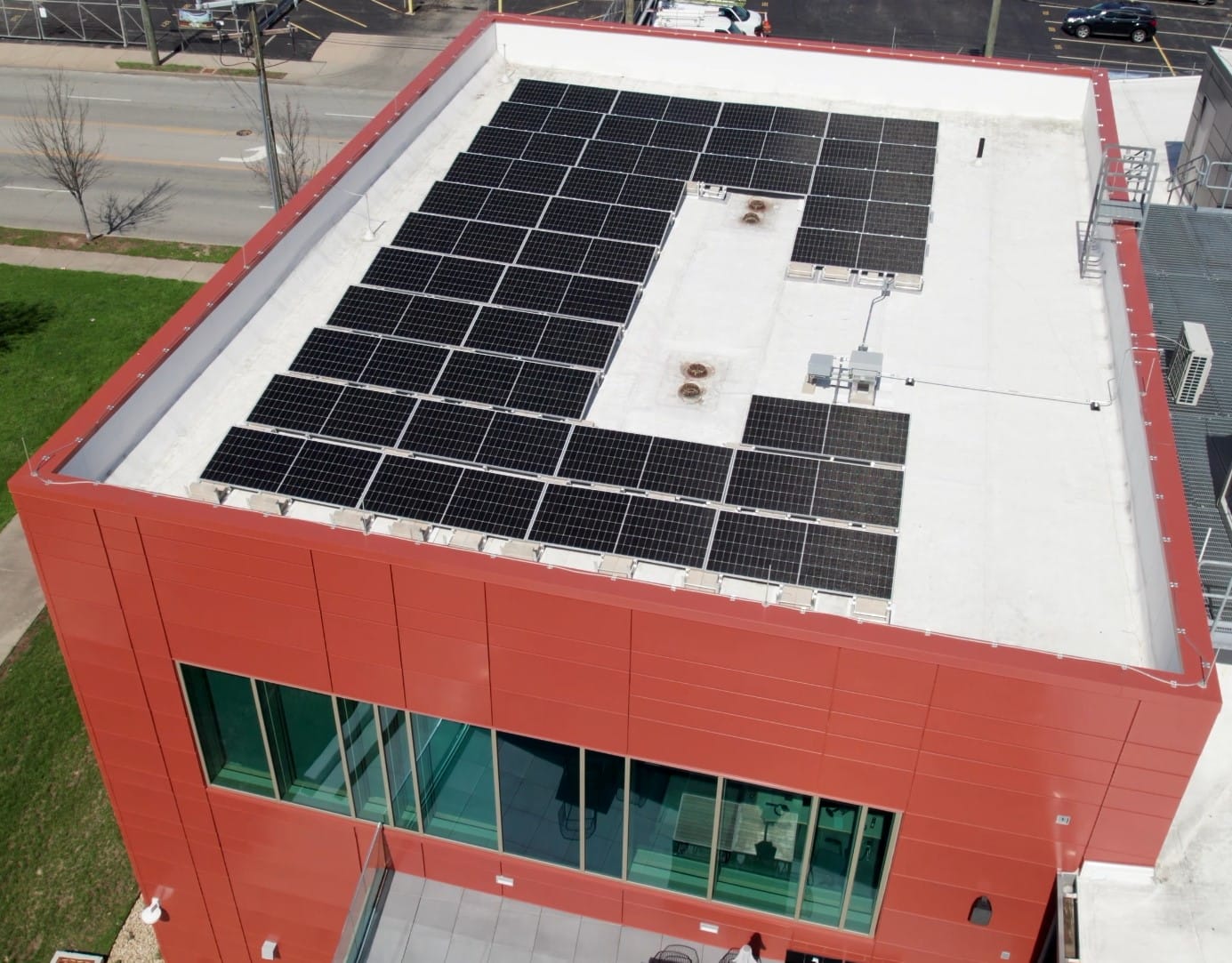
Kokosing Solar partnered with the City of New Albany to deliver a rooftop solar installation at the city’s Public Service Facility, supporting the community’s long-term sustainability and energy management goals. The 5,570-square-foot solar array was designed to reduce facility energy costs.

The Challenge

The City of New Albany identified solar energy as a key initiative through its strategic planning efforts, seeking opportunities to reduce operating expenses and lower its carbon footprint. The city needed a reliable solar solution that would integrate seamlessly with an existing municipal facility while delivering measurable long-term value.

In addition to performance objectives, the project required an efficient procurement and delivery approach that would streamline implementation and minimize administrative complexity.

The Solution

Kokosing Solar designed and installed a rooftop solar array on the Public Service Facility to offset a portion of the building’s energy consumption and support the city’s sustainability objectives. The system was integrated into the facility’s existing infrastructure while maximizing available roof space for energy production.

The project was delivered in coordination with project partners and utilized a streamlined procurement approach that enabled efficient execution and project delivery.

Key Outcomes

  • 5,570-square-foot rooftop solar array installed on the Public Service Facility
  • Reduced annual carbon emissions by approximately 112 metric tons
  • Environmental impact equivalent to planting roughly 2,800 trees
  • Supports the City’s strategic commitment to renewable energy adoption
  • Long-term energy production with an expected system lifespan of approximately 30 years
  • Durable solar equipment backed by manufacturer warranties

Columbus Public Library 2023

  • System Size – 673.96 kW of solar installed across 6 CML branches.
  • Date – Installation completed in 2023.
  • Real Time Monitoring – Each facility includes a kiosk connected to the data acquisition system, allowing visitors to view real-time energy production and learn about solar powerโ€™s impact.
  • Cost Savings – CML offsets a significant portion of its electricity usage, reducing utility expenses.
  • Prevailing Wage – The project was executed in full compliance with Ohioโ€™s Prevailing Wage Law, ensuring fair labor standards.

Kokosing Solar was awarded and successfully completed the installation of 673.96 kW of rooftop solar for the Columbus Public Library (CML). The project spanned six library locations across Central Ohio.

Kokosing Solar designed and installed ballasted rooftop solar arrays. Each system was custom-designed to maximize solar production while ensuring minimal roof penetrations, preserving warranties, and maintaining structural integrity.

Kokosing Solar coordinated closely with AEP Ohio for net metering integration and worked alongside multiple roofing contractors to ensure the installations met warranty and load-bearing requirements. The project featured:

  • A fully behind-the-meter interconnection for seamless integration with existing electrical infrastructure.
  • A hybrid ballast mounting system tailored to each roofโ€™s structural capacity.
  • A robust operation and maintenance plan ensuring optimal system performance for years to come.


City of Grandview Heights City Hall, Police, & Fire Municipal Complex

Project Overview

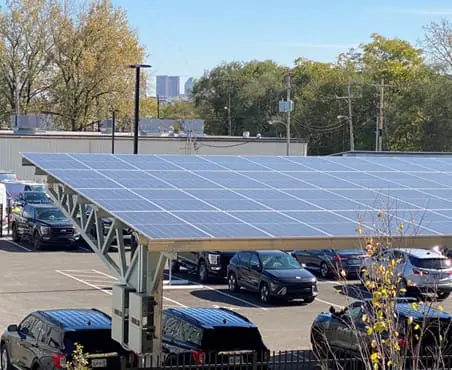
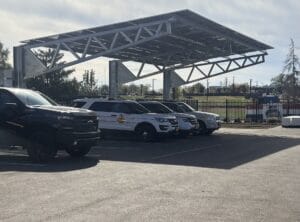
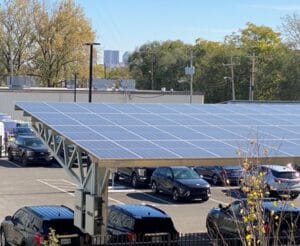
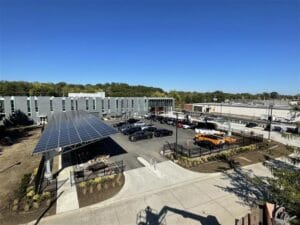
Kokosing Solar partnered with the City of Grandview Heights to deliver solar carport canopies for its new City Hall, Police, and Fire Municipal Complex. Designed to help offset the facility’s energy consumption, the solar installation supports the city’s commitment to sustainability while enhancing the performance of a critical public services campus.

The Challenge

Unlike a conventional rooftop solar installation, this project required substantial civil and foundation work to support the solar carport structures. The installation involved large-scale drilling operations, excavation, and specialized foundation construction, requiring a coordinated approach across multiple disciplines.

At the same time, the project team needed to ensure the solar canopies integrated seamlessly with a new public safety campus designed to support essential city operations, including police, fire, and administrative services.

The Solution

Leveraging the combined capabilities of Kokosing Solar and Kokosing Industrial, the project team self-performed critical construction activities using specialized equipment, experienced operators, and advanced heavy civil expertise.

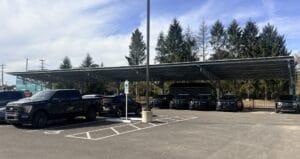
The solar carport canopies were strategically designed and installed to generate renewable energy while providing functional covered parking. This integrated approach allowed the city to maximize the value of its infrastructure investment while advancing its sustainability goals.

Additionally, the municipal complex was engineered with future rooftop solar expansion in mind, creating a pathway for increased renewable energy generation as the city’s needs evolve.

Results

The completed solar carport system helps offset building energy use and supports the long-term operational efficiency of the new municipal complex. By incorporating solar energy into a facility that houses critical public services, Grandview Heights is investing in infrastructure that balances performance, resilience, and environmental responsibility.

Key Outcomes

  • Solar carport canopies designed to offset facility energy consumption
  • Renewable energy integration for a critical public safety and municipal services campus
  • Self-performed installation utilizing heavy civil construction expertise


Cincinnati Public Radio Solar Installation

Project Overview

Cincinnati Public Radio partnered with our team to integrate renewable energy into its facility through a ballasted, roof-mounted solar installation. The project was designed to support the organization’s sustainability goals while contributing to its pursuit of LEED certification.

The Challenge

As part of a broader commitment to environmental stewardship and operational sustainability, Cincinnati Public Radio sought an energy solution that would reduce its environmental impact and align with green building standards. The system needed to be installed without compromising the integrity of the existing roof structure while supporting the facility’s long-term performance objectives.

The Solution

Our team designed and installed a ballasted rooftop solar array that met the project’s technical and sustainability requirements. The non-penetrating mounting system provided an effective solution for the building’s roof while maximizing renewable energy production and supporting LEED certification goals.

Results

The completed solar installation became a key component of the building’s LEED certification strategy, helping Cincinnati Public Radio demonstrate its commitment to sustainable operations and environmental leadership. By investing in clean energy, the organization enhanced its sustainability profile while reducing reliance on traditional energy sources.

Athens 911 Emergency Communications Center

  • Size – 69.6 kW DC
  • Energy production – The system is expected to generate 85,283 kWh annually, offsetting 15% of building use
  • Date – 2025

As part of Athens Countyโ€™s ongoing commitment to sustainability and long-term operational resilience, Kokosing Solar partnered with the Athens 911 Emergency Communications Center to design and install a roof-mounted solar energy system tailored to the unique needs of this critical facility.

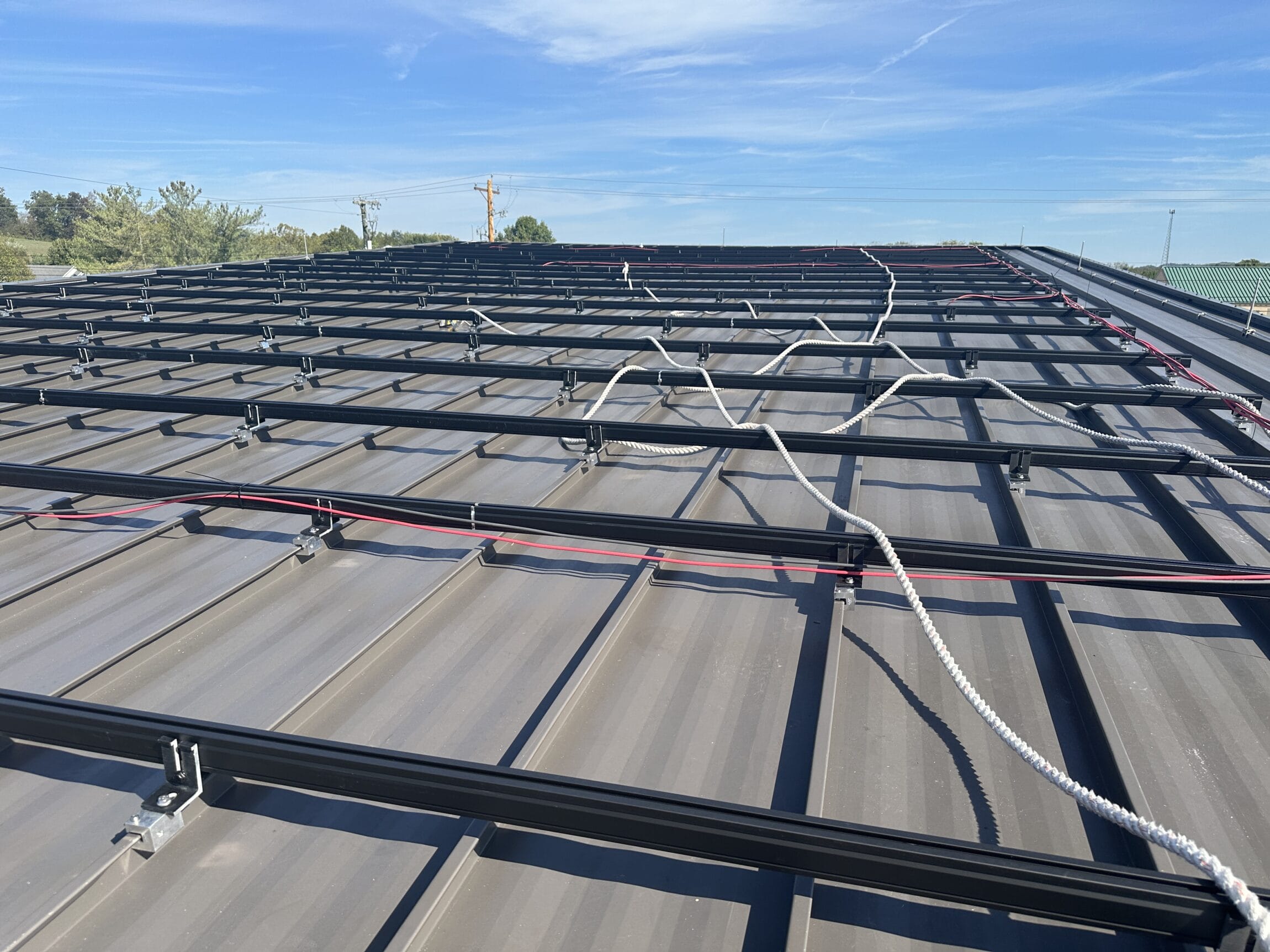
Because the 911 Center features multiple roof surfaces and a complex new-building load profile, Kokosing Solar utilized two mounting strategies to ensure optimal performance:

  • Ballasted Racking System – Used on flat roof sections, this non-penetrating system allows solar arrays to be securely anchored using weighted blocks.
  • Rail Racking on Standing Seam Metal Roof- Mounted directly to the standing seams without penetrating the roofing surface.

Engineering and permitting for public safety facilities typically require several months due to stringent state and building-code standards.
Once permitting and procurement were complete, the installation window was coordinated with the 911 Center. Thanks to its thoughtful engineering and prefabrication work, the Kokosing Solar team completed installation within just a few daysโ€”minimizing onsite disruption to emergency operations.

Private Client, Ohio

  • Scope of work – Mechanical, Civil Work
  • Size – 418-acre solar field
  • Subcontractor
  • Date – Kokosing scope of work complete in 2026

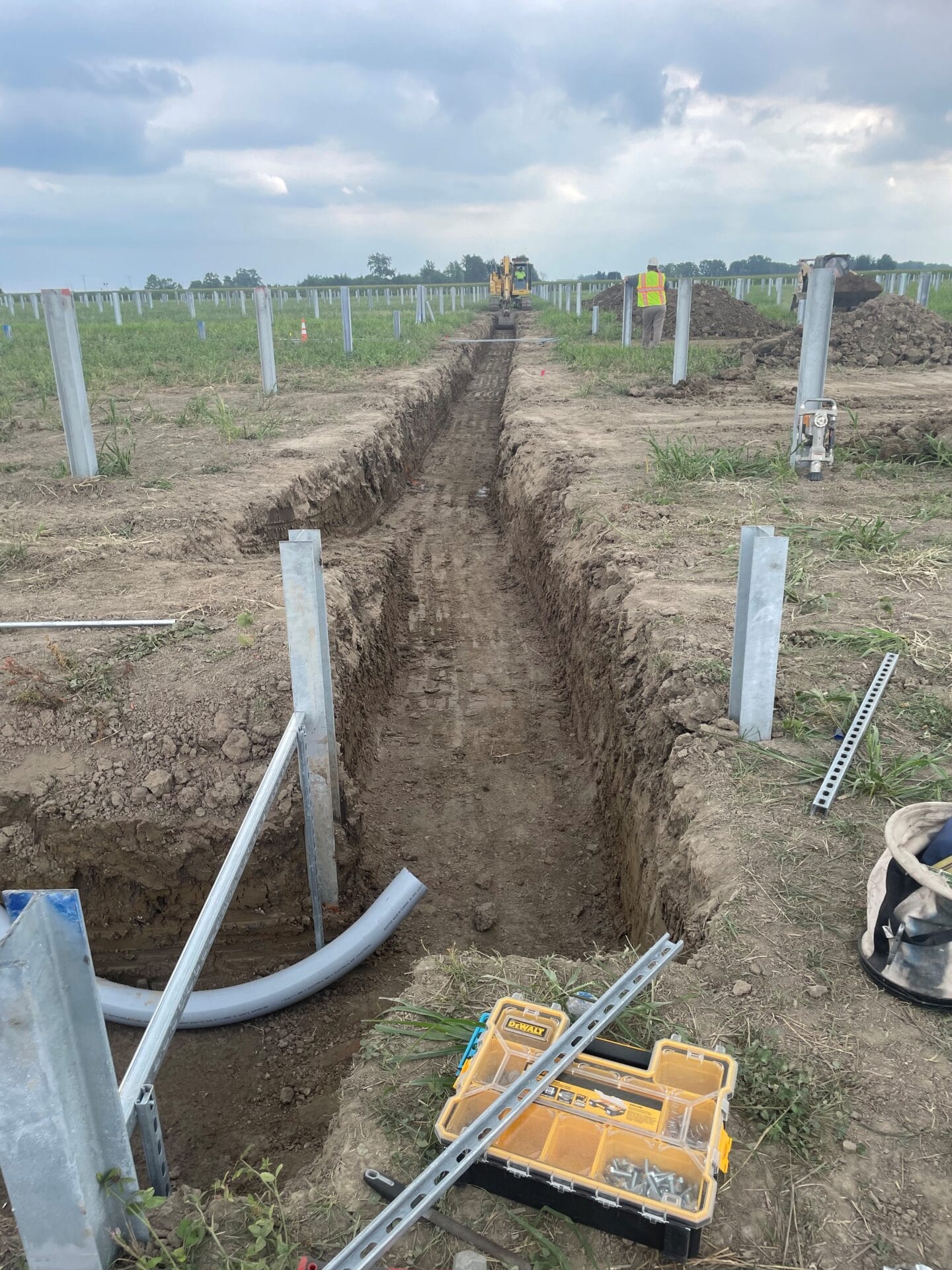
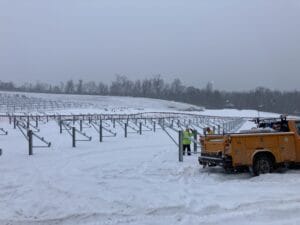
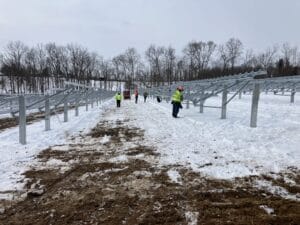
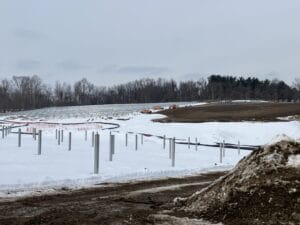
As the civil sitework subcontractor, Kokosingโ€™s scope of work includes site preparation to create a stable foundation for the solar installation. We constructed access roads and installed stormwater management systems, including erosion control measures, to mitigate runoff. Mobilizing in late February was challenging, as saturated soils initially made the site impassable. Our team implemented dewatering, undercutting, and cement stabilization to restore access and maintain schedule progression.

Kokosing also serves as the mechanical subcontractor, responsible for installing racking piles across the 418-acre project. This project marks our first use of the CIV robot for pile point layout. The robot leverages GPS-enabled automated marking to boost field efficiency.

Supply chain delays impacted the piling phase, requiring us to adjust sequencing and shift between power blocks, which we handled with minimal disruption. The Private Client Solar Project not only expands our technical capabilities but also reinforces our reputation for adaptability, problem-solving, and readiness to deliver on large-scale solar projects.

Denison University Solar Expansion, Granville, Ohio

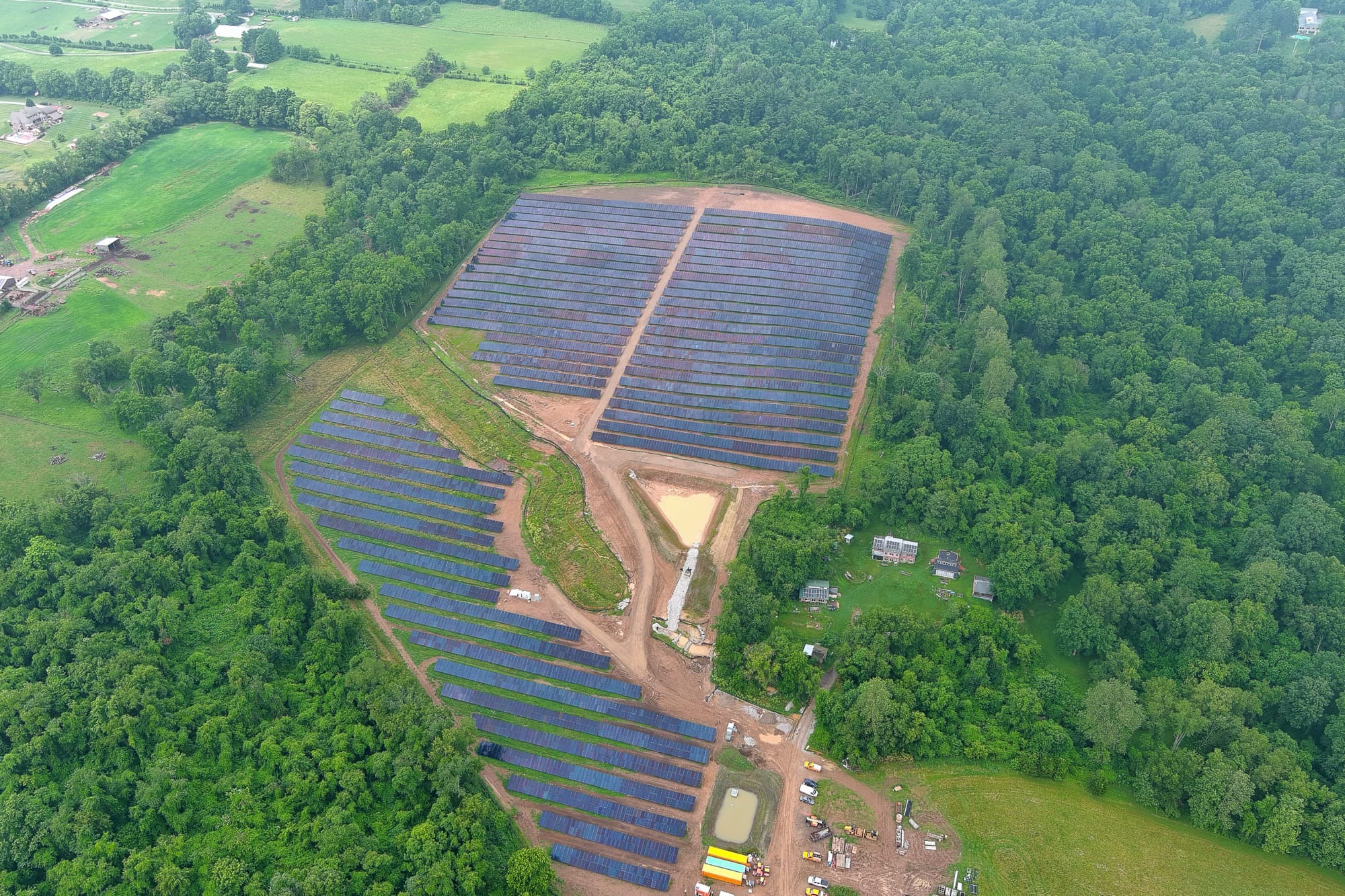
Denison Universityโ€™s newest solar installation began producing energy in June 2026. This represents a major milestone in our longstanding partnership with the university. After our team completed a feasibility study, which laid out the technical and financial elements of the project, Denison University awarded Kokosing Solar the contract to build a 5.4 MW fixed-tilt ground-mounted array, which is now the largest solar project in the schoolโ€™s portfolio, and the fifth project Kokosing Solar has delivered for them.ย ย 

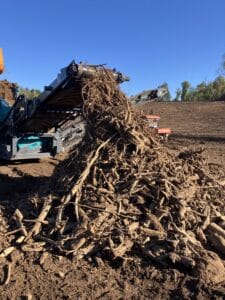
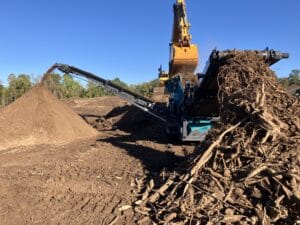
The system required a demanding civil scope of work. The project began with clearing a heavily wooded hillside. This required grading, developing an access road, and implementing erosion control measures. Most of this work occurred during winter, adding complexity to the project as the crews navigated frozen ground and weather delays.ย ย ย ย 

To secure federal tax credit requirements, the array needed to be fully energized before a fixed deadline: June 30, 2026. Meeting this deadline required communication with the county, the local utility, and other permitting entities. Thanks to thorough planning and cross team coordination, Kokosing Solar was able to power up the site on June 29th.ย ย 

The project is financed through a 25โ€‘year power purchase agreement and site lease, and the system will be maintained by Kokosing Solar under a long term O&M agreement.ย ย 

The array is made up of Ohio-made solar components. The racking is manufactured by OMCO, and the modules are produced by First Solar, both Ohio-based companies.ย ย ย ย 

Denisonโ€™s existing solar installations currently supply 10โ€“12% of the universityโ€™s electricity. With this new array, that number has been raised to nearly 40%, significantly reducing the schoolโ€™s use of natural gas and purchased grid power. Denison Universityโ€™s motivation for installing this array was rising electricity costs and an interest in meeting environmental goals.ย  On the first day the system was producing, the university saw its utility consumption drop into negative territory for a period, meaning they were pushing power back to the grid instead of pulling power from it.ย ย 

This project demonstrates Kokosing Solarโ€™s ability to execute complex, fast-tracked solar energy projects while delivering dependable, high value infrastructure for our clients.ย ย 

CONSUMERS ENERGY, BLACKMAN SOLAR GARDENS

  • SYSTEM SIZE- 2.5 MW DC
  • DATE – Installation completed in 2026
  • DESIGN WORK – Civil design in house, electrical design

The Blackman Solar Gardens is a 2.5 megawatt (MW) community solar facility that powers approximately 2,500 homes and businesses.

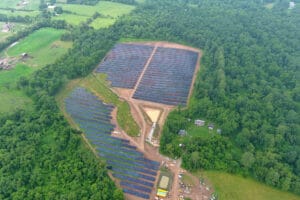
This project is Consumers Energyโ€™s fourth community solar facility, expanding its Solar Gardens program. Spanning 30 acres and featuring nearly 5,000 solar panels, the Blackman Solar Gardens site offers Michiganders a new opportunity to participate in renewable energy without installing solar panels on their own homes or properties.

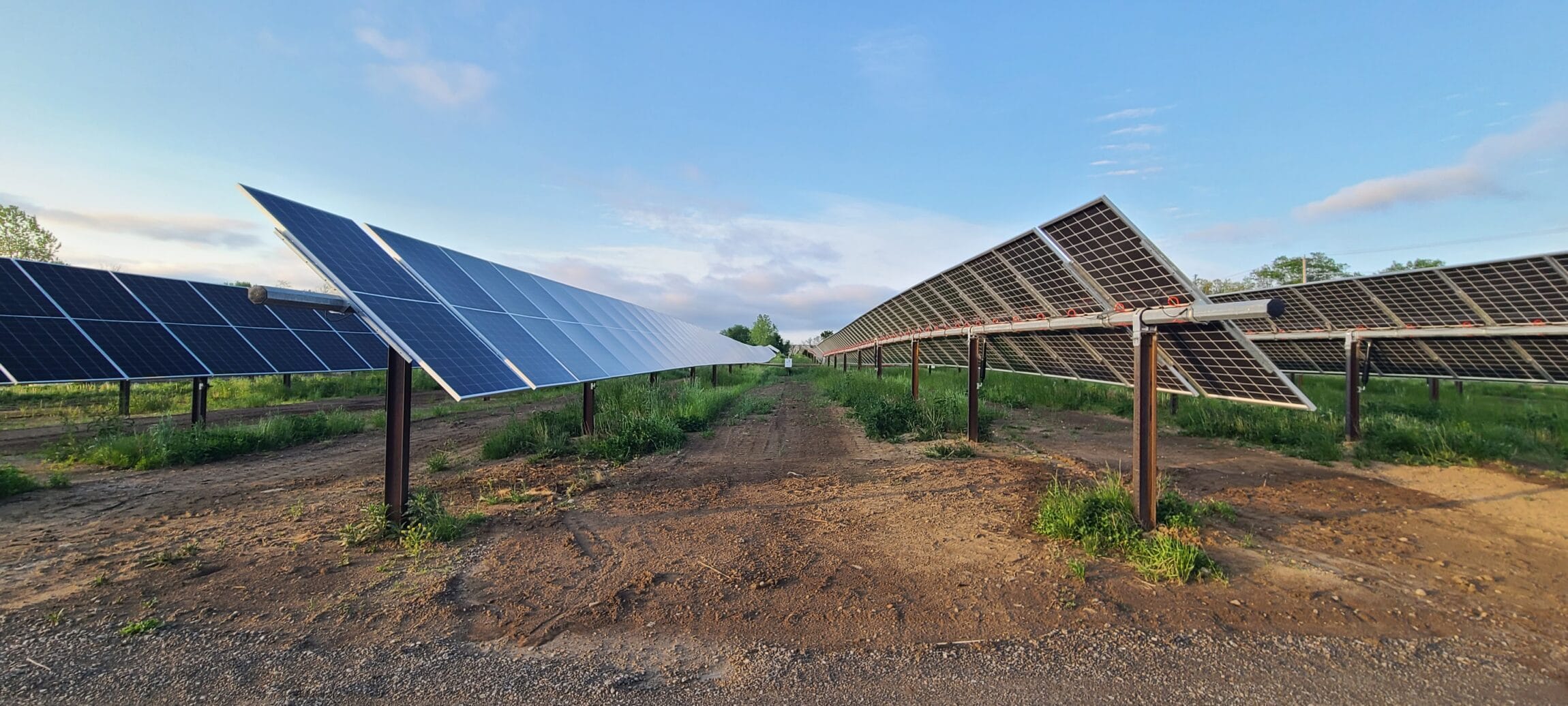
As the design-build contractor, Kokosing Solar managed all phases of construction, including sitework, single-axis tracker installation, panel and inverter installation, and system commissioning. Mayfield Renewables served as the Engineer of Record for the project.

Kokosing Solarโ€™s local hiring strategy focuses on skilled union labor, employing up to 20 local tradespeople during peak construction.

Information about the ground breaking, and additional information can be found here.ย 


Festo USA Corporate Campus

  • SYSTEM SIZE- 2.3 MW DC
  • DATE – Installation completed in 2025
  • ENERGY TARGET – 48% energy offset

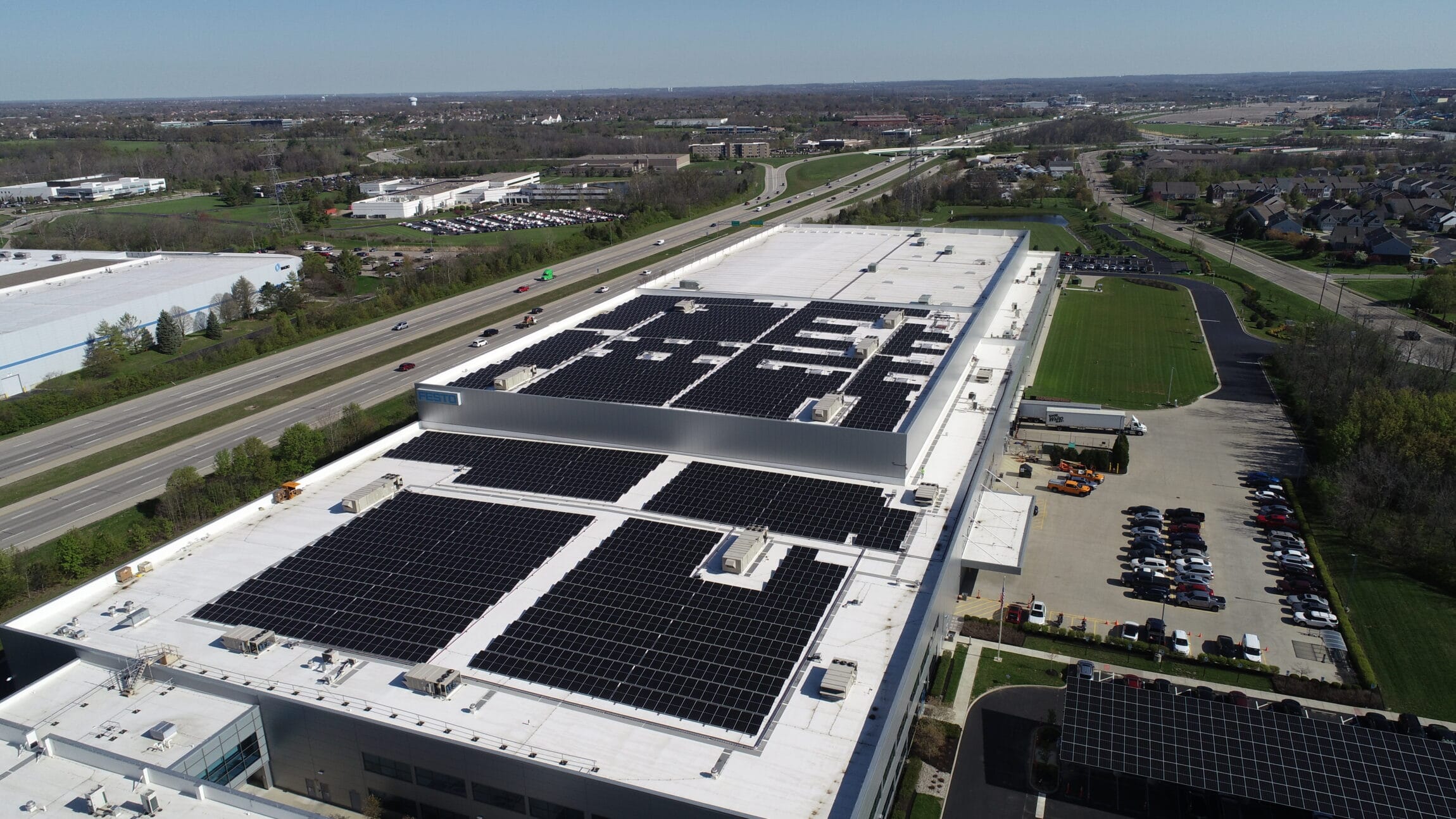
Festo Corporation, a global leader in industrial automation and training systems, selected Kokosing Solar to implement a large-scale solar energy installation. Completed in 2025, this project features a state-of-the-art rooftop solar array that will supply 48% of the facilityโ€™s electricity needsโ€”equivalent to 2.6 million kilowatt hours (kWh) annually. This initiative reflects Festoโ€™s corporate commitment to sustainability and aligns with its goal to generate 25% of its global electricity from solar power by 2030.

This project utilizes a hybrid mounting system that combines ballast blocks with mechanical attachments to meet roof loading requirements while ensuring structural integrity. Additional components of the project include:

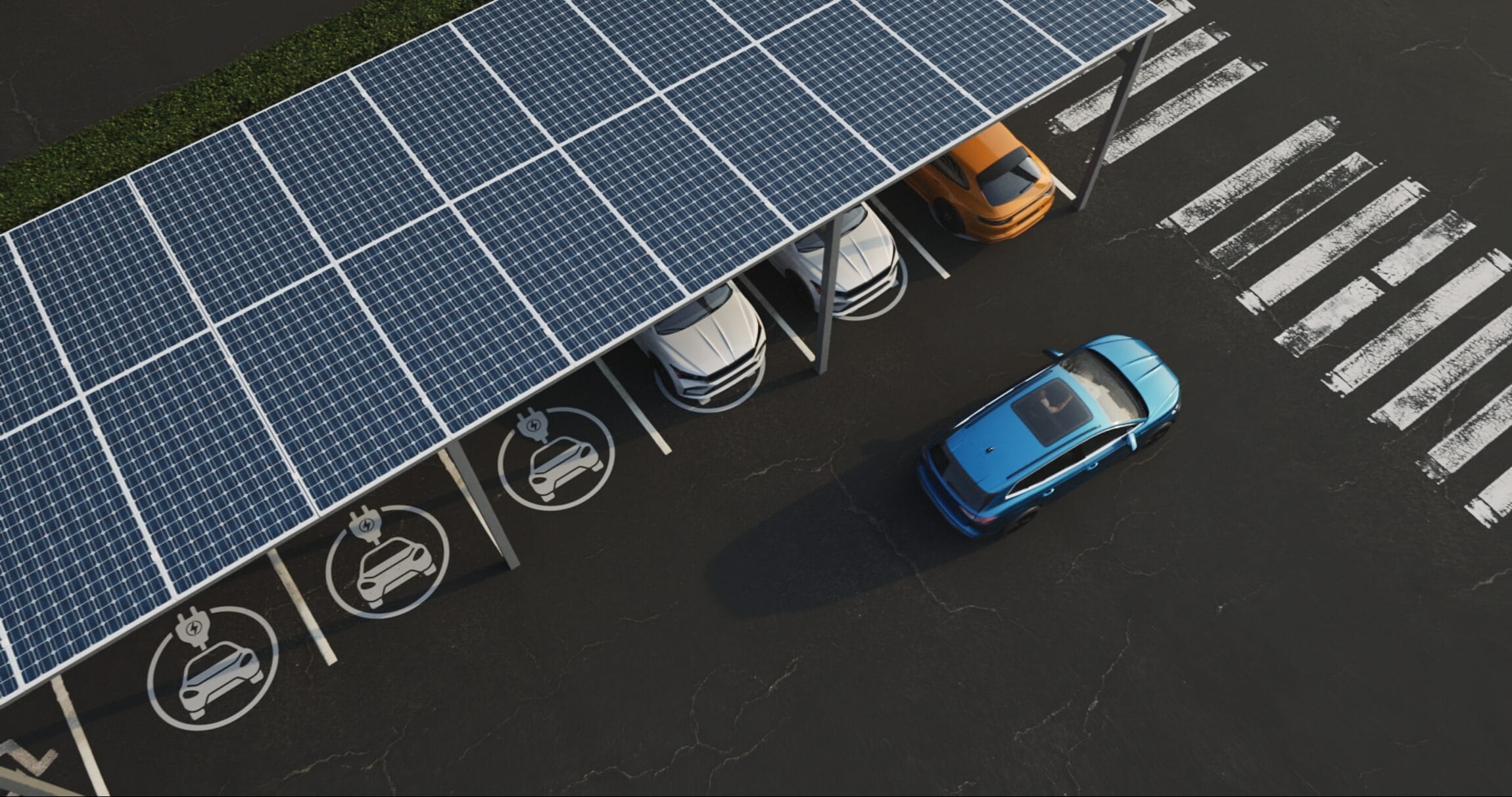
  • Electric Vehicle (EV) Charging Stations: Expanding sustainability efforts by supporting cleaner transportation options for employees and visitors.
  • Solar Canopy Shade Structures: Enhancing parking areas while further increasing solar energy generation capacity.

โ€œOur clean energy investment at the Mason facility is a key step toward meeting Festoโ€™s long-term sustainability objectives. Kokosing Solarโ€™s expertise in large-scale solar installations made them the ideal partner to bring this vision to life.โ€

– Jose Luis Esparza, Head of Non-Production Material Procurement for Festo North America


Solvita Tissue Graft Production

  • SYSTEM SIZE- 1.5 MW DC of solar installed
  • DATE – Installation completed in 2025
  • DESIGN WORK- In-house design
  • PROJECT FINANCING – PPA with IGS Energy

Kokosing Solar constructed a 1.5 MW solar array at Solvitaโ€™s Kettering Research Park to support the companyโ€™s growing tissue graft manufacturing operations.

This project will generate nearly 2 million kWh annually, making Solvita the first major tissue bank in the world to partially power its operations with solar energy. The installation reflects Solvitaโ€™s commitment to sustainability, innovation, and long-term energy cost management.

Check out a full time lapse video of the project here.ย 

Solar Strengthens Emergency Response

Solar Energy Strengthening Ohio’s Emergency Services

Communities count on their fire stations, EMS, and 911 centers to stay up and running no matter what. These places never shut down, they’re packed with essential gear and serve as lifelines when the power goes out. As energy use keeps climbing, staying resilient matters more than ever. All across Ohio, emergency service teams are turning to solar energy to cut costs, modernize their buildings and keep things running smoothly for the long haul.

Kokosing Solar is proud to be a part of this shift, bringing together renewable energy and heavy civil experience, and a commitment building reliable facilities that keep first responders ready for anything.

City Hall, Police, & Fire Municipal Complex.ย 

This City Hall, Police, & Fire Municipal Complex shows how easily solar can fit into a modern public-safety campus. Kokosing Solar designed and installed solar carport canopies that help offset the facilities energy use while giving staff and visitors the bonus of covered parking.ย 

This wasn’t your typical solar job. This project called for big drill rigs, excavators, deep-foundation work, and careful coordination with ongoing municipal construction. To pull it off, Kokosing brought in heavy-civil talent from our own Kokosing Industrial team. They self-performed the toughest parts of the build. Being able to blend solar engineering with advanced equipment and skilled operators is what sets Kokosing Solar apart on complex projects.ย ย 

Athens County Solarโ€‘Powered EMS Infrastructureย 

In Athens County, the new EMS station #51 is a big step forward for sustainable public-safety design. With the help from a $20,000 contribution from SOPEC, the station now features a 34.2 kW solar PV system installed by Kokosing Solar

This setup is the county governments first active solar PV system. The full project cost $74,688 and was designed for net-zero energy billing, meaning its build to produce as much power as the station uses. For a facility that runs 24/7,

Athens County 911 Facility: Solar Supporting Critical Communicationsย 

Athens County has also invested in solar for its 911 communications facility, reinforcing the countyโ€™s commitment to resilient emergency response infrastructure. Dispatch centers require uninterrupted power, and solar helps reduce reliance on the grid while lowering operating costs for taxpayers.ย ย 

As more counties modernize their 911 systems, solar is becoming a natural fit, especially when paired with battery storage to ensure continuity during outages.ย 

Why Solar Matters for Fire, EMS, and 911 Facilitiesย ย 

hitting net-zero isn’t just good for the environment, it’s a smart investment in long-term reliability and resilience.

Emergency-service facilities, including fire stations, EMS bases, and 911 dispatchย centers,ย have some of the most demanding energy requirements in the public sector. These buildingsย operateย 24/7, house mission- critical equipment and must remain fullyย functionalย during grid outages or extreme weather events. Many also serve as communityย sheltersย during emergencies, makingย uninterruptedย power essential.ย Ohioย communities work to modernize their public safetyย infrastructures, reduce long-termย operatingย costs, and supportย sustainability goals. Byย integratingย solar into theseย criticalย facilities,ย citiesย and counties can enhance emergencyย preparedness andย demonstrateย leadership inย buildings throughย a more reliable and efficient public safety network.ย ย 

Kokosing Solar brings a powerful combination of renewable energy expertise and heavy construction capabilities to mission critical public safety projects. With self-performing crews, advanced construction equipment, and decades of experience in both solar and large-scale infrastructure, we are uniquely equipped to handle the complex demands of emergency service facilities. From municipal campuses to EMS stations and 911 dispatch centers, our team delivers solar systems engineered for long-term performance, resilience, and reliability, built to support the first responders who protect our community every day.ย 

+-

Ohio University Alumni: Power Your Home with Solar Savings

Are you an Ohio University Alumni?ย  Find Us in the Bobcat Business Directory!ย 


Kokosing Solar is proud to share your Athens roots. Founded by OU alumni,ย weโ€™veย been designing and building solar energy systems since 2000,ย bringing overย 25 years of experienceย as Ohioโ€™s longest-standing full-service solar installer.ย 

ย 

Today, asย Kokosing Solar,ย weโ€™reย strengthened by theย 75-year legacy of Kokosing, Inc., one of the largest family-owned construction companies in the Midwest and Mid-Atlantic.ย 

ย 

We provideย solar panel installation for homes and businesses across Ohio, proudly servingย Cleveland, Columbus, Cincinnati, and beyond.ย 

ย 

  • Fully licensed and insured electrical contractorย 
  • Trusted residential & commercial installationsย 
  • Safe, high-performance systemsย 
  • Top-notch customer service from start to finishย 

ย 

Being an Ohio University alum comes with perks.
Take advantage of ourย exclusive solar discountย when your system isย 9 kW+ or includes 20+ panels.ย 

ย 

Make your next investment one that powers your futureย with a team rooted right here in Ohio.ย ย 

Visit the Ohio University Alumni Association or head to our website to get started today.ย 


ย 

Charging Your Electric Vehicle With Home Solar in Ohio: What to Know Before You Plug In

Summer driving adds up fast. Between road trips, busy weekends, and daily commuting, many Ohio EV owners start paying closer attention to charging costs and electricity bills in July. The good news is that home solar can cover a meaningful share of electric vehicle charging, and in some cases the majority of it, depending on your energy usage and system size.

Solar EV charging works when your solar panels produce electricity and your home uses that solar power to run an EV charger, your household load, or both. When solar production is higher than home use, that extra electricity can become excess energy that supports charging or flows to the utility grid, depending on your setup. Kokosing Solar installs residential solar and EV charging station equipment together, which helps homeowners plan one complete, reliable energy strategy.

Can you charge an electric vehicle with home solar in Ohio?

Yes. A home solar energy system can supply electricity for electric vehicle charging through your homeโ€™s electrical panel, with grid electricity filling any gaps when solar production is low. Most homes stay connected to the utility grid, so charging stays consistent even at night or during cloudy weather. A solar EV charger setup works best when your solar array and charging system are planned around real driving habits and energy consumption.

How solar EV charging works at home

Solar charging is straightforward. Your solar panel system produces electricity during daylight hours. That power runs your household load first, such as lighting, appliances, and HVAC. If there is excess solar energy left over, it can support home EV charger demand or flow outward as grid energy.

Hereโ€™s the practical takeaway for most Ohio homeowners: you donโ€™t need a special โ€œsolar chargerโ€ to start. You need a properly designed solar system and a compatible EV charger tied into your homeโ€™s electrical panel. A smart EV charger can add helpful energy management features, such as scheduling electric car charging for midday production or off-peak rate windows.

The math: how much electricity does EV charging use?

EV energy usage is typically measured in kilowatt-hours, the unit you see on your electricity bills. The more you drive, the more energy you need to recharge your vehicleโ€™s battery.

Your EV charging costs depend on:

  • Miles driven per month (road trips increase this quickly)
  • Vehicle efficiency (how much electricity per mile)
  • Electricity prices and rates from your utility
  • When you charge (peak rate vs. off-peak)
  • How much solar production you have available

When homeowners ask โ€œhow much power do I need,โ€ the best answer comes from your actual driving and your homeโ€™s energy bills. Once you know your typical energy consumption, it becomes easier to estimate the size of your array and whether you want battery storage.

What changes for Ohio homeowners: seasons, daylight hours, and the grid

Ohio solar production rises in late spring and summer because of longer daylight hours. That timing lines up well with seasonal travel and higher EV charging demand. You may see days where your solar panels produce enough excess energy to cover a significant portion of charging, especially if you charge during the day.

In fall and winter, solar production can drop due to shorter days and weather. Thatโ€™s where grid power still plays a role for many homes. Staying connected to the energy grid gives you reliability, and it keeps your charging station ready even when your solar array isnโ€™t producing at its peak.

Choosing the right EV charging station for your home solar plan

EV chargers come in different power levels, and the type of charger you choose can affect charging costs and installation needs. Some homeowners prefer a faster charging station for convenience, while others are comfortable with slower charging overnight. Your charging system should match your driving patterns, available electrical capacity, and energy budget.

A few planning points that matter in real homes:

  • Homeโ€™s electrical panel capacity and available breaker space
  • Distance from the panel to the garage or parking area
  • Desired charging speed and typical daily miles
  • Future plans such as a second electric vehicle or expanded home use

Kokosing Solar can install an EV charging station at your home when you go solar, which allows one coordinated plan for solar panel installation, electrical work, and equipment placement.

Solar energy storage: when battery storage helps EV owners

Battery storage can store solar energy produced during the day for later home use, including evening electric vehicle charging. For many homes, a storage system adds flexibility and supports energy independence, especially when your goal is to use more of your own solar power instead of relying on grid power after sunset.

That said, not every homeowner needs an energy storage system for solar EV charging to work. Some EV owners do well simply by shifting charging to midday when possible or by using scheduled charging to avoid peak rate periods. If youโ€™re considering battery storage, it helps to talk through expected energy usage, priorities, and how long you want backup capability during outages. Product specifics like maximum storage duration vary by equipment, so the best next step is a site assessment and design conversation.

Environmental impact: lowering your carbon footprint with solar charging

Many EV owners buy an electric car to reduce their carbon footprint and limit reliance on fossil fuels. Pairing EV charging with renewable energy strengthens that decision by powering miles with clean energy generated right on your roof.

The environmental impact comes from two directions:

  • Replacing gasoline with electric vehicle charging at home
  • Reducing the share of grid electricity used for transportation by increasing onsite solar power

This approach supports broader climate change goals while keeping the focus practical. You gain a more predictable energy plan, and you turn sunlight into a daily resource for transportation.

Planning solar production around EV charging: what a good assessment covers

A strong plan connects your solar energy system to your real life. That involves looking at your current electricity bills, your household load, and your EV charging habits. It also includes reviewing your electrical panel to confirm it can support the new charging station and solar interconnection needs.

A typical evaluation for solar EV charging may include:

  • Reviewing historical energy bills and electricity costs
  • Estimating EV energy consumption based on driving patterns
  • Assessing roof space and the size of your array goal
  • Checking your homeโ€™s electrical panel and service capacity
  • Discussing options like battery storage and energy management system features
  • Considering where the EV charging station will be placed for daily convenience

Kokosing Solar positions this as an informed decision, backed by decades of experience. With 25+ years of solar expertise and 74 years of construction experience, the team focuses on safe, reliable design and proper installation that supports long-term performance.
Cost savings and the hidden cost of doing nothing

Electricity prices have a way of creeping up over time, and that affects everything that runs on your homeโ€™s power, including electric vehicle charging. Every year you wait, the utility bill gets higher. Every year you go solar, those dollars stay in your pocket.

Solar EV charging can improve cost savings in two clear ways. First, solar power can reduce the portion of charging that depends on utility grid rates. Second, a well-sized solar panel system can help stabilize long-term energy costs for both home use and transportation. Homeowners often find the biggest value comes from combining a solar system plan with realistic charging costs, rather than guessing based on best-case scenarios.

In many cases, homeowners also ask about the federal tax credit for solar. Incentives can change and eligibility depends on your situation, so itโ€™s smart to confirm current details with a qualified tax professional and your installer during the planning stage.

Why homeowners choose Kokosing Solar for solar EV charging in Ohio

Home charging touches multiple systems at once: solar panels, your electrical panel, your charging station, and your day-to-day energy usage. Having one experienced partner helps keep the installation process clear and coordinated.

Kokosing Solar is Ohioโ€™s longest-standing full-service solar installer, and the team installs both a solar system and an EV charger for homeowners who want a single, integrated plan. The goal stays consistent: turn the reliable, free energy of the sun into savings you can count on, with a system designed for the long term.

Ready to see what solar EV charging looks like for your home?

If youโ€™re driving more this summer and thinking about an EV charging station at home, now is a great time to run the numbers. Schedule a free assessment with Kokosing Solar to review your solar production potential, your homeโ€™s electrical panel capacity, and your electric vehicle charging needs so you can build a clear, confident path to clean energy at home.

Get Started

Get Started